


Whether you are building your first product or scaling fast, choosing the right AI agent development company in 2025 could be the single most important decision you make this year.
Every week, more startups are realizing that automation is no longer a luxury. It is a survival strategy. When your competitors are using intelligent AI agents to handle customer queries, process data, and run workflows around the clock, staying manual means falling behind.
But here is the problem most founders face: there are hundreds of companies claiming to be the best at building AI agents. Some charge enterprise prices that no early-stage startup can afford. Others promise fast delivery but disappear after deployment. And some simply do not understand the unique constraints startups operate under.
This guide by Tech Specs cuts through the noise. We have researched, compared, and ranked the top 10 AI agent development companies that genuinely work well for startups in 2025. We looked at pricing, startup experience, delivery speed, scalability, and real results. Whether you have a $10,000 budget or $500,000, there is something useful here for you.
What Is an AI Agent Development Company?
Before diving into the list, it is worth being clear about what these companies actually do. An AI agent development company builds autonomous software agents that can perform tasks, make decisions, and interact with systems without constant human input.
These agents can:
- Handle customer support conversations from start to resolution
- Automate internal workflows like approvals, data entry, and reporting
- Monitor and respond to events in real time across multiple platforms
- Connect with your existing tools like CRMs, ERPs, and communication apps
- Learn from user interactions to improve responses over time
For startups specifically, the right AI agent development company should offer flexible pricing, quick deployment, and solutions that can grow as your business grows.
How We Selected These Companies
We did not just pick the most well-known names. We evaluated each company based on criteria that actually matter to startup founders and early-stage teams:
- Startup-friendliness: Do they understand startup budgets, timelines, and growth needs?
- Pricing transparency: Are costs clearly explained, or are there hidden fees?
- Deployment speed: How quickly can they get an agent live for your business?
- Scalability: Can the solution grow from 100 users to 100,000?
- Technical quality: Are agents built on reliable, modern infrastructure?
- Support quality: Will they still be helpful six months after launch?
Top 10 AI Agent Development Companies for Startups in 2025
1. Cognizant AI Labs
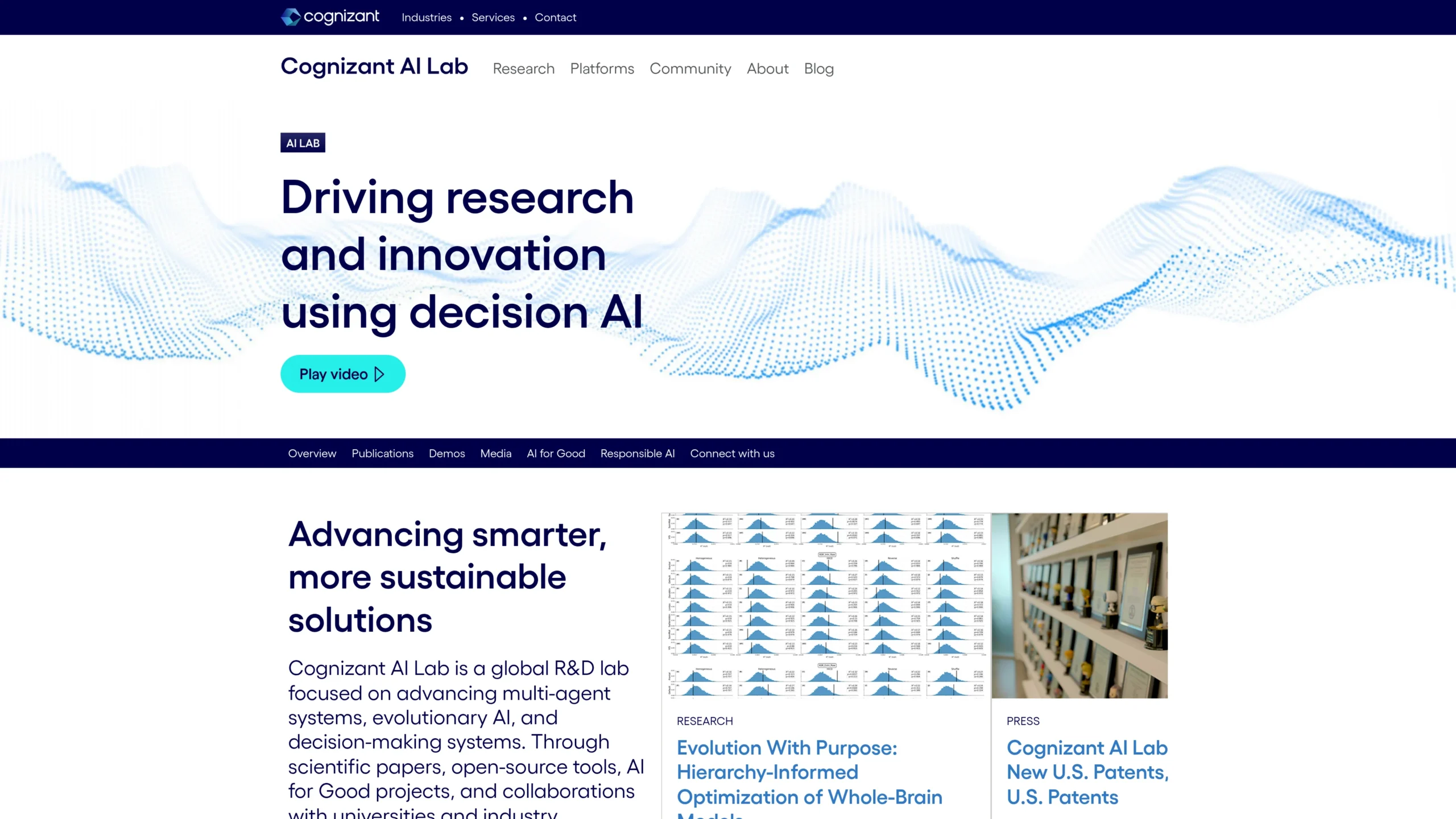
Cognizant AI Labs has built a strong reputation as a go-to AI agent development company for businesses that need both enterprise reliability and startup flexibility. Their dedicated startup acceleration program offers reduced pricing for early-stage companies, making it genuinely accessible to growth-stage teams. Their agents are built on a modular architecture, meaning you can start small and expand specific capabilities without rebuilding from scratch.
What sets them apart is their dedicated startup success team. You get a real account manager who understands that your needs today will look very different in six months. Deployment timelines typically range from four to eight weeks, depending on complexity.
Strengths:
- Strong startup pricing program
- Modular, scalable architecture
- Fast onboarding process
- Excellent post-launch support
Considerations:
- The premium tier can be costly
- Requires integration planning upfront
Best for: Startups planning to scale quickly and needing enterprise-level quality from day one.
2. AgentBase by Rasa
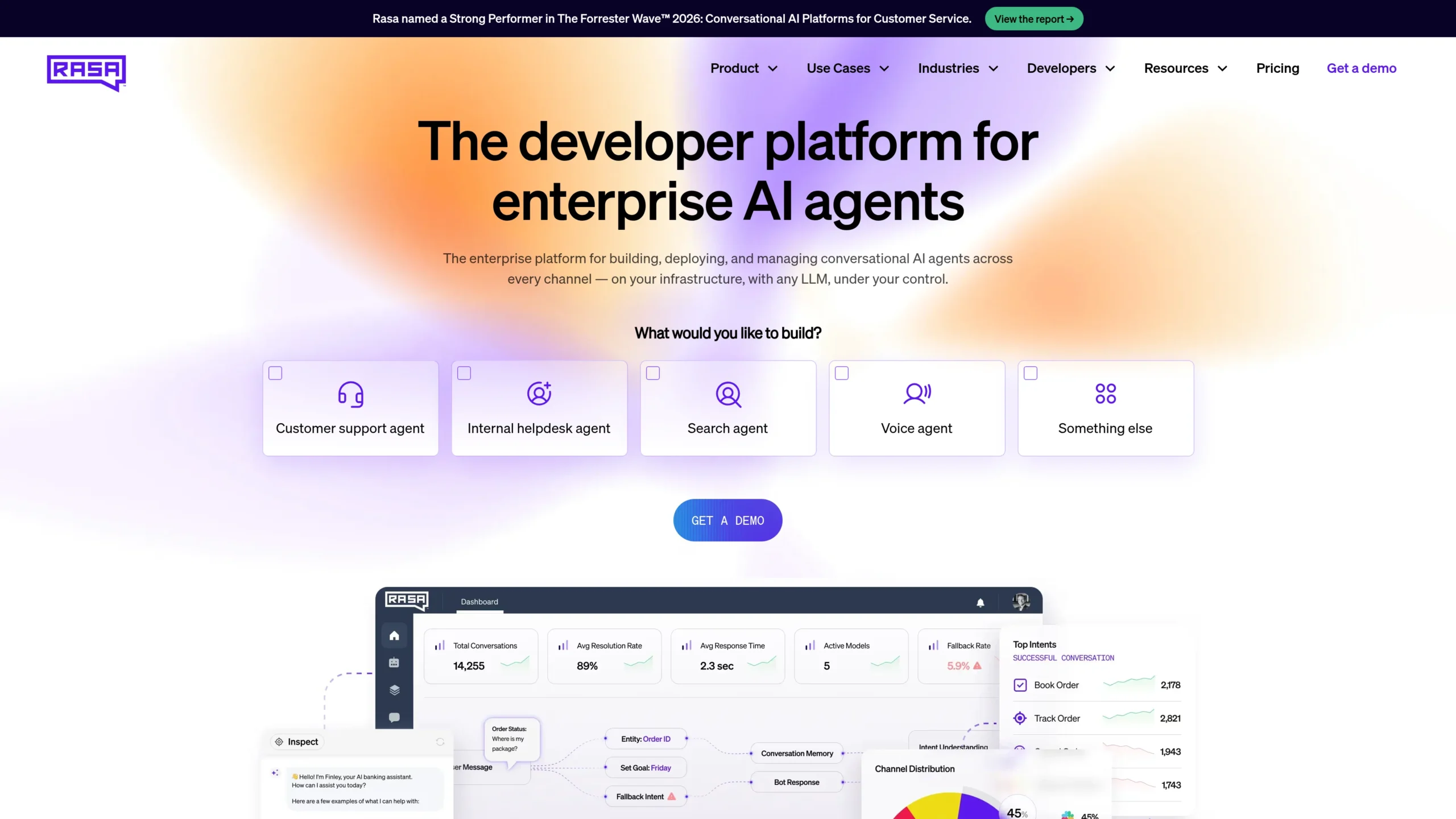
Rasa has long been respected in the AI development space for its open-source conversational AI framework, and AgentBase builds on that foundation with full-service development support. For startups with technical co-founders, Rasa offers a hybrid model where you can use their open-source tools independently and bring them in for complex customization.
The pricing model is among the most flexible in the market. Startups can begin with a self-hosted, open-source setup at minimal cost and upgrade to managed services as revenue grows. Their agents are particularly strong in multilingual support and customer-facing applications.
Strengths:
- Open-source foundation reduces upfront cost
- Excellent multilingual support
- Very flexible pricing structure
- Strong developer community for support
Considerations:
- Requires some technical knowledge to get the most value
- User interface tooling is less polished than some competitors
Best for: Technical founders who want flexibility and control over their AI agent infrastructure.
3. Moveworks
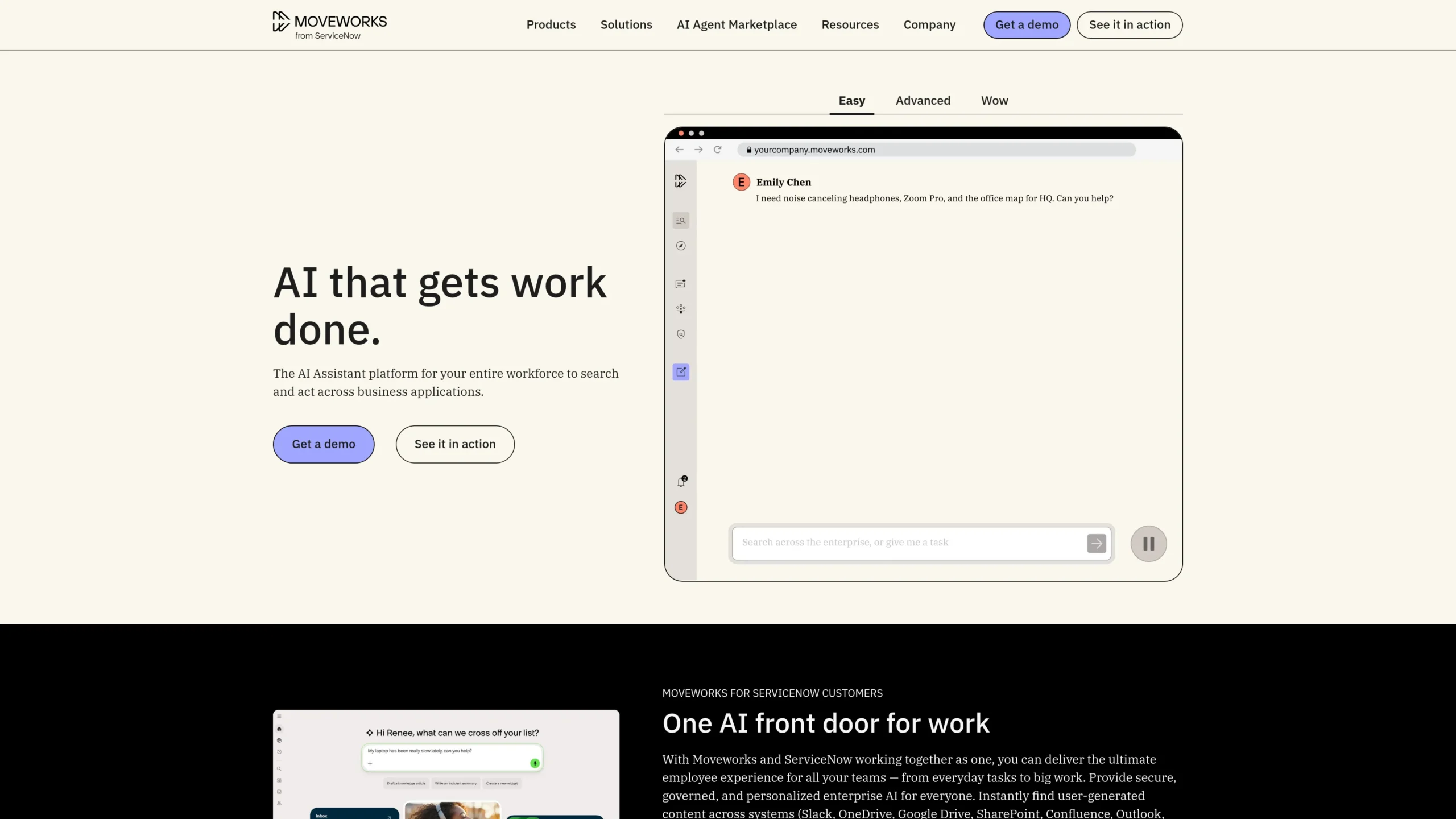
Moveworks has carved out a specific niche as a leading AI agent development company for internal productivity. If your startup is growing fast and your internal operations are starting to crack under the pressure, Moveworks builds agents that handle IT support, HR queries, and internal knowledge management automatically.
Their platform integrates deeply with tools like Slack, Microsoft Teams, Jira, and ServiceNow. The result is an agent that employees can talk to in plain language to get things done, from resetting passwords to finding the right policy document. For startups scaling from 20 to 200 employees, this kind of internal automation saves enormous amounts of founder time.
Strengths:
- Deep Slack and Microsoft Teams integration
- Reduces internal support load significantly
- Easy for non-technical employees to use
Considerations:
- Focused on internal use cases only
- Pricing is not listed publicly
Best for: Growth-stage startups struggling with internal operations and employee support at scale.
4. Botpress
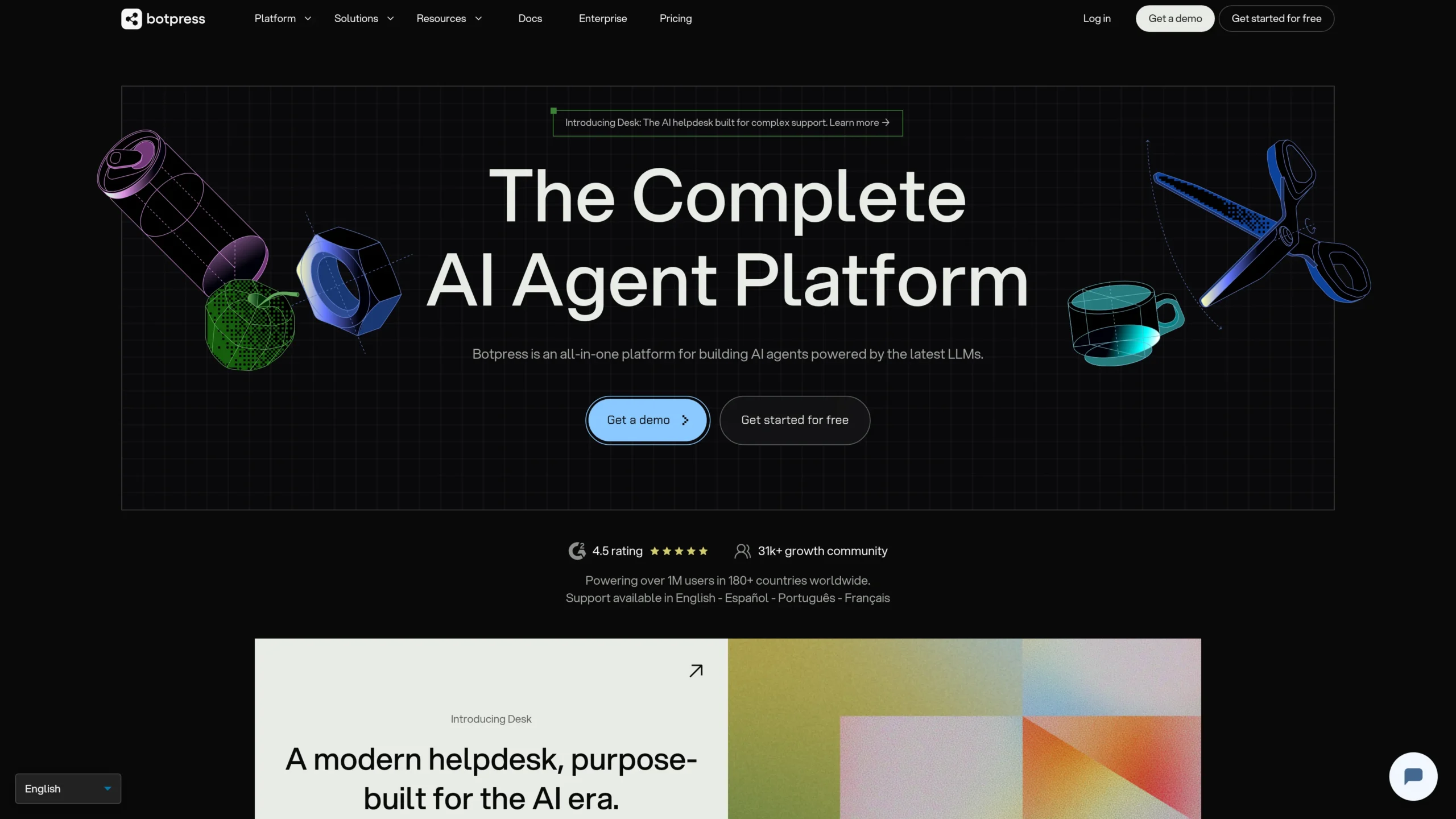
Botpress is one of the most startup-friendly names on this list. Their platform allows non-technical founders to build and deploy AI agents using a visual builder, while also giving developers full access to the underlying code for advanced customization. This dual approach means your team can move fast without waiting on external developers for every update.
Pricing starts at a genuinely affordable level, with a free tier that lets you test and prototype before committing. For startups that need to launch an agent quickly without a large upfront investment, Botpress is hard to beat. Their ecosystem also includes pre-built templates for e-commerce, SaaS, and customer support use cases.
Strengths:
- Free tier available for testing and prototyping
- Both no-code and full-code options in one platform
- Fast time from setup to deployment
- Good library of ready-to-use templates
Considerations:
- Less suitable for complex enterprise workflows
- Advanced features require paid plans
Best for: Early-stage startups that need a working AI agent fast with minimal upfront budget.
5. Scale AI
Scale AI approaches AI agent development from a data-first perspective. If your startup operates in a domain where accuracy and reliability are critical, such as legal tech, fintech, or healthcare, Scale AI brings the data labeling, model training, and evaluation infrastructure needed to build agents you can actually trust.
They work with many growth-stage vendors in regulated industries where a hallucinating AI agent is not just unhelpful but potentially harmful. Their pricing is higher than some alternatives, but the quality and defensibility of the output often justifies the investment for startups in high-stakes verticals.
Strengths:
- Industry-leading data quality and accuracy
- Strong track record in regulated industries
- Trusted by major technology companies globally
Considerations:
- Higher price point than most alternatives
- Longer project timelines due to the rigorous process
Best for: Startups in fintech, legal tech, or healthcare where accuracy and compliance are non-negotiable.
6. Relevance AI
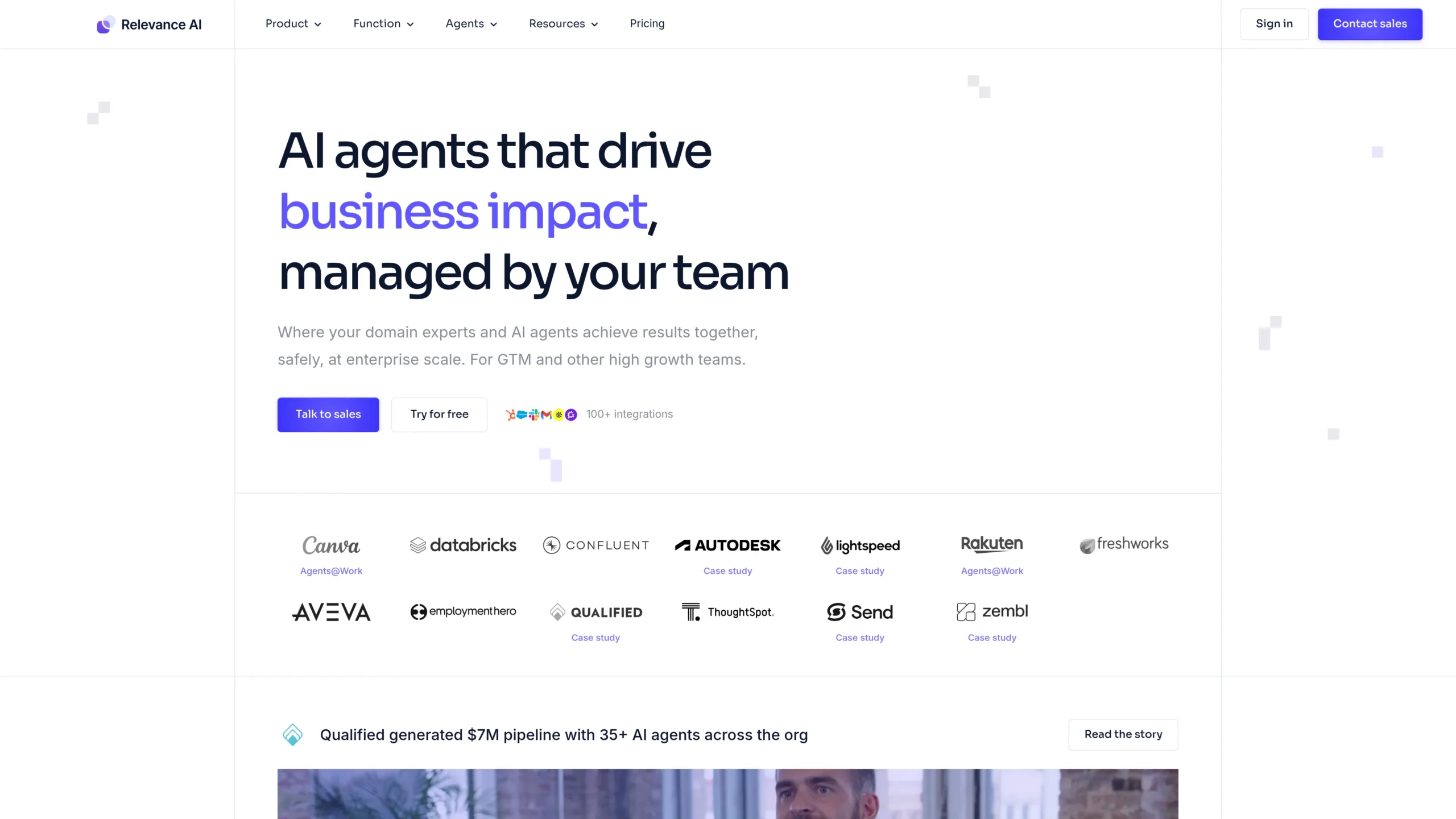
Relevance AI has positioned itself specifically as an AI agent development company built for teams without large engineering resources. Their platform lets you build multi-step AI workflows and agents using a simple drag-and-drop interface, connecting to your existing tools like Notion, Airtable, and Google Sheets with minimal friction.
For non-technical founders, Relevance AI removes most of the complexity that makes AI development feel out of reach. You define what you want the agent to do in plain language and the platform handles the underlying logic. Pricing is transparent and structured around usage, which suits startups that start small and grow.
Strengths:
- Built specifically for non-technical users
- Transparent usage-based pricing
- Strong integrations with popular startup tools
Considerations:
- Less suited for highly complex custom logic
- Smaller community compared to some competitors
Best for: Non-technical founders who want to build AI agents without hiring a developer.
7. Lamatic.ai
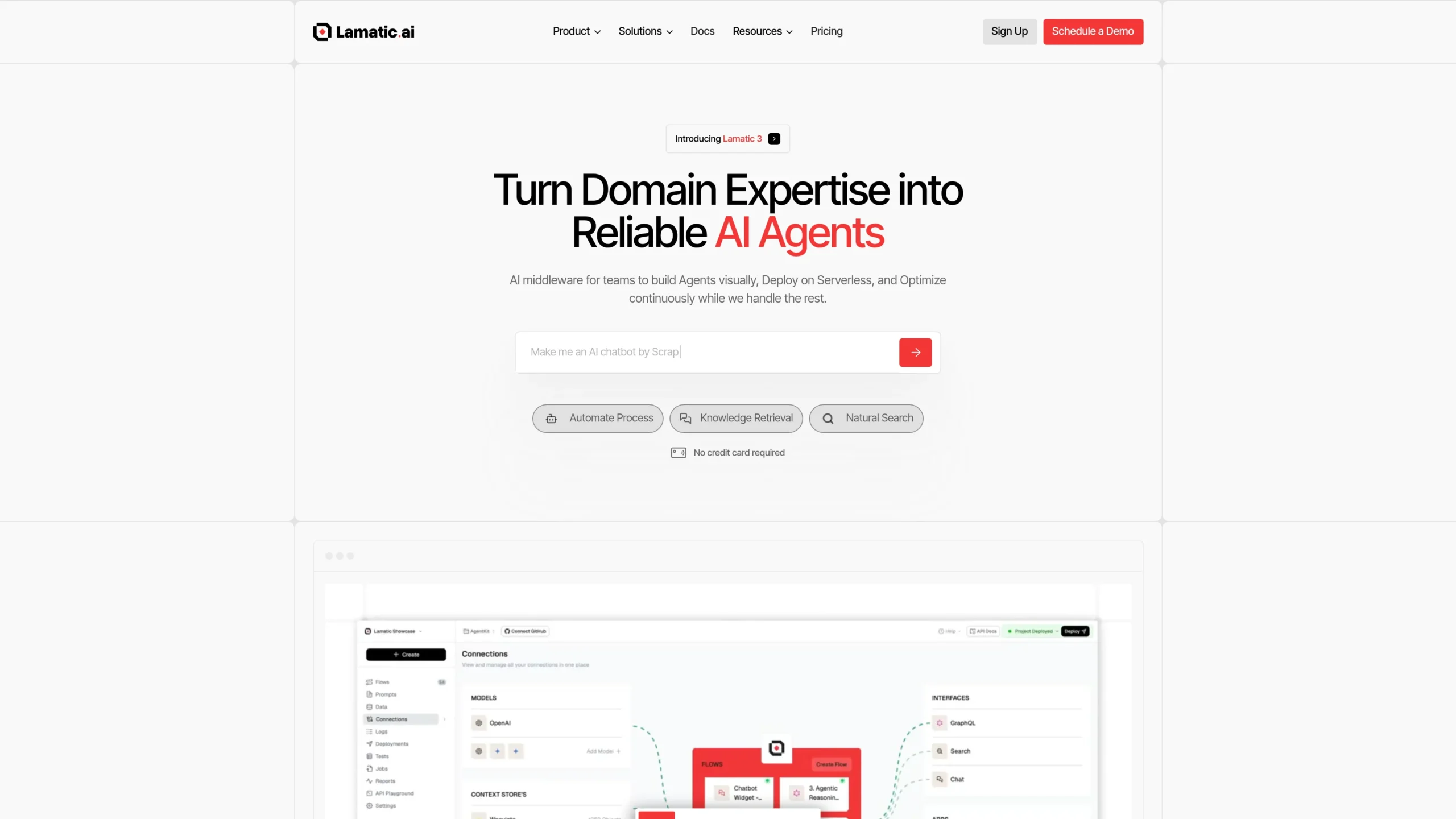
Lamatic.ai is a newer AI agent development company gaining traction among startup developers for its clean approach to LLM orchestration. If your engineering team wants to build custom agents on top of models like GPT-4, Claude, or Gemini without stitching together dozens of libraries, Lamatic provides an opinionated but powerful framework.
The platform is particularly strong for startups building AI-native products, where the agent is a core part of the user experience rather than a bolt-on feature. Their generous developer tier and active community make it a good starting point for prototyping, and their managed cloud handles scaling when you are ready to go live.
Strengths:
- Clean and well-designed LLM orchestration layer
- Works with multiple leading AI models
- Good fit for startups where AI is the core product
Considerations:
- The platform is still maturing
- Smaller enterprise track record compared to older vendors
Best for: Developer-led startups building AI as a core product feature rather than an add-on.
8. Floatbot
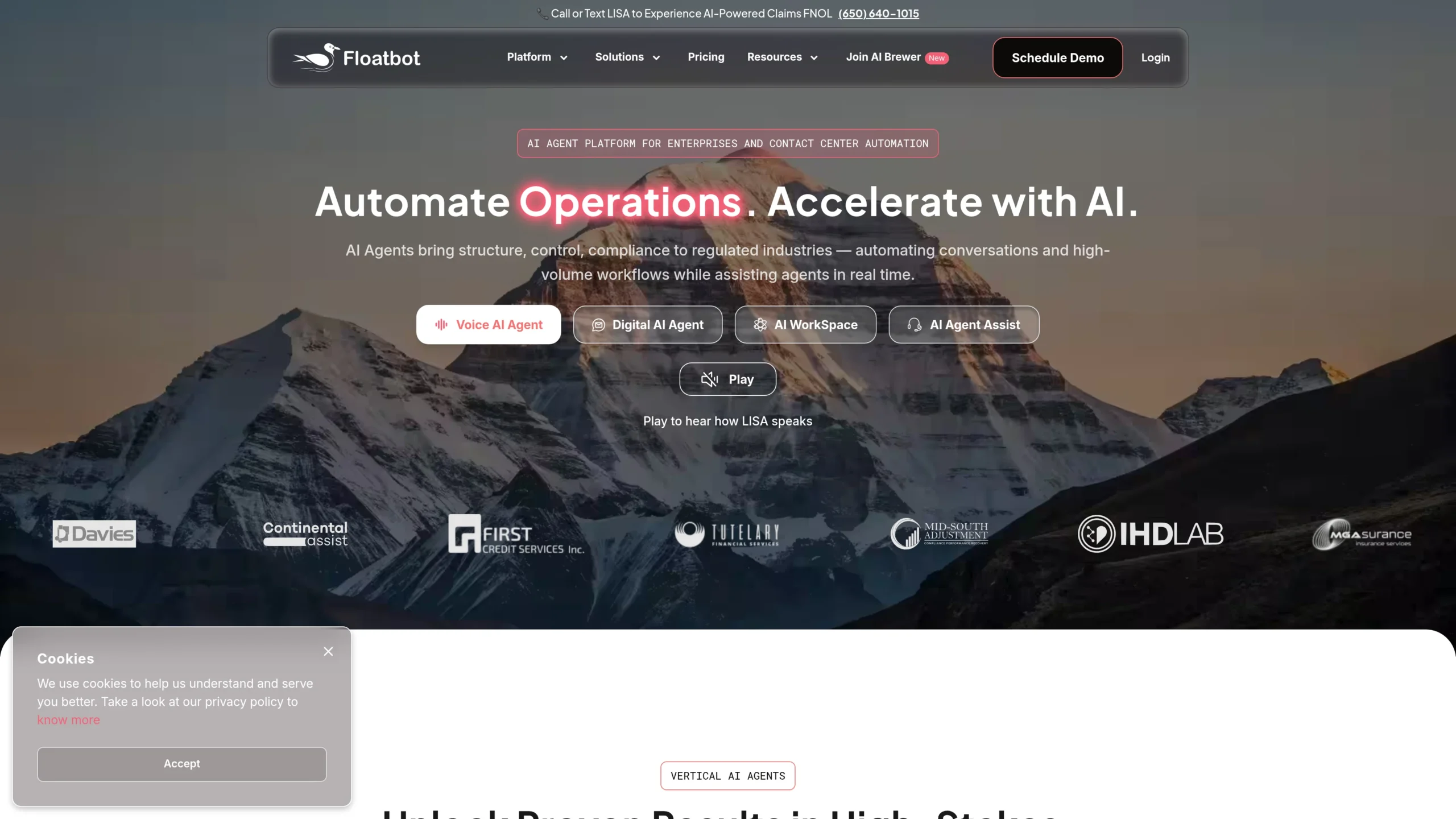
Floatbot is an AI agent development company with a strong focus on voice and omnichannel customer engagement. If your startup needs agents that work across web chat, WhatsApp, phone calls, and email from a single platform, Floatbot delivers this in a way very few budget-friendly vendors can match.
Their voice agent capability is particularly impressive for the price point. Startups in e-commerce, logistics, and customer-facing services have used Floatbot to replace entire customer support teams with agents that handle calls and messages simultaneously. The platform supports multiple languages and regional dialects, which matters greatly for emerging market startups.
Strengths:
- Strong voice agent capabilities at an affordable price
- True omnichannel deployment from one platform
- Good multilingual and regional dialect support
Considerations:
- Less well-known in Western markets
- The user interface could be more polished
Best for: Startups in customer-facing industries that need voice plus chat from one affordable platform.
9. Artisan AI
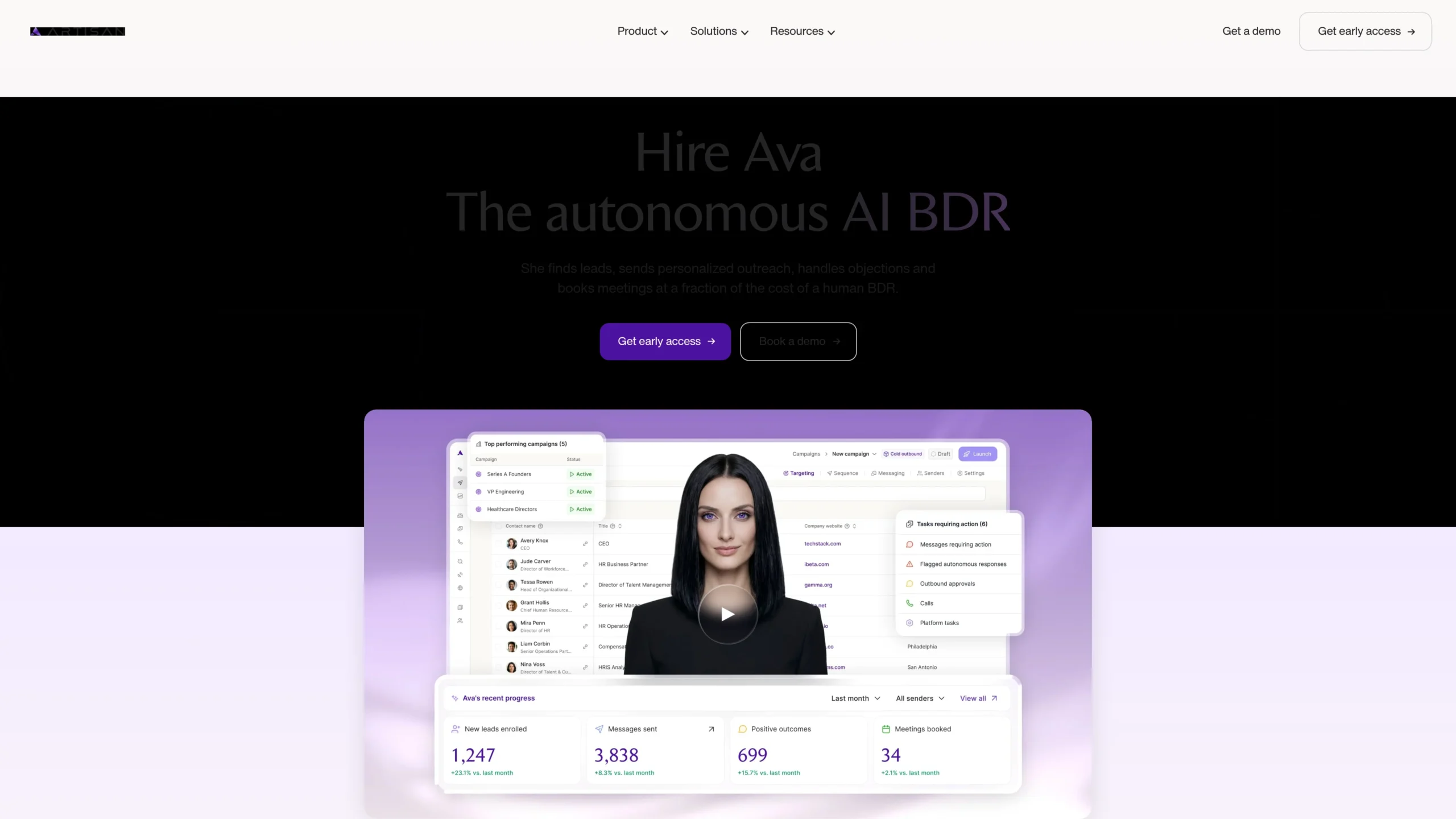
Artisan AI has built a very specific but very compelling product for startups: AI agents focused entirely on sales and revenue generation. Their flagship agent, Ava, handles outbound sales prospecting, personalizes email sequences, researches leads, and books meetings autonomously. For a seed-stage startup with a lean sales team, this kind of capability can be transformational.
The concept of an AI sales development representative that works around the clock without salary, benefits, or sick days resonates strongly with budget-conscious founders. Results vary by industry and target market, but startups in SaaS and B2B services have reported significant pipeline growth within the first 90 days.
Strengths:
- Purpose-built for sales pipeline growth
- Autonomous prospecting and outreach without human input
- Effectively replaces costly SDR headcount
Considerations:
- Very narrow use case focus
- Results depend heavily on the quality of your ideal customer profile
Best for: B2B SaaS startups that need to build a pipeline without hiring a full sales team.
10. Kore.ai
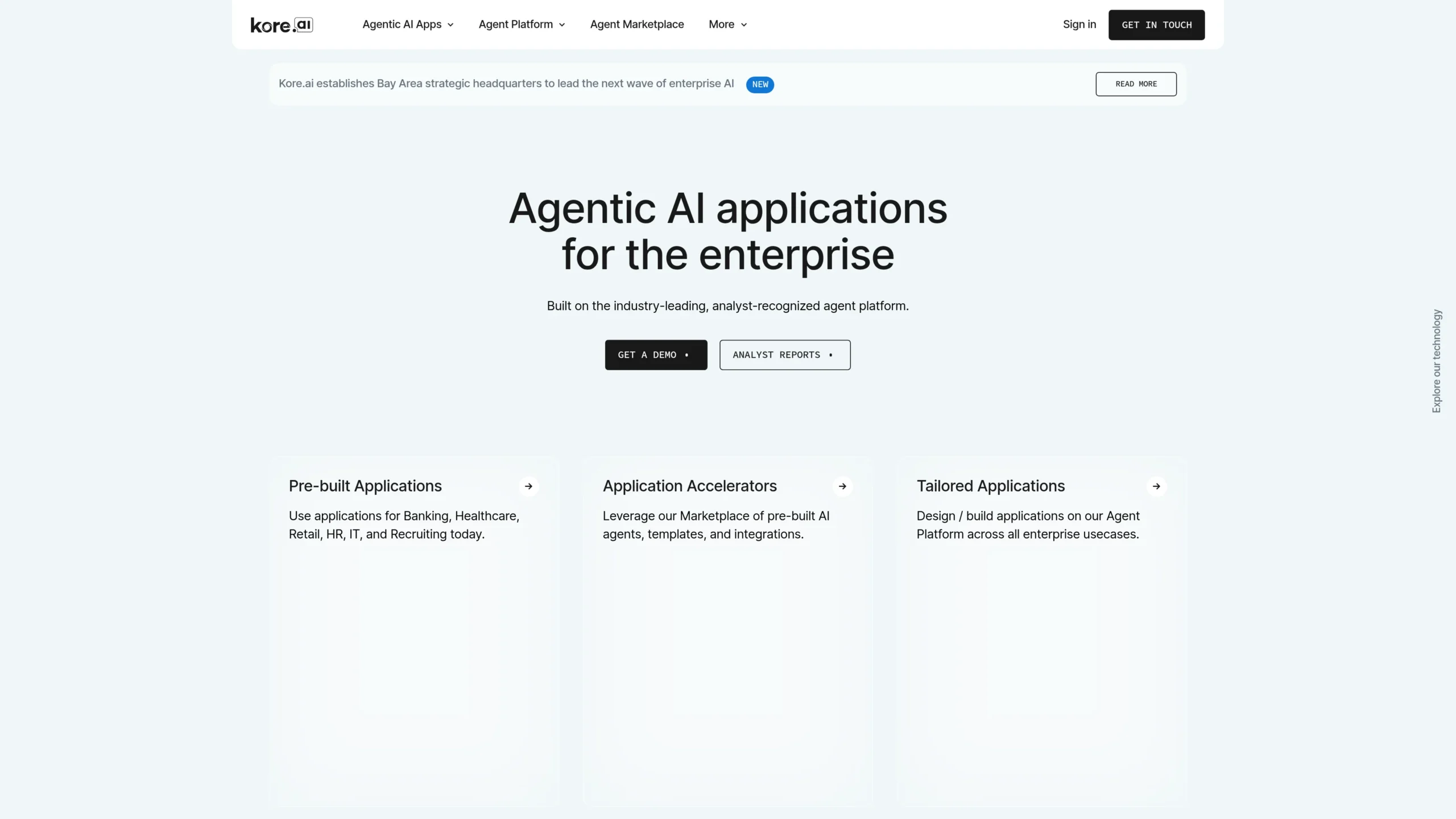
Kore.ai rounds out this list as an established AI agent development company with a platform mature enough to serve both growth-stage vendors and large enterprises. Their XO Platform supports multi-agent orchestration, meaning you can deploy several specialized agents that work together rather than one single agent trying to do everything.
For startups that are already well-funded and moving toward enterprise sales, Kore.ai offers the credibility and compliance certifications that procurement teams expect. They are one of the few companies on this list with deep experience across banking, insurance, retail, and telecom, which matters if your startup is targeting those sectors.
Strengths:
- Multi-agent orchestration for complex workflows
- Enterprise compliance certifications
- Strong industry-specific experience across multiple verticals
- Proven performance at scale
Considerations:
- More complex to set up initially than simpler platforms
- Better suited for Series A startups and beyond
Best for: Well-funded startups targeting enterprise clients who need compliance, scalability, and proven vendor credibility.
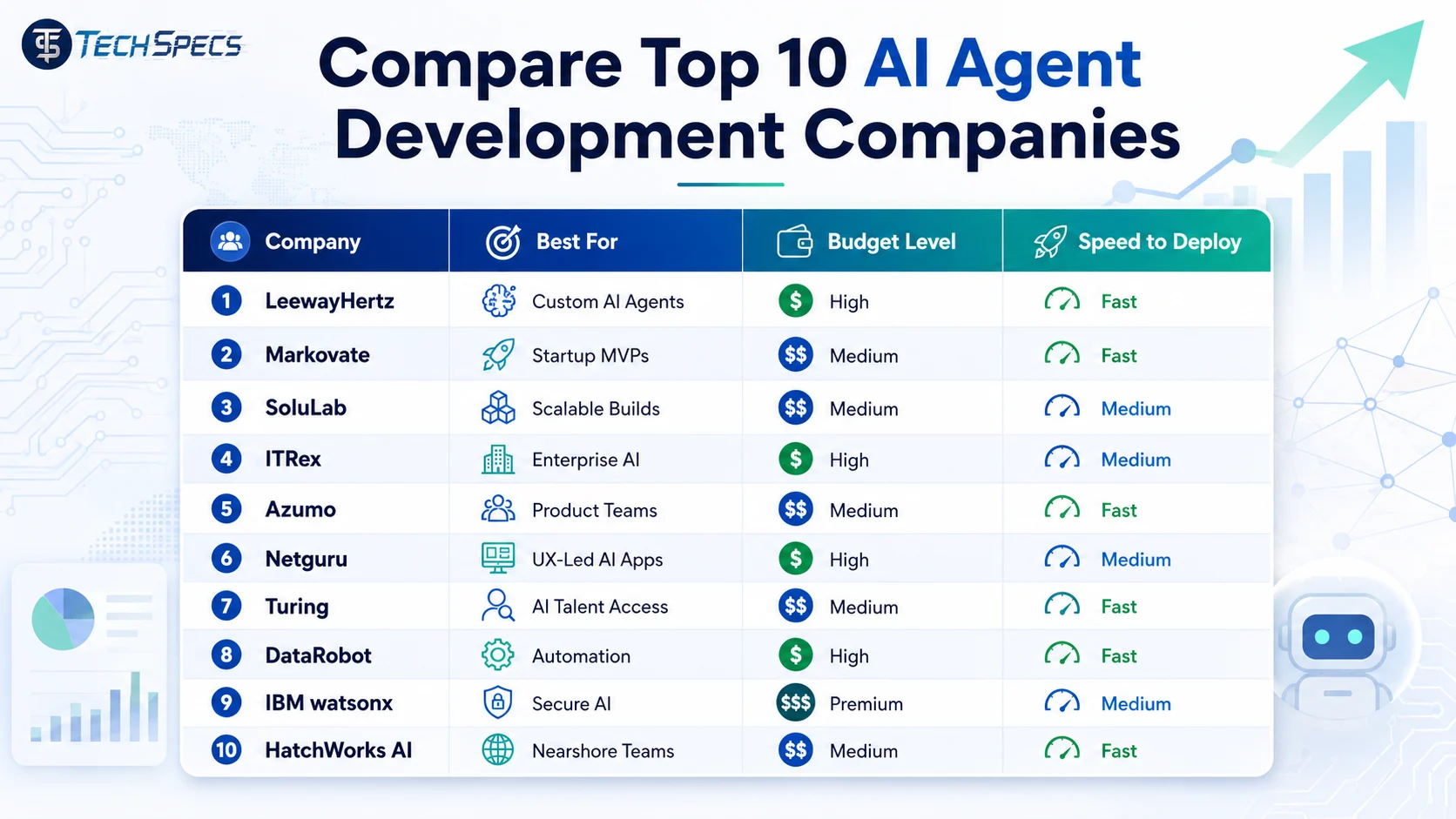
Quick Comparison Overview
How to Choose the Right AI Agent Development Company
Reading a top 10 list is useful, but the right choice depends entirely on your specific situation. Here are the key questions to ask before you commit to any AI agent development company:
- What specific problem are you solving? A customer support agent and a sales agent require very different expertise.
- What is your realistic budget for the next 12 months, including maintenance and updates?
- Do you have technical co-founders or developers on your team, or do you need a no-code solution?
- How quickly do you need a working agent live? Some providers deploy in days while others take months.
- Does the company understand your industry, or are they building a generic solution?
- What does post-launch support look like? Many companies disappear after delivery.
Founder tip: Before signing any contract, ask the AI agent development company to show you a real case study from a startup at a similar stage in a similar industry. Generic demos are easy to produce. Real results from comparable companies tell you what you actually need to know.
What to Expect in Terms of Cost
Pricing across the AI agent development company landscape in 2025 varies enormously. Here is a realistic breakdown to help you plan your budget:
- $5,000 to $20,000: Entry-level custom agents with limited scope, typically suited for a single use case like FAQ handling or appointment booking.
- $20,000 to $80,000: Mid-range solutions with integrations, custom training, and ongoing support. Suitable for most growth-stage vendors.
- $80,000 to $300,000+: Enterprise-grade multi-agent systems with compliance, custom infrastructure, and dedicated account management.
Many affordable solutions on this list also offer subscription-based models starting from a few hundred dollars per month, which dramatically lowers the barrier for early-stage startups that are not ready for a large capital commitment.
Common Mistakes Startups Make When Hiring an AI Agent Development Company
After reviewing dozens of startup experiences with AI agent projects, a few mistakes come up repeatedly:
- Choosing a vendor based on their marketing rather than their actual startup experience
- Underestimating the importance of post-launch maintenance and ongoing updates
- Building an agent that is too complex for their current user base to actually use
- Ignoring data privacy requirements until it becomes a legal or compliance problem
- Not defining clear success metrics before the project begins
The best AI agent development company partnerships start with honest conversations about what success looks like, what resources you have available, and what happens when things go wrong.
Final Thought
Choosing the right AI agent development company as a startup in 2025 is genuinely one of the most consequential technology decisions you will make. The good news is that the market has matured significantly. You no longer need a massive budget or an in-house AI team to build agents that deliver real business value.
Whether you are a solo founder looking to automate customer support with Botpress, a technical team building an AI-native product with Lamatic.ai, or a well-funded Series A startup targeting enterprise customers with Kore.ai, the right partner exists for your specific situation and budget.
Start by defining what you actually need the agent to do, set a realistic budget, and shortlist two or three companies from this list. Book discovery calls, ask for startup-specific case studies, and pay close attention to how responsive and knowledgeable the team is during the sales process. That usually tells you everything about what the partnership will feel like after you sign the contract.
The startups that move on to AI agent development now are building a competitive advantage that will be very hard for slower-moving competitors to close. The question is not whether to invest in an AI agent development company. The question is which one is right for you, and how fast you can get started.
Frequently Asked Questions
What does an AI agent development company actually build for startups?
An AI agent development company builds software agents that can perform tasks autonomously, such as answering customer questions, processing data, automating workflows, and integrating with existing tools. For startups, these agents typically replace repetitive manual work and allow small teams to operate at a much larger scale without adding headcount.
How much should a startup budget for AI agent development in 2025?
Costs range widely depending on complexity and scope. Early-stage startups can begin with affordable solutions starting from a few hundred dollars per month using platforms like Botpress or Relevance AI. Custom-built agents from specialist firms typically start at $20,000 and can reach $300,000 or more for enterprise-level systems. Most growth-stage vendors find the $20,000 to $80,000 range delivers strong value for the investment.
How long does it take to deploy an AI agent for a startup?
Deployment timelines vary significantly across different AI agent development companies. Simple agents using no-code platforms can go live in days or a couple of weeks. Custom-built agents with integrations and training typically take four to eight weeks. Enterprise-grade multi-agent systems can take three to six months from kickoff to full deployment.
Do I need technical skills to work with an AI agent development company?
Not necessarily. Several companies on this list, including Botpress, Relevance AI, and Floatbot, offer no-code or low-code platforms that non-technical founders can use effectively. If you want fully custom agents built to specific requirements, having a technical co-founder or developer helps, but many AI agent development companies provide full-service delivery where your team does not need to write a single line of code.
What is the difference between a chatbot and an AI agent?
A traditional chatbot follows a fixed script and can only respond to questions it has been explicitly programmed to handle. An AI agent is more sophisticated: it can reason through new situations, take actions across multiple systems, learn from interactions, and handle tasks that were not explicitly anticipated. An AI agent development company builds agents that go far beyond simple chatbot functionality.
Can an AI agent development company integrate agents with my existing tools?
Yes, integration with existing tools is a core part of what most AI agent development companies do. Common integrations include CRMs like Salesforce and HubSpot, communication tools like Slack and Microsoft Teams, e-commerce platforms, ticketing systems, and databases. Always confirm which specific integrations a vendor supports before signing a contract.
Which AI agent development company is best for a startup with no technical team?
Botpress and Relevance AI are the strongest options for non-technical founders. Both offer visual builders, pre-built templates, and startup-friendly pricing that does not require engineering resources to get started. Floatbot is also a strong choice if your primary need is customer-facing voice and chat automation across multiple channels.
What questions should I ask an AI agent development company before hiring them?
Key questions include: Can you show me a case study from a startup at a similar stage? What does post-launch support look like, and what does it cost? How do you handle data privacy and security? What happens if the agent underperforms after launch? How long will deployment actually take in a typical project, rather than in the best-case scenario? These questions reveal how experienced and honest a vendor truly is before you commit any budget.