


If you have been researching agentic AI recently, you already know the technology is genuinely exciting. Autonomous AI agents that can plan, reason, and execute multi-step tasks without constant human input? That is a real shift in how businesses can operate. But somewhere between reading about the potential and actually pulling out a credit card, most people hit a wall: the pricing is confusing, inconsistent, and surprisingly hard to compare across providers.
This guide by Tech Specs is built to fix that. Whether you are a solo operator, a startup scaling fast, or an enterprise team evaluating options, understanding agentic AI pricing is the first real step to making a smart investment. We will walk through how pricing models actually work, what separates a good deal from an overpriced plan, and how to match the right structure to your specific business needs.
Let us get into it.
What Is Agentic AI and Why Does Pricing Work Differently?
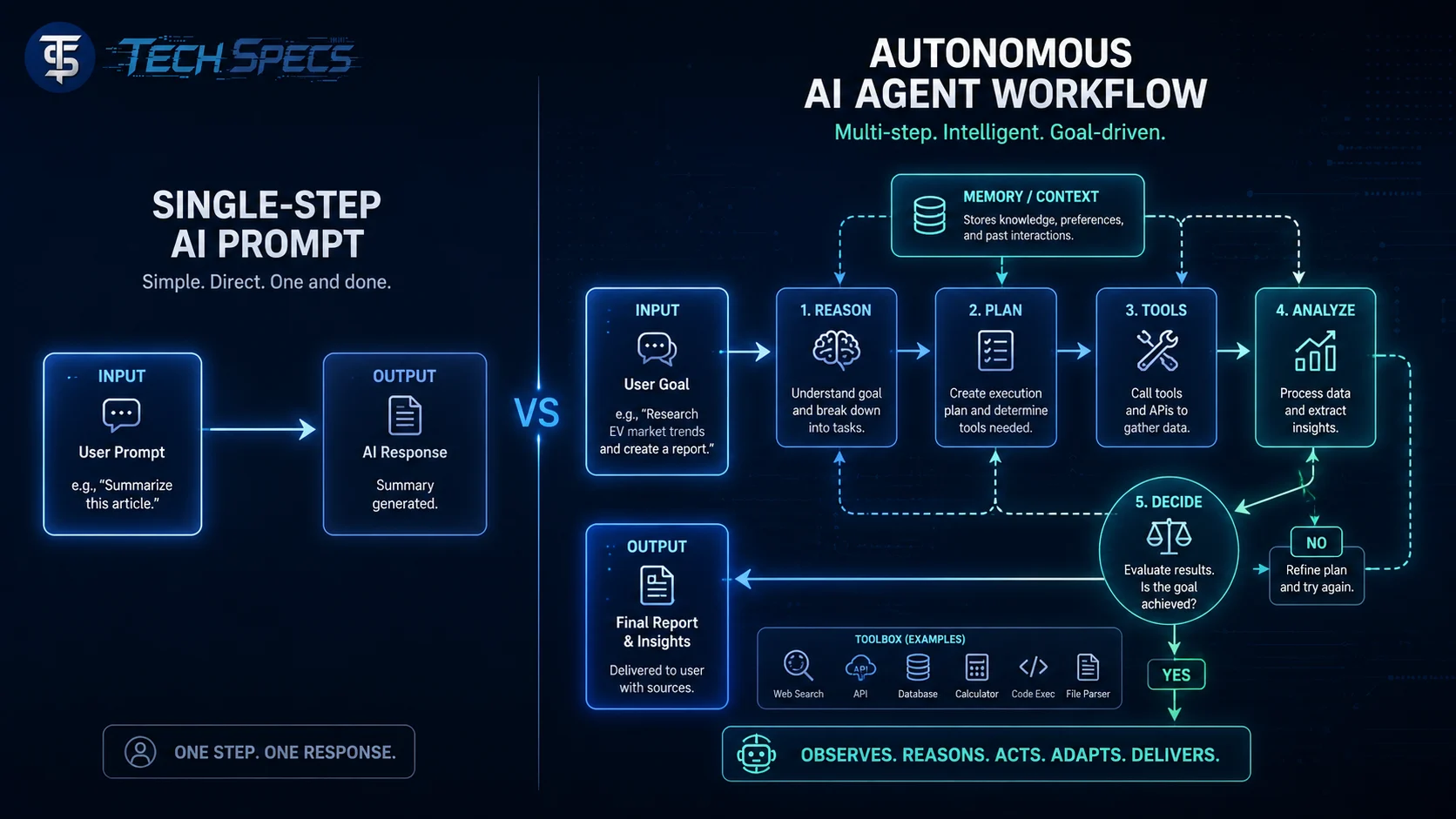
Before getting into costs, it is worth quickly clarifying what we mean by agentic AI. Unlike standard AI tools that respond to a single prompt and stop, agentic AI systems can take on goals, break them into steps, use tools and external data, and execute sequences of actions across multiple rounds of reasoning. Think of the difference between asking an assistant to write one email versus giving them a project and letting them manage it through to completion.
That fundamental difference is exactly why agentic AI pricing does not follow the same rules as basic AI subscriptions or chatbot tools.
With a standard AI tool, you pay per prompt or per month for a fixed feature set. With agentic AI, the system might run dozens of reasoning loops, call external APIs, process large data sets, and complete tasks that take minutes or hours of compute time. All of that activity adds up, and providers have to account for it in how they structure their pricing.
This is also why comparing agentic AI pricing across providers requires a slightly different approach than comparing, say, two project management tools. You need to understand not just the sticker price, but what the system actually does when it is running and how that translates to your bill.
The Main Agentic AI Pricing Models Explained
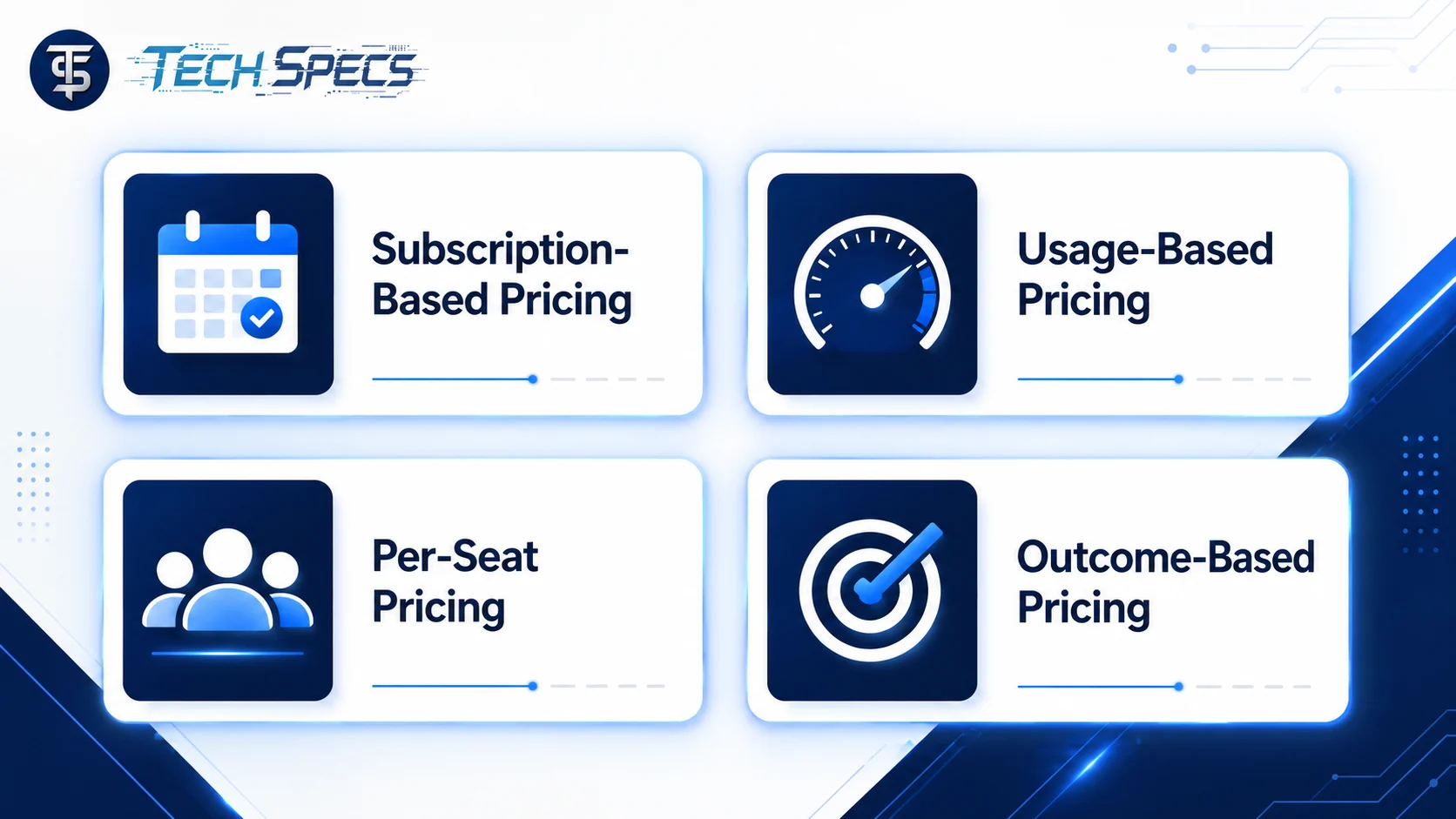
Most agentic AI platforms use one of four core pricing structures, or a hybrid of several. Here is what each one means for your business.
1. Subscription-Based Pricing
This is the most familiar model. You pay a flat monthly or annual fee and get access to a defined set of features, agent runs, or usage limits. Some platforms offer tiered subscriptions: a starter plan for individuals or small teams, a growth tier for scaling businesses, and an enterprise plan with custom limits and dedicated support.
Subscription pricing is predictable, which makes budgeting straightforward. The trade-off is that you may end up paying for capacity you do not use, especially in the early stages when you are still figuring out where agentic AI fits in your workflow.
2. Usage-Based or Pay-Per-Use Pricing
Here, you pay based on what you actually consume: number of agent runs, tokens processed, API calls made, or tasks completed. This model is common among platforms built on top of large language models, where compute costs are directly tied to usage.
Usage-based pricing sounds appealing because you only pay for what you use. But it can lead to bill shock if your agents are running longer task chains than expected, or if your team scales usage quickly without clear governance in place. Always look for usage dashboards and alert systems before committing to this model.
3. Per-Seat or Per-User Pricing
Some agentic AI platforms charge based on the number of users accessing the system. This is more common in enterprise-focused tools where the AI agent is embedded within a broader platform like a CRM, customer support system, or internal knowledge base.
Per-seat pricing works well when usage is fairly consistent across your team. It becomes expensive when only a handful of people are heavy users, while others barely log in.
4. Outcome-Based or Task-Based Pricing
This is an emerging model where you pay per completed task or per achieved outcome rather than for raw compute. It is still uncommon, but is increasingly being explored by providers who want to align their incentives more directly with the value they deliver.
Outcome-based pricing is attractive in theory, but the definitions of what counts as a “completed task” or “successful outcome” need to be crystal clear before you sign anything.
Breaking Down the Real Cost of Agentic AI
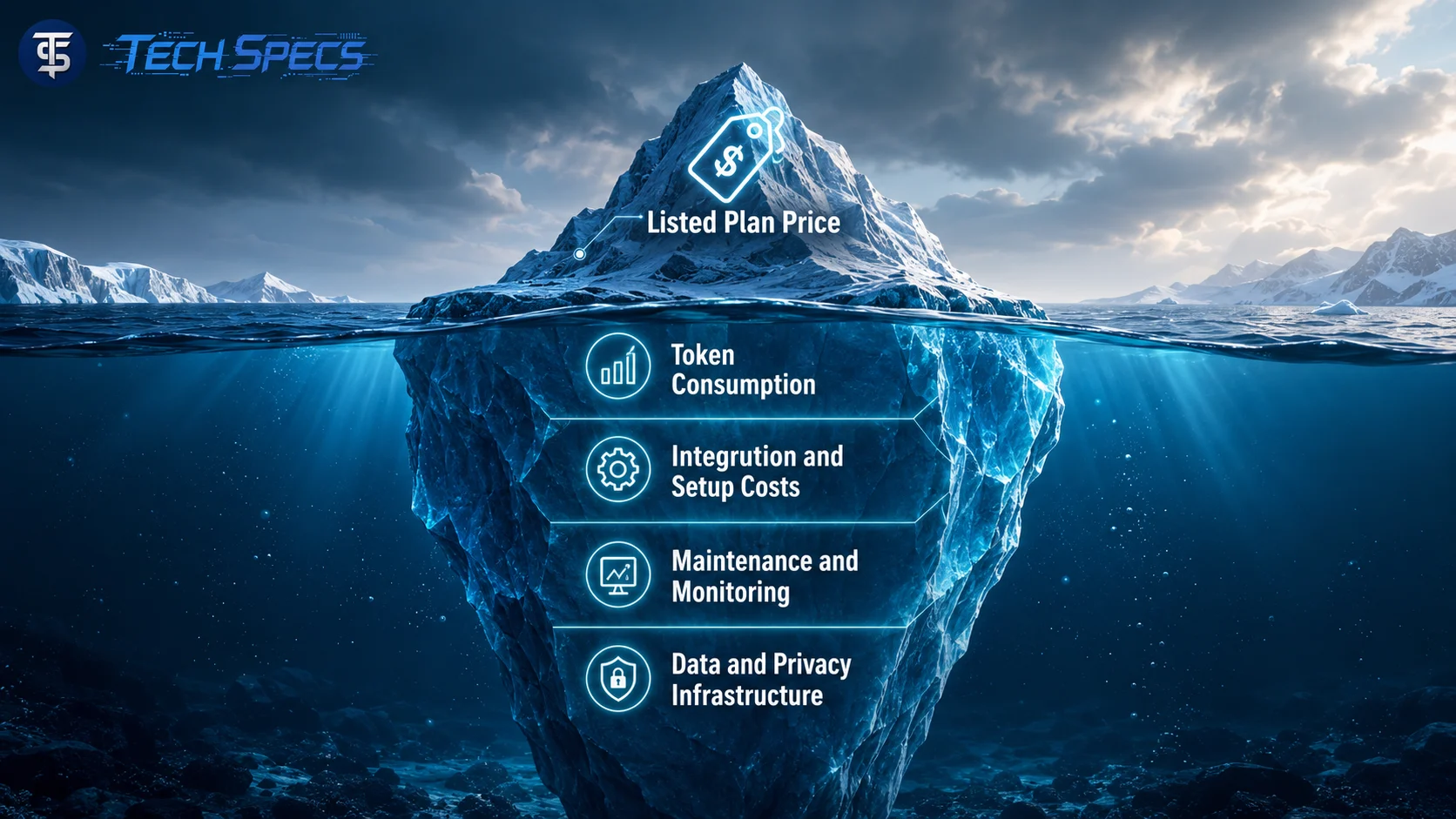
The listed price on a pricing page is rarely the full story. Here is where businesses frequently get caught off guard.
Token Consumption Runs Deeper Than You Think
Agentic AI systems are fundamentally token-intensive. Every step in a reasoning chain, every tool call, and every piece of context passed between steps consumes tokens. A task that looks simple on the surface can generate thousands of tokens behind the scenes. If you are on a usage-based plan, those tokens are being counted and billed.
Before committing to any plan, ask providers for realistic estimates of token consumption on tasks similar to your use cases. Better yet, run a controlled pilot and measure it yourself.
Integration and Setup Costs
Most agentic AI platforms do not drop into your existing tech stack without some configuration. You will likely need developer time, API setup, and possibly custom workflow design. Some enterprise plans include implementation support, but many starter and mid-tier plans leave this entirely to you.
Factor in a realistic estimate of internal engineering hours or freelance costs when calculating the total cost of ownership.
Maintenance and Monitoring
Agentic AI systems do not run themselves indefinitely without oversight. Tasks fail, edge cases emerge, and agent behavior needs to be reviewed and adjusted over time. Someone on your team needs to own this responsibility, and that time has a cost, even if it is not showing up on your invoice.
Data and Privacy Infrastructure
If your use case involves sensitive customer or business data, you may need to pay for additional security tiers, private deployment options, or compliance certifications. These are not always included in standard plans and can be costly for regulated industries such as finance, healthcare, or legal services.
How to Compare Agentic AI Pricing Plans Without Getting Lost
There are a few frameworks that make it much easier to compare options objectively.
Start With Your Use Case, Not the Feature List
Every provider will tell you their platform can do everything. Instead of evaluating features in isolation, map your actual workflow first. What tasks do you want the agent to handle? How frequently will those tasks run? How complex are they in terms of data access, reasoning steps, and external tool use?
Once you have a clear picture of your use case, you can pressure-test each pricing plan against that specific reality rather than against a theoretical maximum.
Calculate Cost Per Outcome, Not Cost Per Month
The monthly price means very little without context. What you really want to know is: what does it cost to complete one meaningful unit of work? If one agentic AI plan costs $200 a month and handles 500 tasks, while another costs $150 a month but handles only 100 tasks, the second option is significantly more expensive per outcome despite the lower headline price.
This sounds obvious, but is easy to miss when you are comparing polished pricing pages.
Look at the Limits, Not Just the Price
Every pricing tier has constraints. These might include limits on:
- Number of agent runs per month
- Maximum task duration or steps per run
- Number of integrations or connected tools
- Data storage or memory retention
- Number of users or seats
- Access to priority compute or support response times
A plan that looks affordable can become restrictive very quickly once you hit those limits. Always read the fine print on what happens when you exceed them. In many cases, usage overage fees kick in and they are rarely cheap.
Ask About Scaling Before You Need to Scale
What happens to your pricing when your usage doubles? Can you scale up gradually, or does the pricing jump in large increments between tiers? Is there a smooth path from a startup plan to an enterprise plan, or does it require a full renegotiation?
Providers who make scaling complicated or expensive are a red flag, especially in a fast-moving technology space where your usage needs can shift quickly.
Agentic AI Pricing by Business Size
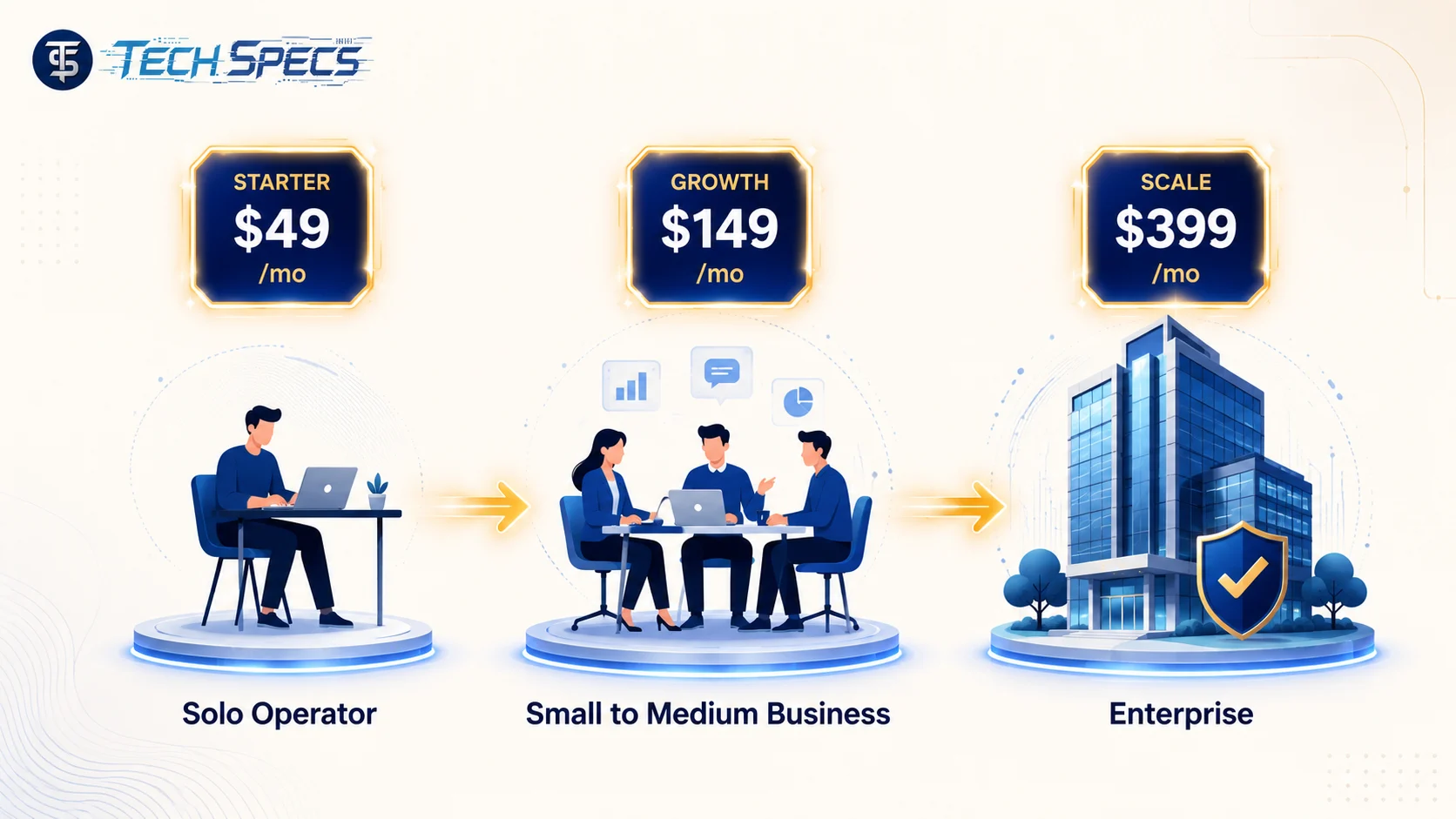
The right pricing structure genuinely depends on where your business is today. Here is a practical breakdown.
Solo Operators and Freelancers
If you are using agentic AI as an individual, your priority is low entry cost and flexibility. Look for plans with a free tier or a low-cost entry plan that lets you experiment without significant financial commitment. Pay-per-use models often work well here because your usage will be irregular, and you do not want to pay for a high-capacity subscription when you only need it occasionally.
Key things to prioritize: free trial availability, low minimum spend, and good documentation so you can set things up without needing external support.
Small to Medium Businesses
At this level, consistency and predictability become more important. You want a plan that can handle your regular operational workload without surprise costs. Subscription tiers tend to work well here, especially if you can forecast your usage reasonably accurately.
Look for plans that include at least basic usage analytics, some level of customer support, and clear upgrade paths. Also pay attention to whether the platform supports the integrations your existing tools rely on, since that will determine how much additional setup work is required.
Enterprise Teams
Enterprise agentic AI pricing is almost always custom, which means the negotiation process matters as much as the initial quote. At this level, you have real leverage: usage commitments, multi-year contracts, and bundled seat licenses can all bring unit costs down significantly.
Beyond price, enterprise buyers should prioritize:
- SLA guarantees and uptime commitments
- Dedicated support and account management
- Private deployment or data residency options
- Compliance and security certifications relevant to your industry
- Audit logging and governance controls
Do not rush the evaluation process at this level. The cost of a poor fit is not just financial: it includes migration risk, retraining time, and the opportunity cost of delayed deployment.
Questions to Ask Every Agentic AI Provider Before Buying
Regardless of your business size, these questions will help you cut through the marketing and get to the information that actually matters.
- What is included in each pricing tier and what triggers an overage charge?
- How are tokens or compute units counted for multi-step agent tasks?
- What does the onboarding and implementation process look like, and is support included?
- How is pricing expected to change as the platform scales or as AI costs evolve?
- What are the data retention and privacy policies for tasks processed through the system?
- Is there a sandbox or trial environment where I can test real workflows before committing?
- What happens to my data and workflows if I decide to cancel or switch providers?
Providers who answer these questions clearly and confidently are generally the ones worth trusting with your operations.
Red Flags to Watch in Agentic AI Pricing
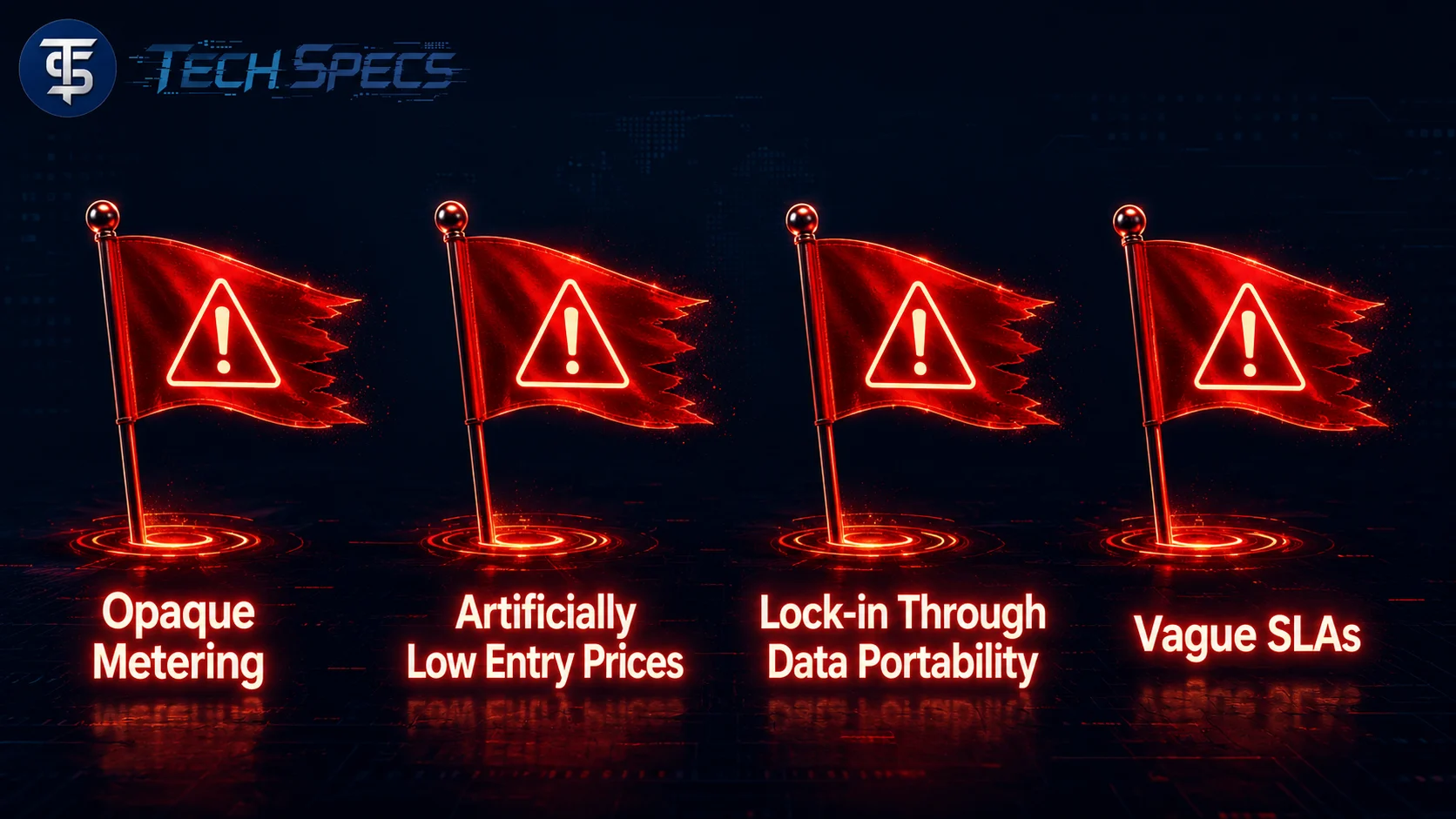
Not every pricing structure is designed with your best interests in mind. Watch out for these warning signs.
Opaque Metering: If a provider cannot clearly explain how usage is measured and billed, that ambiguity will almost always cost you money down the line.
Artificially Low Entry Prices: Some platforms offer very cheap starter plans that are essentially unusable at real scale. They are designed to get you set up and reliant on the platform before the real costs kick in.
Lock-in Through Data Portability: If your workflows, agent configurations, or task history cannot be easily exported, you are effectively locked in. That gives the provider significant pricing leverage at renewal time.
Vague SLAs: If uptime and performance guarantees are absent or buried in legal language, do not assume they apply. Always ask for explicit commitments in writing before signing.
The Long-Term Value Perspective
Here is something worth sitting with: the question is not really whether agentic AI pricing is affordable today. It is whether the value delivered over time justifies the investment relative to alternatives.
A well-deployed agentic AI system that handles research, reporting, customer communication, or operational tasks can free up significant human capacity. The real calculation is not “does this cost $X per month?” but “does this replace or enhance work that currently costs us $Y per month?”
When you frame agentic AI pricing through the lens of what it actually replaces or enables, the math often looks very different from the surface-level cost comparison.
Choosing the Right Plan: A Practical Checklist
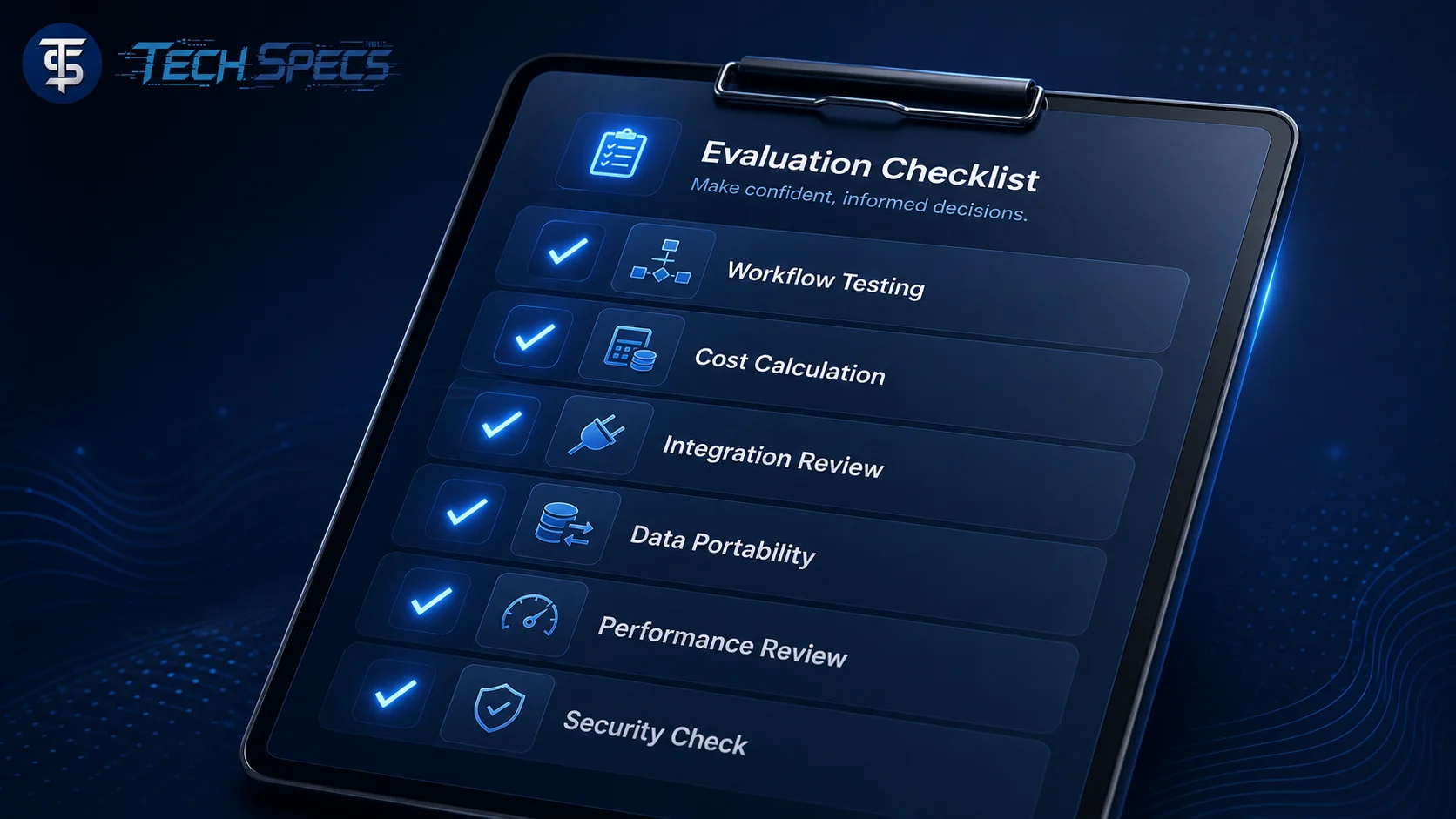
Before making a final decision on any agentic AI pricing plan, run through this checklist:
- You have clearly defined the tasks you want the agent to handle
- You have estimated realistic usage volumes based on those tasks
- You have calculated the cost per outcome rather than just the monthly price
- You have reviewed what happens at or above usage limits
- You have tested the platform with your actual workflows during a trial period
- You have asked about scaling paths and pricing stability over time
- You have evaluated integration requirements and factored in setup costs
- You have reviewed data portability and exit terms
Ticking every box on that list will not guarantee a perfect outcome, but it will dramatically reduce the risk of choosing a plan that looks right on paper and fails in practice.
Final Thoughts
Agentic AI pricing is one of those areas where the complexity is real but entirely manageable once you know what you are actually evaluating. The technology is moving fast, providers are still figuring out sustainable pricing models, and that creates both risk and opportunity for buyers.
The businesses that will get the most out of agentic AI are the ones that approach the pricing conversation with clarity: clear about their use cases, clear about their budget constraints, and clear about the value they need the investment to deliver.
Do not buy based on hype. Do not avoid the technology based on sticker shock. Do the work to understand what you are actually getting, hold providers to clear and honest answers, and choose a plan that fits where your business is today with a realistic path to where it needs to go.
That is how you make agentic AI pricing work in your favor.
Subscribe now or find us on Google.
Frequently Asked Questions
What is the average monthly cost of an agentic AI plan for a small business?
Agentic AI pricing for small businesses typically ranges from $50 to $500 per month depending on the platform, usage volume, and included features. Entry-level plans with limited agent runs can start much lower, while more capable platforms with high usage allowances sit at the higher end of that range.
Is there a free plan available for agentic AI tools?
Several agentic AI platforms offer free tiers with limited usage, making them useful for testing and small-scale exploration. However, most free plans come with meaningful restrictions on agent runs, task complexity, or data access that make them unsuitable for regular business operations.
What is the difference between token-based and task-based agentic AI pricing?
Token-based pricing charges you based on the volume of text and data processed during agent tasks. Task-based pricing charges per completed unit of work, regardless of the underlying compute. Token pricing gives you more granularity but requires closer monitoring, while task pricing is simpler but can vary widely depending on how providers define a “task.”
How do I avoid unexpected charges with agentic AI pricing?
Set up usage alerts and spending caps where available, understand exactly what actions trigger billing events, and run test workflows before deploying at scale. Choosing platforms with transparent dashboards and predictable pricing structures also reduces the risk of bill shock.
Is enterprise agentic AI pricing always custom?
Not always, but in most cases enterprise-grade plans with higher usage limits, dedicated support, and compliance features are priced through direct negotiation rather than public pricing pages. This gives enterprise buyers room to negotiate based on usage commitments and contract length.
Can agentic AI pricing change after I sign up?
Yes. Most providers reserve the right to adjust pricing, especially in a rapidly evolving technology space. Annual contracts typically lock in your rate for the contract period, while month-to-month plans carry more pricing flexibility for the provider. Always review renewal terms carefully.
What industries benefit most from investing in agentic AI despite the cost?
Industries with high volumes of repetitive, structured tasks tend to see the strongest ROI: financial services, healthcare administration, legal document processing, e-commerce operations, and customer support. The stronger the case for automation in your workflow, the more defensible the agentic AI pricing investment becomes.
How does agentic AI pricing compare to hiring a human assistant?
For many task types, agentic AI can perform work at a fraction of the ongoing cost of a full-time hire. The comparison depends heavily on task complexity and the level of human judgment required. Agentic AI excels at high-volume, structured tasks and struggles with nuanced decision-making that requires real-world context or interpersonal skill.