


AI agent management is becoming a serious business priority in 2026. Companies are no longer testing one simple chatbot. They are building multiple enterprise AI agents for sales, service, HR, IT, finance, operations, customer support, and workflow automation.
But the more AI agents a company creates, the harder they become to manage. Businesses need platforms that can help them build agents, connect data, control permissions, monitor performance, manage risks, and improve agent orchestration.
That is why AI agent platforms are now moving beyond “agent builders.” The best AI agent management platforms help companies control the full lifecycle of enterprise AI agents, from design and testing to deployment, governance, monitoring, and optimization.
Why AI Agent Management Matters in 2026
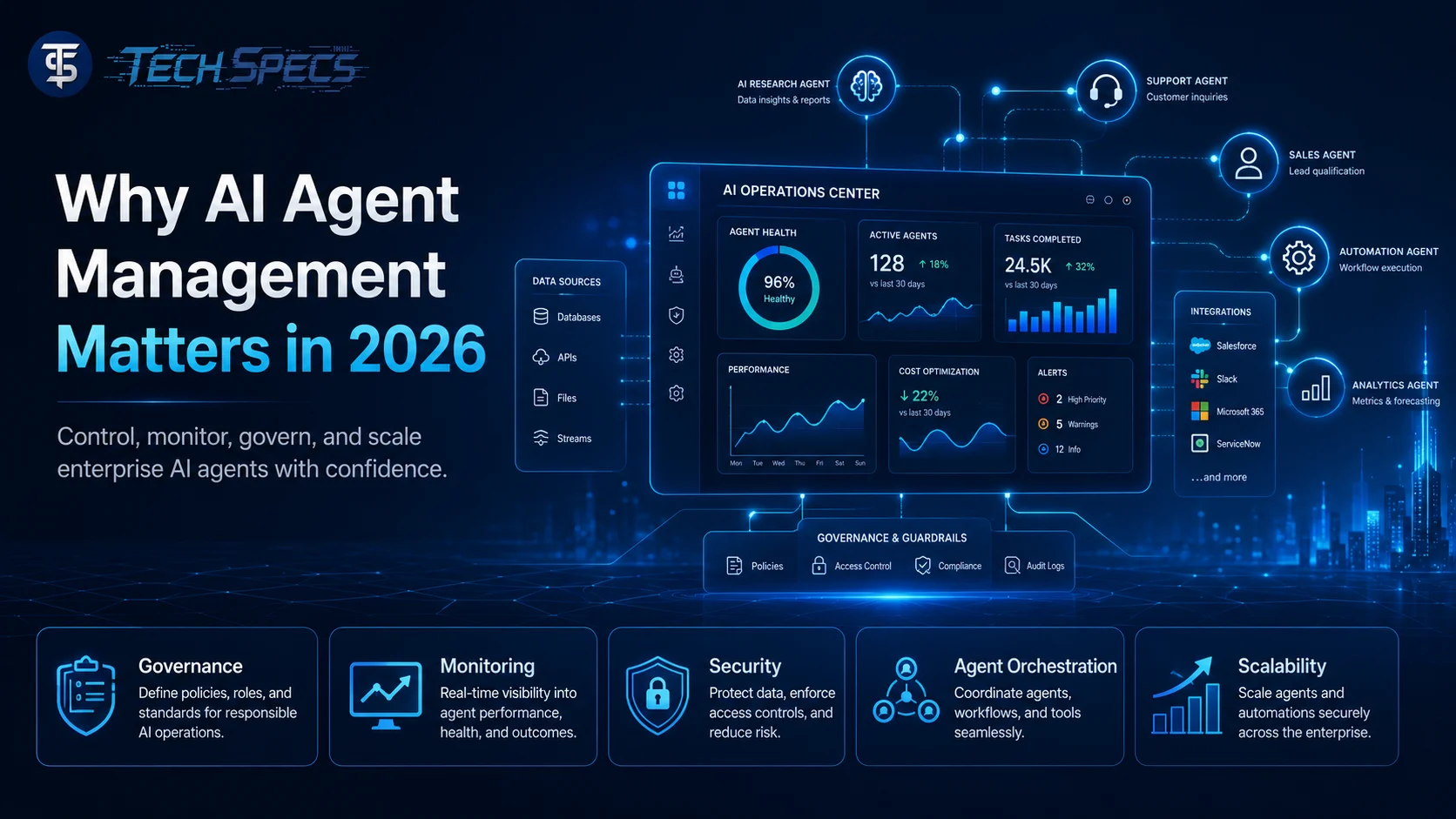
AI agent management matters because enterprise AI agents can take actions, access tools, use business data, and influence workflows. Without proper management, companies may face inconsistent answers, weak security, poor visibility, wrong tool usage, compliance issues, and disconnected agent workflows.
A strong AI agent management platform helps teams:
- Build custom AI agents
- Connect agents with business data
- Manage access and permissions
- Monitor agent activity
- Improve agent performance
- Orchestrate multi-step workflows
- Govern enterprise AI agents
- Track business value
- Scale AI agent tools across departments
In short, AI agent management helps companies move from scattered AI experiments to controlled, secure, and useful enterprise automation.
1. Microsoft Copilot Studio
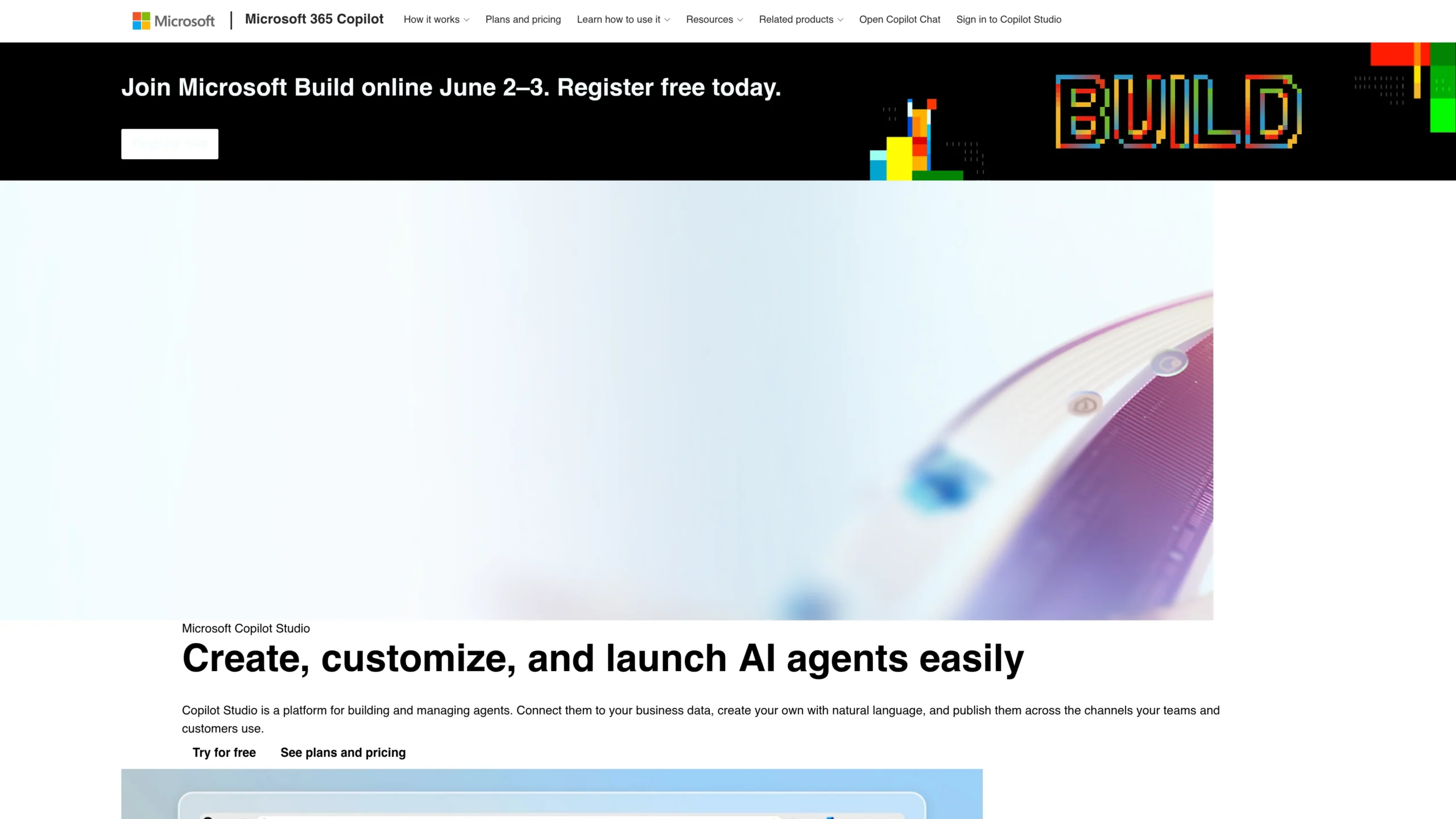
Microsoft Copilot Studio is one of the most practical AI agent management platforms for companies already using Microsoft 365, Teams, SharePoint, Dynamics, and Power Platform. Microsoft describes Copilot Studio as a platform for building and managing agents, connecting them to business data, and publishing them across channels used by teams and customers.
It is especially useful for enterprise AI agents because many organizations already store documents, conversations, workflows, and business data inside Microsoft tools. This makes Copilot Studio a strong option for internal support agents, HR agents, IT helpdesk agents, sales assistants, and customer-facing AI tools.
Microsoft Copilot Studio helps businesses create custom agents with natural language and connect them to company data.
It is best for organizations that want AI agent management inside the Microsoft ecosystem.
Features
- Low-code agent building
- Natural language agent creation
- Microsoft 365 integration
- Business data connections
- Multi-channel publishing
- Agent governance options
- Workflow support through Microsoft tools
Free Features
- Free trial options may be available
- Microsoft learning resources
- Agent readiness resources
- Basic product exploration
Pro Features
- Enterprise-grade agent deployment
- Microsoft 365 Copilot integration
- Advanced connectors
- Admin and governance controls
- Power Platform workflow integration
Best For
Microsoft 365 users, enterprise teams, HR, IT, support, and internal knowledge management.
Limitations
- Best value comes inside the Microsoft ecosystem
- Advanced workflows may need Power Platform knowledge
- Licensing can be complex for larger organizations
Best Use Cases
- Employee support agents
- HR policy assistants
- IT helpdesk agents
- Sales support agents
- Internal knowledge search
- Microsoft Teams-based AI agents
2. OpenAI AgentKit
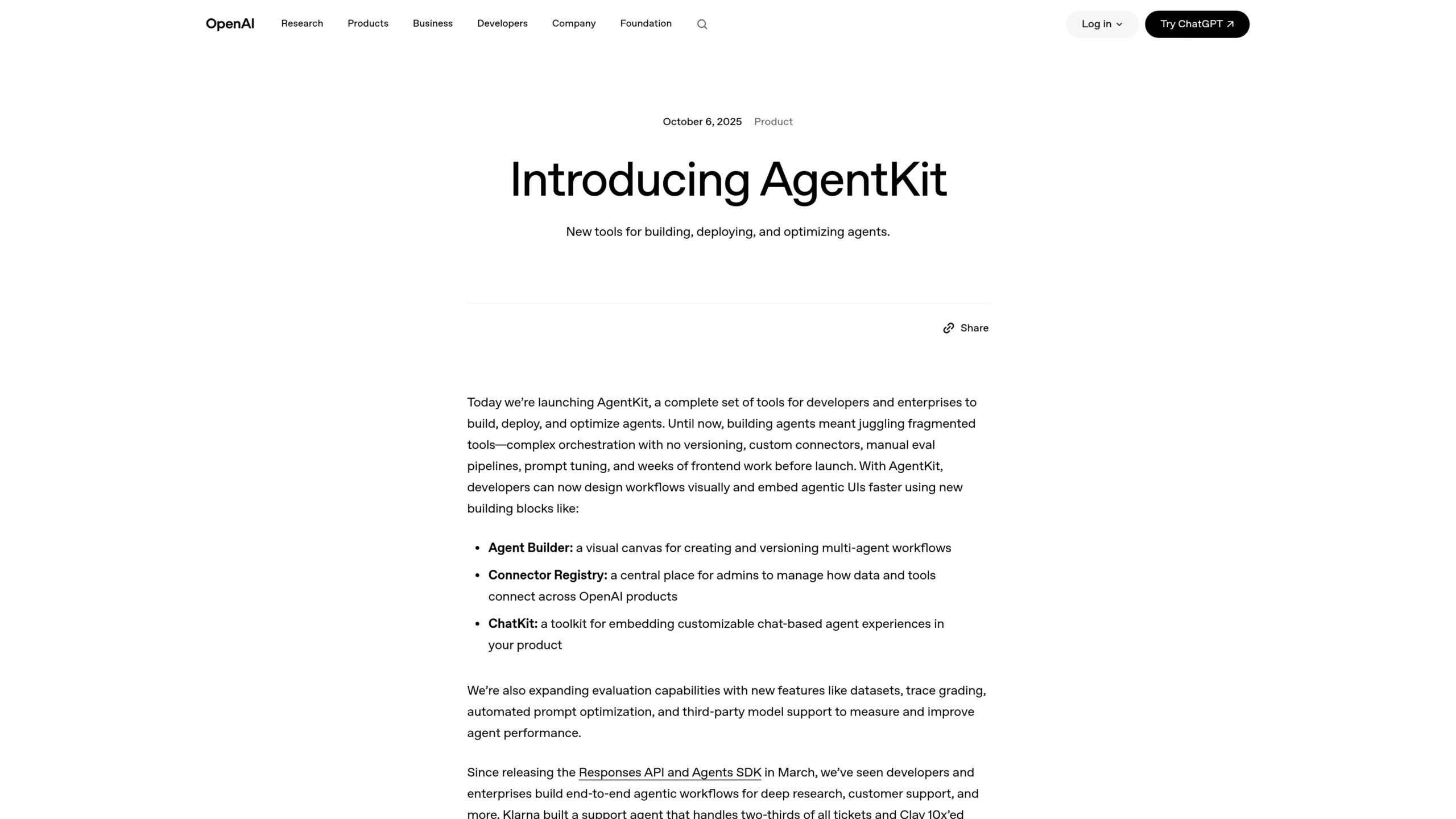
OpenAI AgentKit is designed for developers and enterprises that want to build, deploy, and optimize agents. OpenAI describes AgentKit as a complete set of tools for building, deploying, and optimizing agents, including Agent Builder, Connector Registry, ChatKit, and evaluation capabilities.
For AI agent management, OpenAI AgentKit is useful when a company needs flexible agent design, visual workflow creation, agentic user interfaces, evaluation pipelines, and production-ready AI agent tools.
OpenAI AgentKit gives teams the building blocks to create and manage advanced AI agents.
It is best for businesses that need flexible custom AI agent development and strong optimization tools.
Features
- Agent Builder for visual workflows
- Connector Registry
- ChatKit for agentic interfaces
- Evaluation tools
- Workflow versioning support
- Model and tool orchestration
- Flexible developer-first architecture
Free Features
- Developer documentation
- Example agent workflows
- API guides
- Prototyping resources
Pro Features
- Production agent deployment
- Advanced evaluations
- Enterprise integrations
- Custom agent workflows
- Agent optimization support
Best For
Developers, AI product teams, SaaS companies, enterprise AI teams, and custom AI solution builders.
Limitations
- More technical than simple no-code tools
- Production setup needs careful planning
- Advanced use may require developers
Best Use Cases
- Custom AI agent platforms
- Product-based AI agents
- Multi-step agent workflows
- Customer support agents
- AI copilots inside apps
- Agent testing and optimization
3. Google Gemini Enterprise Agent Platform
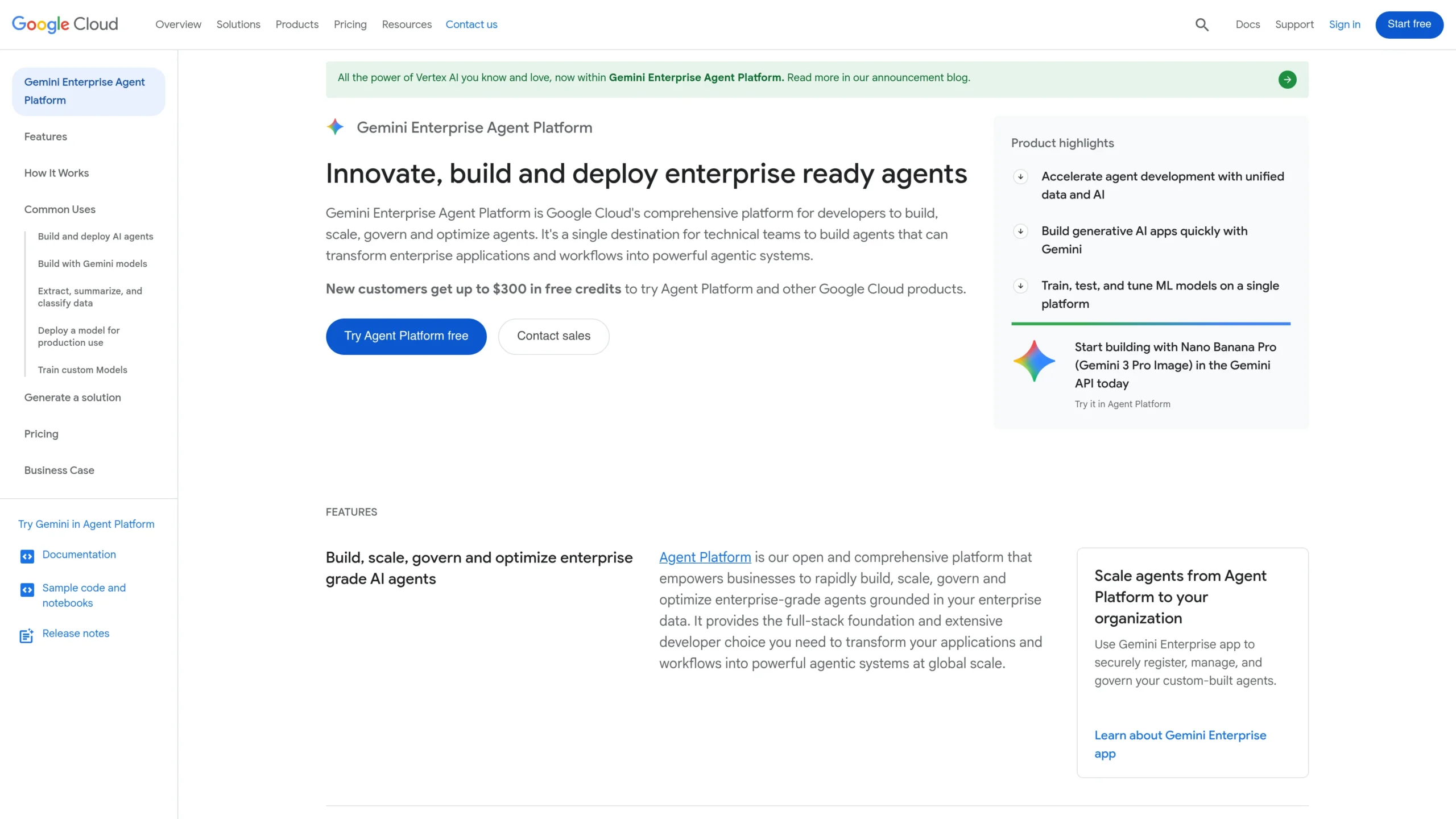
Google Gemini Enterprise Agent Platform is built for enterprise-grade AI agent development, deployment, governance, and optimization. Google describes it as a unified platform to build, deploy, govern, and optimize enterprise-grade AI agents and model-based solutions.
This makes it one of the strongest AI agent platforms for companies already using Google Cloud, Gemini models, Workspace, BigQuery, and cloud-native AI infrastructure.
Gemini Enterprise Agent Platform supports the full lifecycle of enterprise AI agents.
It is best for technical teams that need cloud-scale agent orchestration, governance, and optimization.
Features
- Enterprise AI agent development
- Agent deployment and governance
- Model selection and optimization
- Google Cloud integration
- Security and compliance support
- Agent lifecycle management
- DevOps and orchestration capabilities
Free Features
- Google Cloud credits may be available for new customers
- Documentation and codelabs
- Starter agent experiments
- Gemini model exploration
Pro Features
- Enterprise-grade deployment
- Advanced governance
- Agent optimization
- Cloud security controls
- Integration with Google Cloud services
Best For
Google Cloud users, AI engineering teams, data teams, and enterprise cloud teams.
Limitations
- Best for teams already familiar with Google Cloud
- More technical than simple AI agent builders
- Enterprise setup may require cloud architecture planning
Best Use Cases
- Cloud-native enterprise AI agents
- Data-connected AI assistants
- Google Workspace agents
- Enterprise agent governance
- AI and data pipeline agents
- Large-scale agent orchestration
4. Salesforce Agentforce
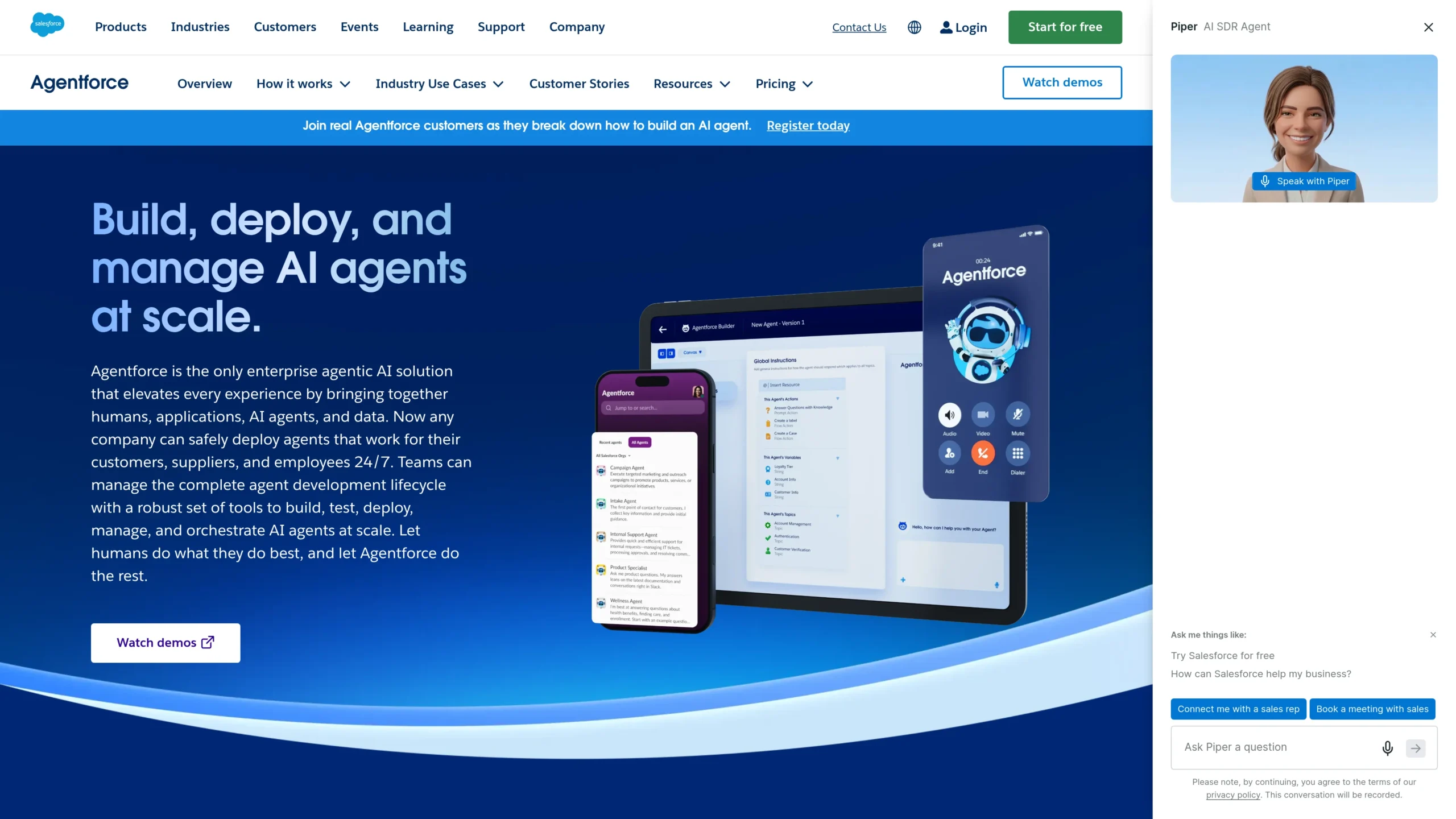
Salesforce Agentforce is one of the leading AI agent management platforms for CRM, sales, service, marketing, and customer experience workflows. Salesforce describes Agentforce as a platform for building and customizing autonomous AI agents that support employees and customers 24/7.
Agentforce is especially useful for businesses that already manage customer records, sales pipelines, service tickets, and marketing journeys inside Salesforce.
Salesforce Agentforce helps businesses build AI agents for sales, service, and customer operations.
It is best for companies that want enterprise AI agents connected to CRM data and customer workflows.
Features
- Autonomous CRM agents
- Sales and service agent support
- Business knowledge grounding
- Low-code and pro-code agent building
- Salesforce ecosystem integration
- Agent performance monitoring
- Customer and employee support automation
Free Features
- Salesforce learning resources
- Product demos
- Trial access may vary
- Agentforce educational content
Pro Features
- Enterprise CRM agent deployment
- Data Cloud integration
- Customer service automation
- Sales workflow automation
- Enterprise governance controls
Best For
Salesforce users, sales teams, service teams, CRM managers, and customer experience teams.
Limitations
- Best value comes inside Salesforce
- Enterprise pricing may be high for small teams
- Setup may require Salesforce expertise
Best Use Cases
- Sales follow-up agents
- Customer service agents
- Lead qualification agents
- CRM update automation
- Case management
- Customer support automation
5. ServiceNow AI Control Tower
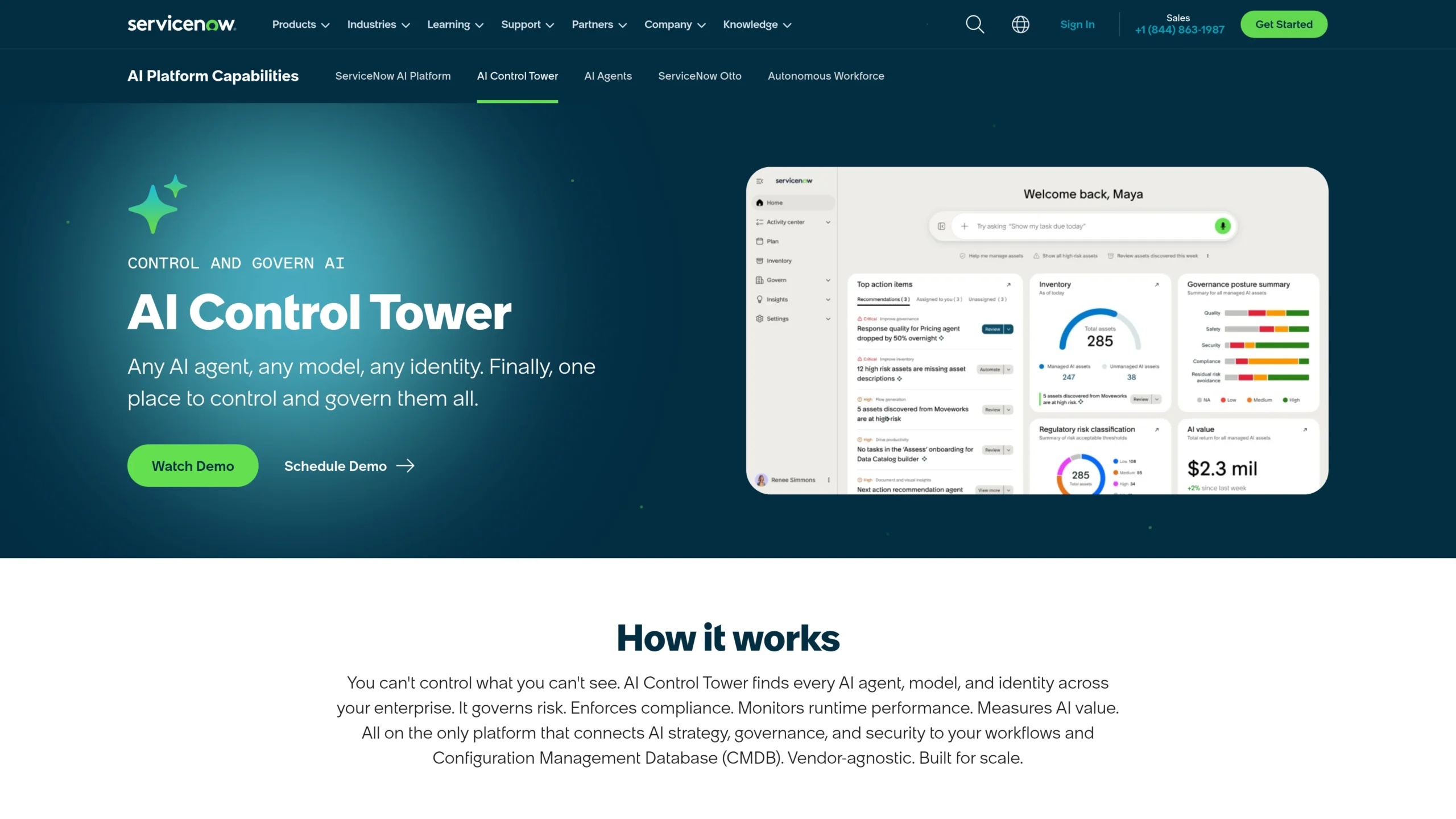
ServiceNow AI Control Tower is highly relevant for AI agent management because it focuses on visibility, governance, risk, compliance, runtime monitoring, and measuring AI value. ServiceNow says AI Control Tower finds AI agents, models, and identities across the enterprise, governs risk, enforces compliance, monitors runtime performance, and measures AI value.
This makes ServiceNow a strong option for large organizations that need to manage many enterprise AI agents across IT, HR, customer service, security, and operations.
ServiceNow AI Control Tower helps enterprises monitor and govern AI agents across the organization.
It is best for companies that need strong AI governance, performance tracking, and operational control.
Features
- Enterprise AI visibility
- AI agent discovery
- Runtime performance monitoring
- Risk and compliance governance
- AI value measurement
- Connection with ServiceNow workflows
- Vendor-agnostic oversight
Free Features
- Product information and demos
- Readiness resources
- Learning materials
- Use-case discovery
Pro Features
- Enterprise AI agent governance
- Runtime monitoring
- Compliance enforcement
- AI performance management
- Integration with ServiceNow CMDB and workflows
Best For
Large enterprises, IT leaders, security teams, compliance teams, and ServiceNow customers.
Limitations
- Best fit for enterprise environments
- May be too advanced for small businesses
- Implementation can require platform expertise
Best Use Cases
- AI agent governance
- AI risk management
- IT service agents
- HR service automation
- Enterprise service workflows
- Monitoring agent activity across departments
6. Amazon Bedrock AgentCore
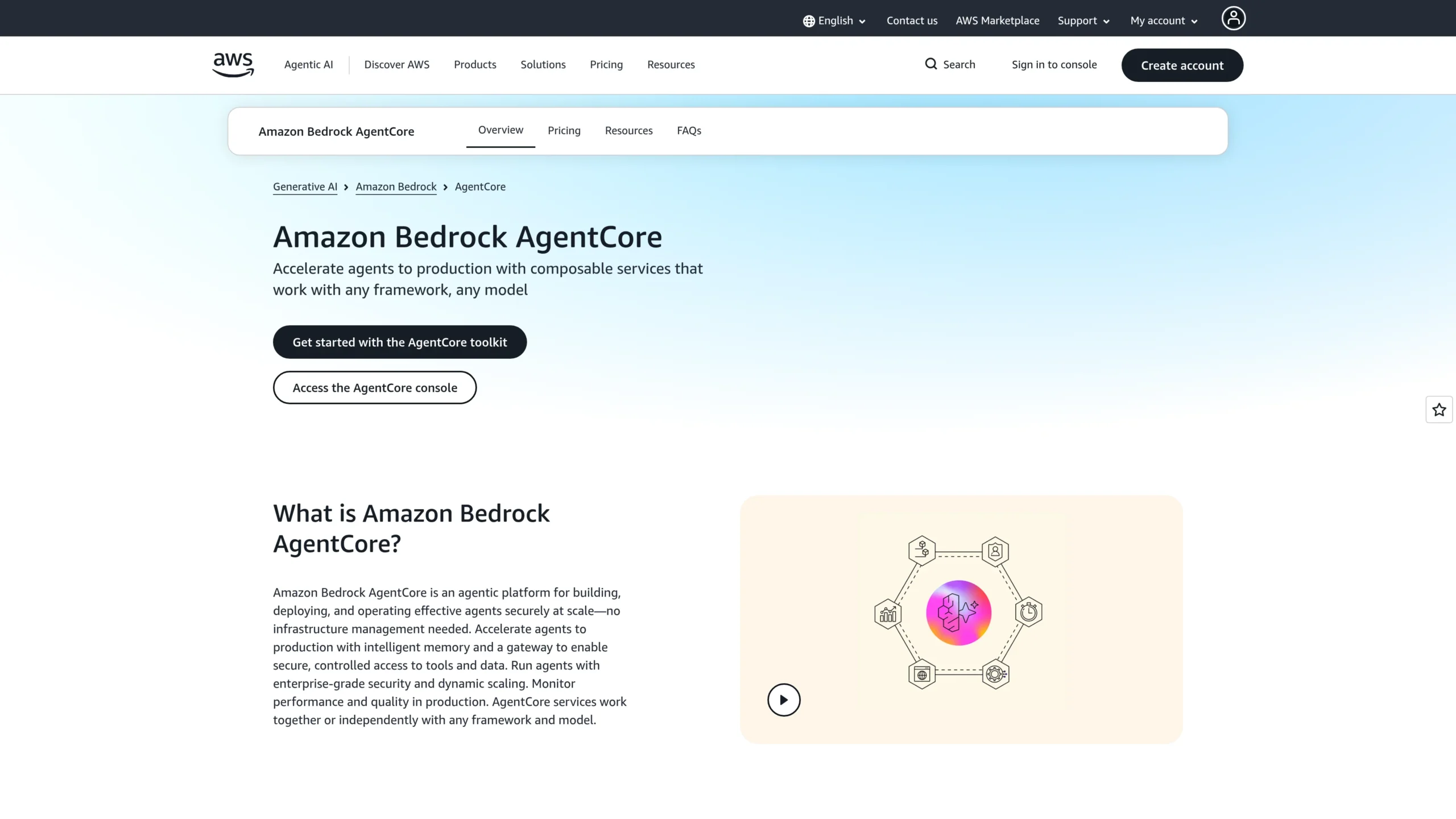
Amazon Bedrock AgentCore is built for deploying and operating AI agents securely at scale. AWS describes AgentCore as an agentic platform for building, deploying, and operating agents securely at scale, with memory, secure tool access, dynamic scaling, and production monitoring.
For AI agent management, AgentCore is strong because it helps technical teams move agents from prototypes into production with enterprise security and operational control.
Amazon Bedrock AgentCore helps teams build and operate production AI agents on AWS.
It is best for enterprises that need secure, scalable, cloud-native AI agent management.
Features
- Secure agent deployment
- Agent memory
- Tool and data access gateway
- Dynamic scaling
- Production monitoring
- Works with multiple frameworks and models
- AWS cloud infrastructure integration
Free Features
- AWS documentation
- Starter resources
- Prototyping support
- AWS credit options may vary
Pro Features
- Enterprise-scale deployment
- Secure production operations
- Advanced monitoring
- Agent runtime management
- AWS ecosystem integration
Best For
AWS users, cloud engineering teams, AI infrastructure teams, and enterprise application teams.
Limitations
- Requires AWS knowledge
- More technical than no-code platforms
- Pricing depends on cloud usage and architecture
Best Use Cases
- Production AI agents
- Secure internal automation
- API-connected agents
- Data-driven enterprise agents
- Cloud-native agent orchestration
- AI agents for SaaS applications
7. IBM Watsonx Orchestrate
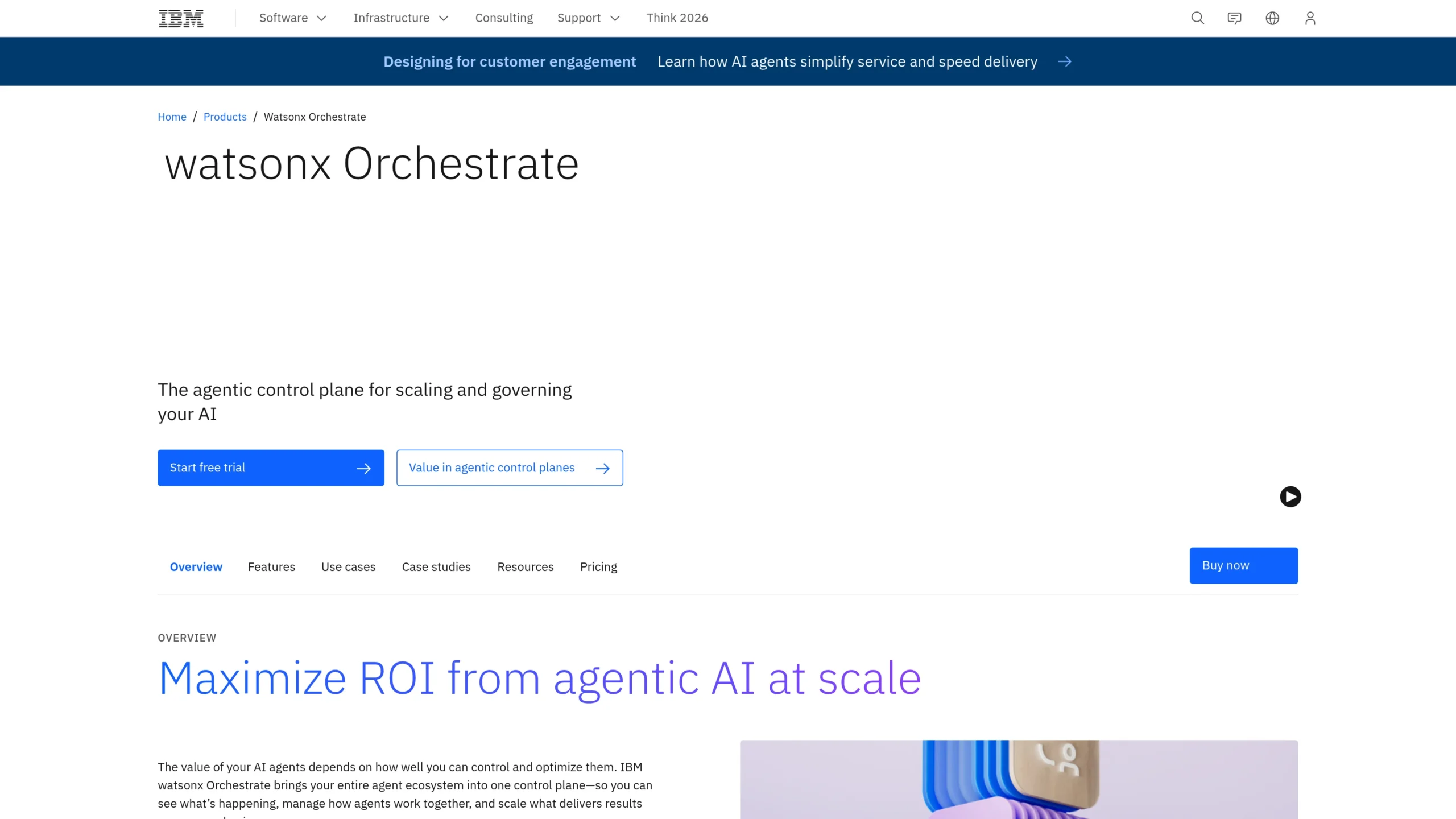
IBM Watsonx Orchestrate is designed to bring an organization’s agent ecosystem into one control plane. IBM says Watsonx Orchestrate helps businesses see what is happening, manage how agents work together, and scale what delivers results across the business.
This makes IBM a strong choice for enterprise AI agent management, especially for companies that want to manage multiple agents, automate workflows, and support agent orchestration across business functions.
IBM Watsonx Orchestrate helps businesses manage AI agents from one operational layer.
It is best for enterprises that want centralized control, governance, and agent collaboration.
Features
- Centralized agent control plane
- Agent ecosystem management
- Multi-agent coordination
- Business workflow automation
- Prebuilt AI agents
- Enterprise governance
- Scaling and performance support
Free Features
- Product resources
- Demos and educational content
- Trial availability may vary
- Prebuilt agent exploration
Pro Features
- Enterprise agent governance
- Multi-agent management
- Business automation workflows
- Centralized visibility
- Agent collaboration features
Best For
Large enterprises, operations teams, HR teams, procurement teams, and companies managing several AI agents.
Limitations
- Enterprise-focused platform
- Best value comes with IBM ecosystem adoption
- May require implementation support
Best Use Cases
- Multi-agent management
- HR automation
- Procurement automation
- Business operations agents
- Agent governance
- Enterprise AI scaling
8. UiPath Platform for Agentic Automation
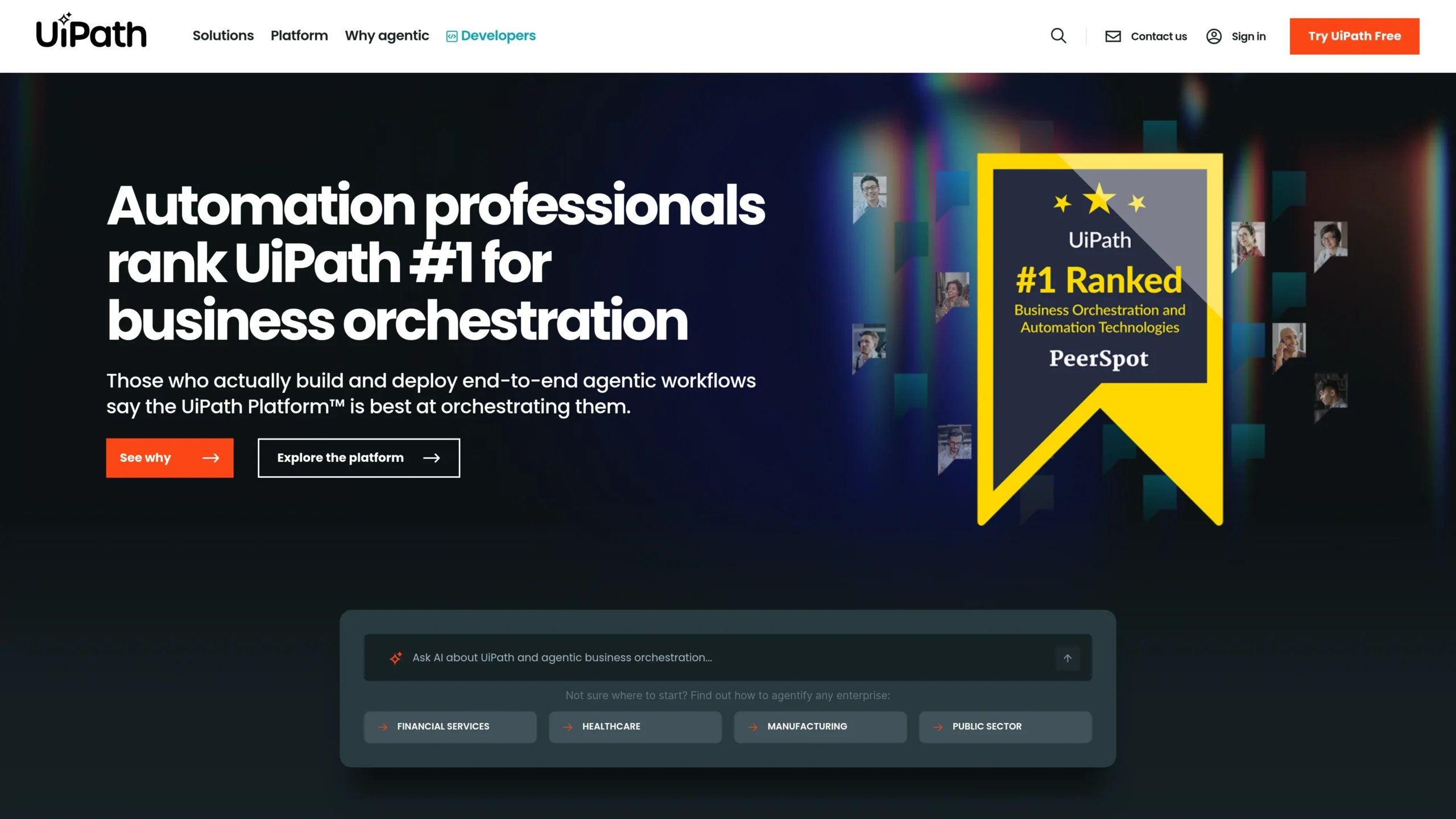
UiPath is well-known for automation, and its agentic automation platform brings together AI agents, robots, and people. UiPath describes its platform as agentic orchestration and automation for enterprise operations, with agents, robots, and teams working across business workflows.
For AI agent management, UiPath is especially useful when a company already uses RPA and wants to extend automation with enterprise AI agents.
UiPath helps companies manage agentic automation by combining AI agents, robots, and human workers.
It is best for process-heavy enterprises that want automation beyond simple AI chat.
Features
- Agentic automation
- AI agents and robots
- UiPath Maestro orchestration
- Human-in-the-loop workflows
- Process intelligence
- Enterprise governance
- Automation monitoring
Free Features
- Trial options may be available
- Community resources
- Learning academy
- Starter automation tools
Pro Features
- Enterprise orchestration
- Agent and robot management
- Advanced workflow automation
- Process monitoring
- Enterprise support and governance
Best For
RPA users, finance teams, operations teams, enterprise automation teams, and back-office workflows.
Limitations
- Best for mature automation programs
- Implementation may require process design
- More complex than simple no-code AI agent tools
Best Use Cases
- Finance automation
- Claims processing
- Document workflows
- Back-office automation
- Human approval workflows
- Agent and robot orchestration
9. Automation Anywhere
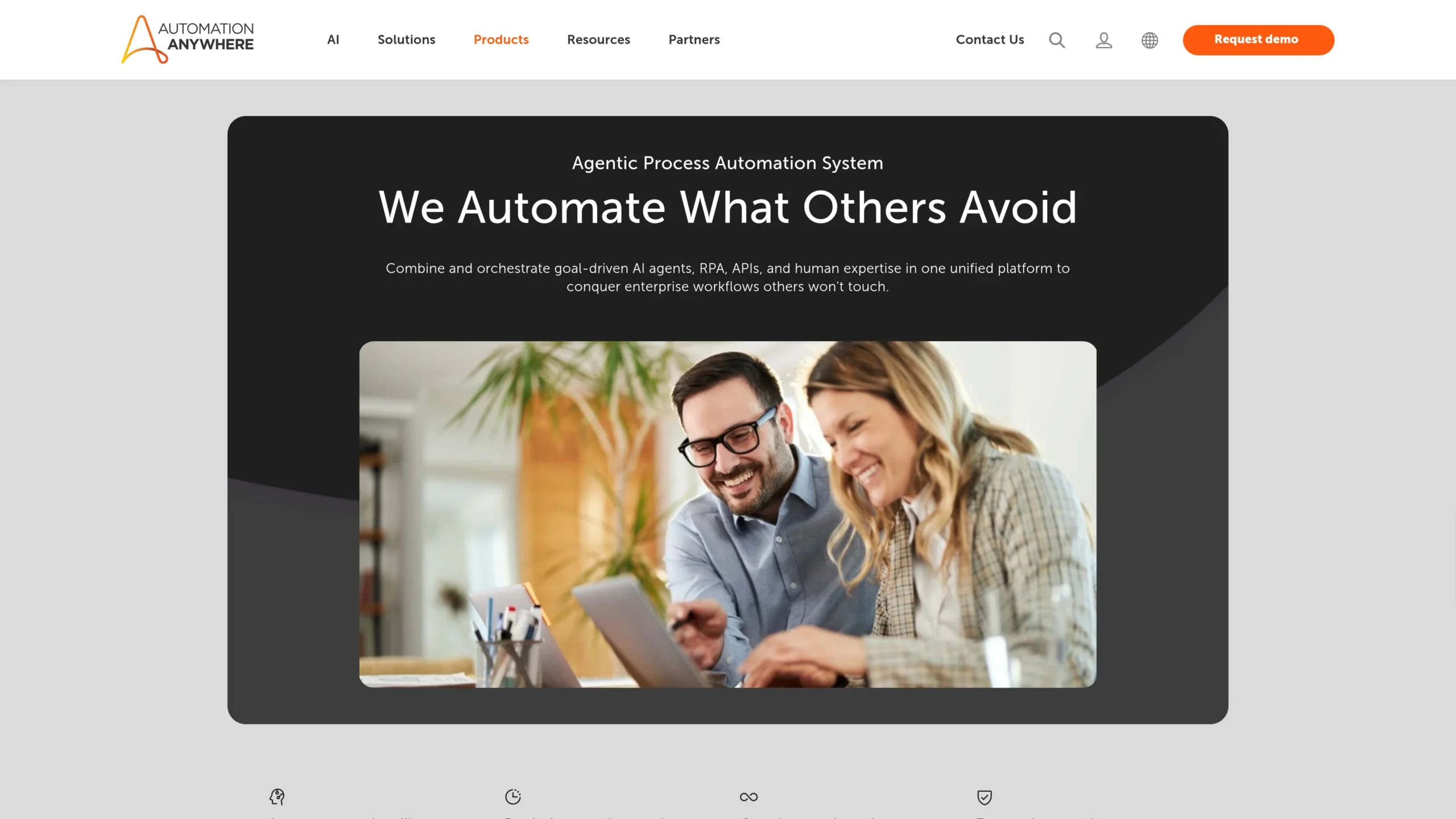
Automation Anywhere focuses on agentic process automation for enterprise workflows. The company describes its system as combining goal-driven AI agents with automation tools, governance, and enterprise context to orchestrate end-to-end workflows.
This makes it a strong AI agent management platform for businesses that want to move from traditional automation to agent-led process orchestration.
Automation Anywhere helps enterprises orchestrate AI agents, RPA, APIs, and human expertise.
It is best for complex business processes that need governance and end-to-end automation.
Features
- Agentic Process Automation
- Goal-driven AI agents
- Enterprise context
- Process Reasoning Engine
- RPA and API automation
- Human collaboration
- Governance and compliance
Free Features
- Product resources
- Demos
- Educational content
- Trial options may vary
Pro Features
- Enterprise process automation
- AI governance tools
- Advanced workflow orchestration
- Secure agent execution
- Prebuilt automation solutions
Best For
Large enterprises, process automation teams, operations leaders, finance teams, and IT automation teams.
Limitations
- Best suited for enterprise use
- Requires process mapping
- Maybe more than small teams need
Best Use Cases
- End-to-end workflow automation
- Finance operations
- IT service workflows
- Manufacturing operations
- Document processing
- Complex process orchestration
10. Workato Enterprise MCP
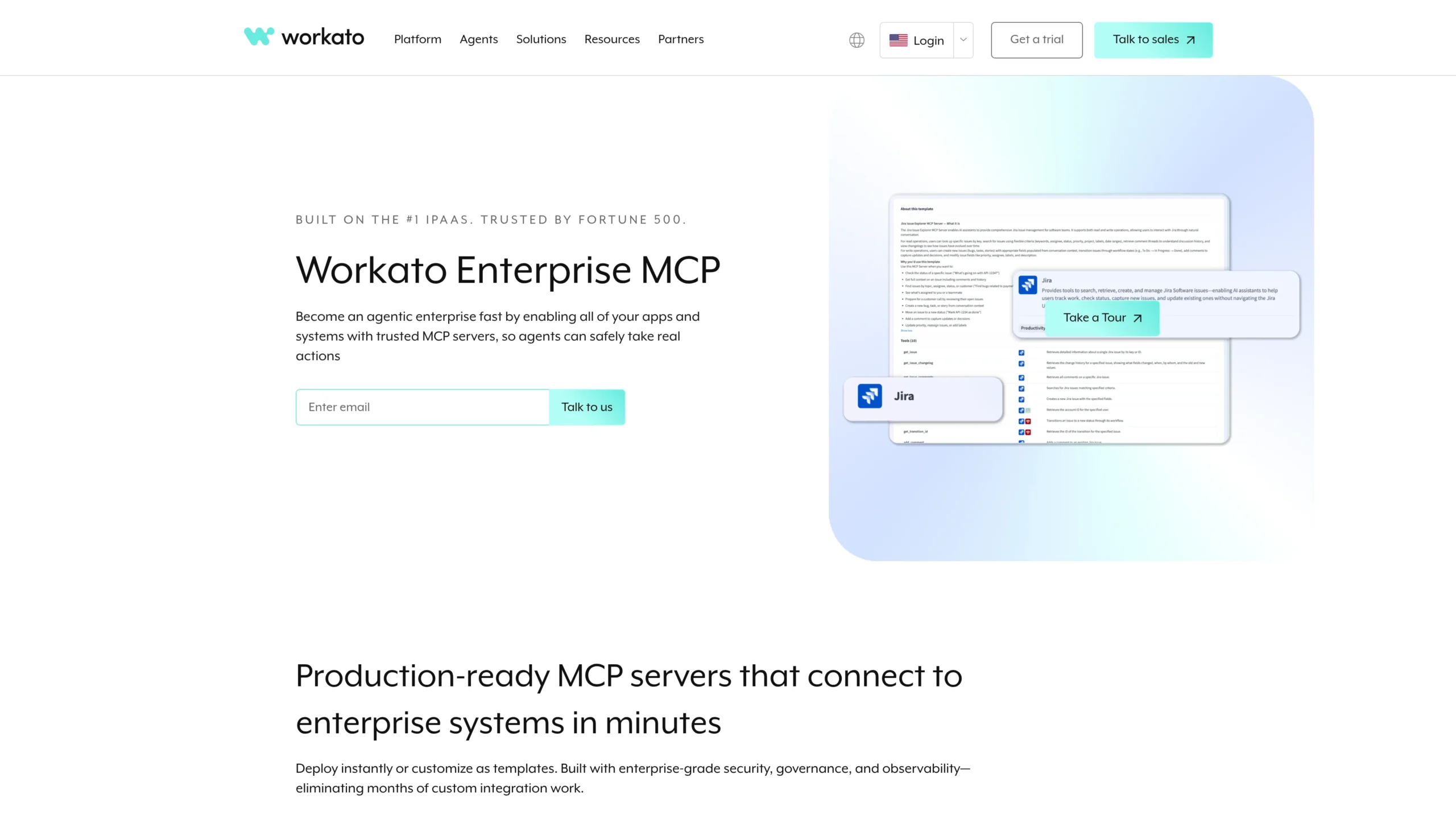
Workato Enterprise MCP is designed to connect AI agents with enterprise apps in a secure and governed way. Workato says its platform provides secure, governed access to thousands of apps, verified user access, unified orchestration, and centralized control for MCP-compatible agents.
For AI agent management, Workato is useful because many enterprises need agents to take action across business systems like CRM, ERP, support tools, finance tools, and communication platforms.
Workato helps businesses connect AI agents with enterprise applications and governed workflows.
It is best for companies that need secure agent orchestration across many SaaS tools.
Features
- Enterprise MCP
- Secure app access for AI agents
- Verified user access
- Unified gateway control
- App integration
- Workflow orchestration
- Governance and audit trails
Free Features
- Product demos
- Trial options may be available
- Learning resources
- Workflow templates
Pro Features
- Enterprise MCP governance
- Advanced app integrations
- Secure agent access
- Centralized control
- Enterprise workflow orchestration
Best For
SaaS-heavy enterprises, RevOps teams, IT teams, operations teams, and integration-focused companies.
Limitations
- Enterprise-focused pricing
- Works best when app integration is a major need
- Complex orchestration requires workflow planning
Best Use Cases
- Agent-to-app integration
- Sales workflow automation
- Finance app automation
- HR workflow automation
- Cross-app agent orchestration
- Enterprise MCP governance
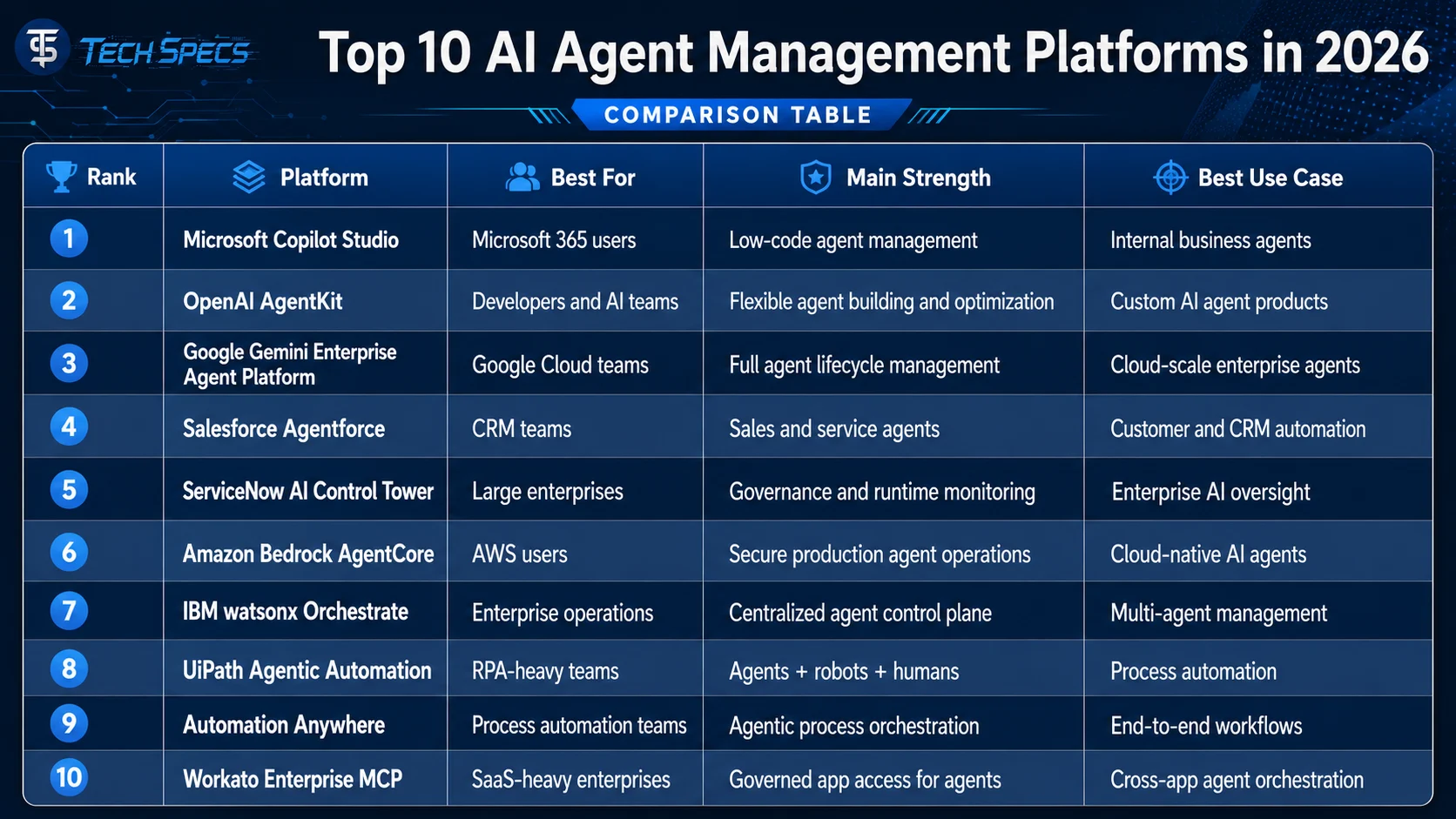
Top 10 AI Agent Management Platforms Comparison
How to Choose the Right AI Agent Management Platform
Choosing the right AI agent management platform depends on your current systems, team skill level, and automation goals.
- Choose Microsoft Copilot Studio if your business already works heavily in Microsoft 365.
- Choose OpenAI AgentKit if you need flexible custom AI agent tools and developer control.
- Choose Google Gemini Enterprise Agent Platform if your team needs cloud-scale agent lifecycle management.
- Choose Salesforce Agentforce if your main workflows are sales, service, CRM, and customer experience.
- Choose ServiceNow AI Control Tower if governance, monitoring, and compliance are your top priorities.
- Choose Amazon Bedrock AgentCore if you want to deploy and operate agents securely on AWS.
- Choose IBM WatsonX Orchestrate if you need a centralized control plane for multiple agents.
- Choose UiPath if your company already uses RPA and wants agentic automation.
- Choose Automation Anywhere if you need enterprise process orchestration with AI agents.
- Choose Workato if your agents need secure access to many business applications.
Recommendation
For most enterprises, the best AI agent management platform is the one that fits the systems the company already uses.
For Microsoft-based companies, Copilot Studio is a natural starting point. For developer-led AI products, OpenAI AgentKit is a strong choice. For cloud-first teams, Google Gemini Enterprise Agent Platform and Amazon Bedrock AgentCore are powerful options. For governance-heavy organizations, ServiceNow AI Control Tower and IBM WatsonX Orchestrate stand out.
If your company is focused on automation, UiPath, Automation Anywhere, and Workato are strong choices because they connect AI agent tools with real business workflows.
The smartest approach is to start with one useful agent, test it carefully, monitor the result, add governance, and then expand agent orchestration across departments.
Final Thoughts
AI agent management is now one of the most important parts of enterprise AI adoption. Businesses are moving from isolated chatbots to enterprise AI agents that can take action, connect with apps, use business data, and support real workflows.
The best AI agent platforms in 2026 are not just tools for creating agents. They help companies manage agents safely, monitor performance, control access, improve agent orchestration, and scale AI across the business.
A successful AI agent strategy should focus on three things: value, control, and trust. If your AI agents save time, follow rules, and work safely with business systems, they can become a major advantage for enterprise workflow automation.
Subscribe now and never miss a smart tech update.
FAQs
1. What is AI agent management?
AI agent management is the process of creating, deploying, monitoring, governing, and improving AI agents across business workflows and enterprise systems.
2. Why is AI agent management important?
It is important because AI agents can access data, use tools, and take actions. Companies need control, security, monitoring, and governance to use them safely.
3. What are AI agent platforms?
AI agent platforms are tools that help businesses build, deploy, manage, and optimize AI agents for tasks like customer support, sales, IT, HR, finance, and workflow automation.
4. What are enterprise AI agents?
Enterprise AI agents are AI-powered assistants or autonomous systems designed to work inside business environments with company data, workflows, apps, and security rules.
5. What is agent orchestration?
Agent orchestration means coordinating AI agents, tools, data, workflows, and human approvals so tasks are completed in the right order with proper control.
6. Which AI agent management platform is best for Microsoft users?
Microsoft Copilot Studio is usually the best fit for Microsoft users because it connects with Microsoft 365, Teams, SharePoint, and Power Platform.
7. Which platform is best for custom AI agent development?
OpenAI AgentKit is a strong option for custom AI agent development because it supports visual workflow building, connectors, agent interfaces, and evaluations.
8. Which platform is best for AI agent governance?
ServiceNow AI Control Tower and IBM WatsonX Orchestrate are strong choices for governance, monitoring, and centralized agent control.
9. Can AI agent management platforms support multiple agents?
Yes. Many platforms support multi-agent management, agent orchestration, monitoring, and governance across different business functions.
10. Are AI agent tools only for developers?
No. Some tools are developer-focused, like OpenAI AgentKit and Amazon Bedrock AgentCore. Others, like Microsoft Copilot Studio and Salesforce Agentforce, offer low-code or business-friendly options.
11. What should businesses check before choosing an AI agent platform?
Businesses should check security, governance, integrations, monitoring, scalability, pricing, ease of use, human approval controls, and compatibility with existing systems.
12. What is the future of AI agent management?
The future of AI agent management will focus on safer agent orchestration, stronger governance, better monitoring, multi-agent collaboration, and deeper integration with enterprise workflows.