


Workflow orchestration tools help teams connect tasks, systems, data, approvals, APIs, and automation steps into one controlled workflow. In 2026, businesses are not only looking for simple workflow automation tools. They need reliable automation platforms that can manage complex processes, recover from failures, monitor performance, and support AI-powered workflows.
The right workflow orchestration platform can help data teams run pipelines, developers manage distributed systems, operations teams automate approvals, and enterprises coordinate people, software, and AI agents.
In this Tech Specs guide, we will compare the top 10 workflow orchestration tools in 2026 based on use cases, strengths, features, limitations, and best fit.
Why Workflow Orchestration Tools Matter in 2026
Workflow orchestration is important because modern business processes are no longer simple. A single workflow may include cloud apps, databases, APIs, AI models, human approvals, notifications, error handling, and monitoring.
Without proper process orchestration, teams often face:
- Broken automations
- Manual handoffs
- Data delays
- Poor visibility
- Repeated errors
- Slow approvals
- Hard-to-debug workflows
- Scattered automation systems
Good workflow orchestration tools help teams design, schedule, monitor, and improve workflows from one place. They make automation more reliable, scalable, and easier to manage.
1. Temporal
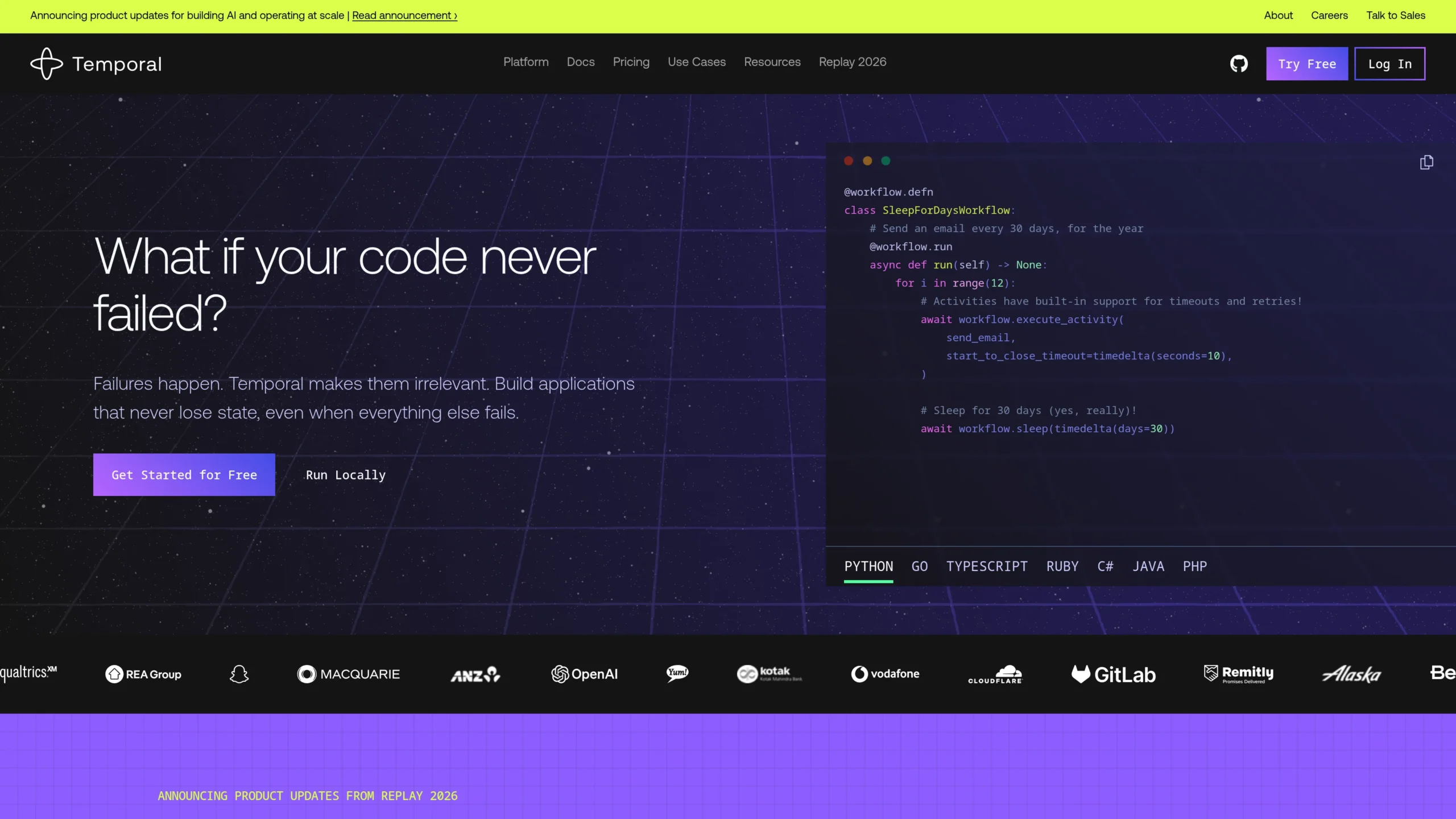
Temporal is one of the strongest workflow orchestration tools for developers building reliable, long-running applications. It focuses on durable execution, which means workflows can continue correctly even when services fail, servers restart, or network problems happen. Temporal offers an open-source self-hosted option and Temporal Cloud as a managed service.
Temporal is best for teams that need process orchestration at the application level. Instead of only scheduling jobs, it helps developers build workflows directly into software systems.
Features
- Durable execution
- Long-running workflow support
- Open-source and cloud options
- Failure recovery
- Microservice orchestration
- Developer-first workflow design
- Strong support for distributed systems
Free Features
- Open-source self-hosted option
- Local development support
- SDKs and documentation
- Community resources
Pro Features
- Temporal Cloud
- Managed infrastructure
- Enterprise support
- Security and scaling features
- Production-grade monitoring
Best For
Developers, SaaS platforms, backend teams, fintech apps, and distributed system workflows.
Limitations
- More technical than no-code automation platforms
- Requires developer knowledge
- Not ideal for simple marketing or admin automations
Best Use Cases
- Payment processing workflows
- Order lifecycle management
- Long-running business transactions
- Microservice coordination
- AI agent workflow reliability
- Backend process orchestration
2. Apache Airflow
Apache Airflow is a popular open-source platform for authoring, scheduling, and monitoring workflows. It is widely used for data pipelines, batch jobs, ETL workflows, and analytics automation. The official Apache Airflow documentation describes it as an open-source platform for developing, scheduling, and monitoring batch-oriented workflows using Python.
Airflow remains one of the most recognized workflow orchestration tools for data teams because of its ecosystem, community, and Python-based workflow design.
Features
- Python-based workflow authoring
- DAG-based scheduling
- Web UI for monitoring
- Strong community support
- Large integration ecosystem
- Batch workflow management
- Extensible architecture
Free Features
- Fully open-source
- Local and self-hosted deployment
- Community plugins
- Web-based workflow monitoring
Pro Features
- Managed Airflow through cloud vendors or platforms
- Enterprise support through third-party providers
- Advanced scaling and monitoring options
- Managed infrastructure options
Best For
Data engineers, analytics teams, ETL pipelines, and batch workflow scheduling.
Limitations
- Can become complex at scale
- Not always ideal for real-time workflows
- Requires Python and infrastructure knowledge
Best Use Cases
- ETL pipelines
- Data warehouse workflows
- Scheduled analytics jobs
- Batch processing
- Reporting automation
- Data engineering workflow orchestration
3. Prefect
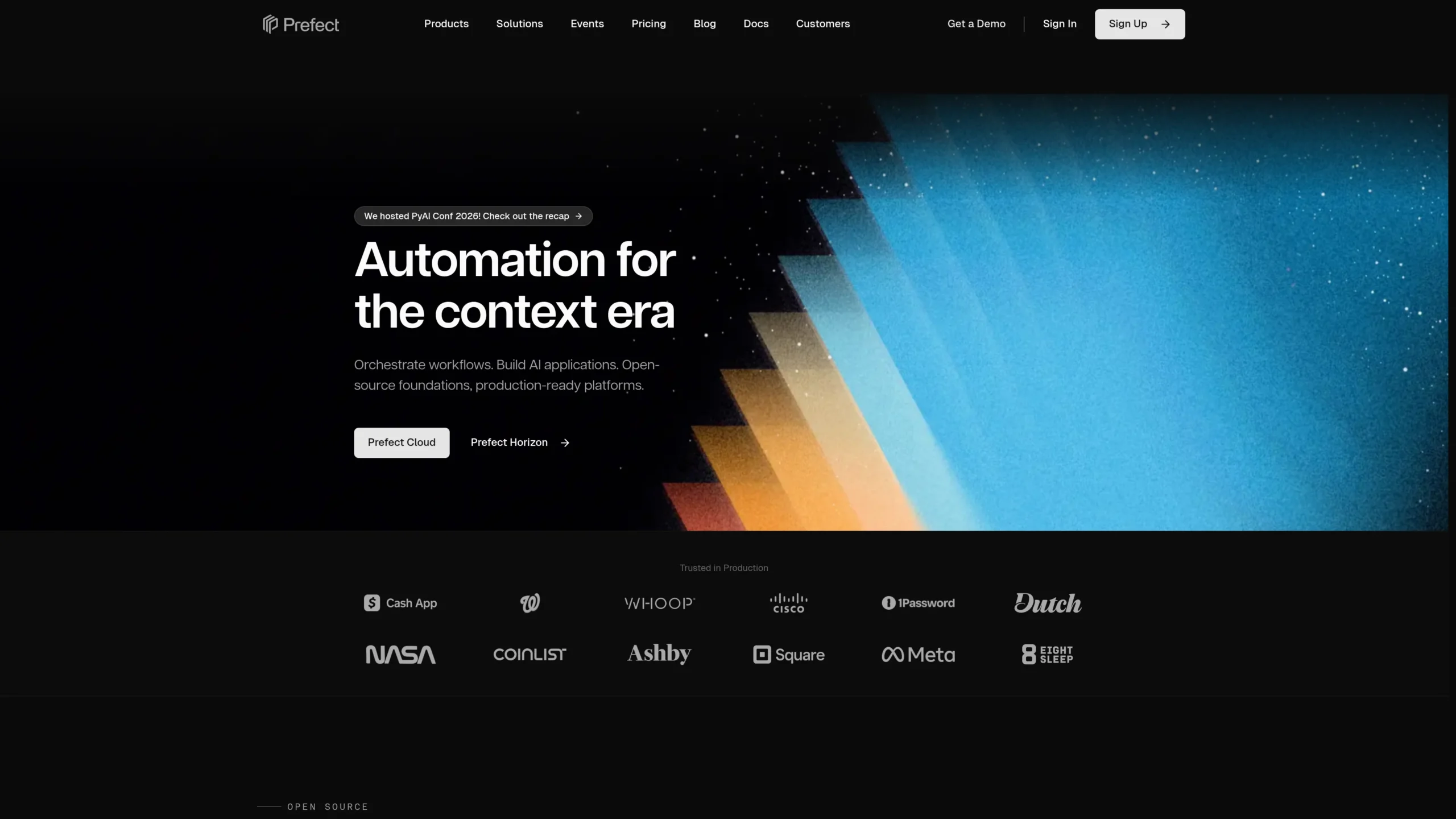
Prefect is a modern workflow orchestration platform designed for Python-based workflows, data pipelines, and AI infrastructure. Prefect describes its platform as open-source foundations with production-ready platforms for orchestrating workflows and building AI applications.
Prefect is often chosen by teams that want workflow automation tools with a simpler developer experience than traditional DAG-heavy systems.
Features
- Python-first workflow orchestration
- Open-source core
- Managed Prefect Cloud
- Scheduling and retries
- Event-based automation
- Workflow monitoring
- Infrastructure flexibility
Free Features
- Prefect open source
- Local workflow development
- Basic orchestration
- Community support
Pro Features
- Prefect Cloud
- SSO
- Autoscaling support
- Team collaboration
- Managed orchestration
- Production monitoring
Best For
Python teams, data engineers, ML teams, and AI workflow builders.
Limitations
- Best for Python-based workflows
- Advanced enterprise features require paid plans
- Less suitable for non-technical business users
Best Use Cases
- Data pipeline orchestration
- Machine learning workflows
- AI application workflows
- Python automation
- Event-based process orchestration
- Research and analytics workflows
4. Dagster
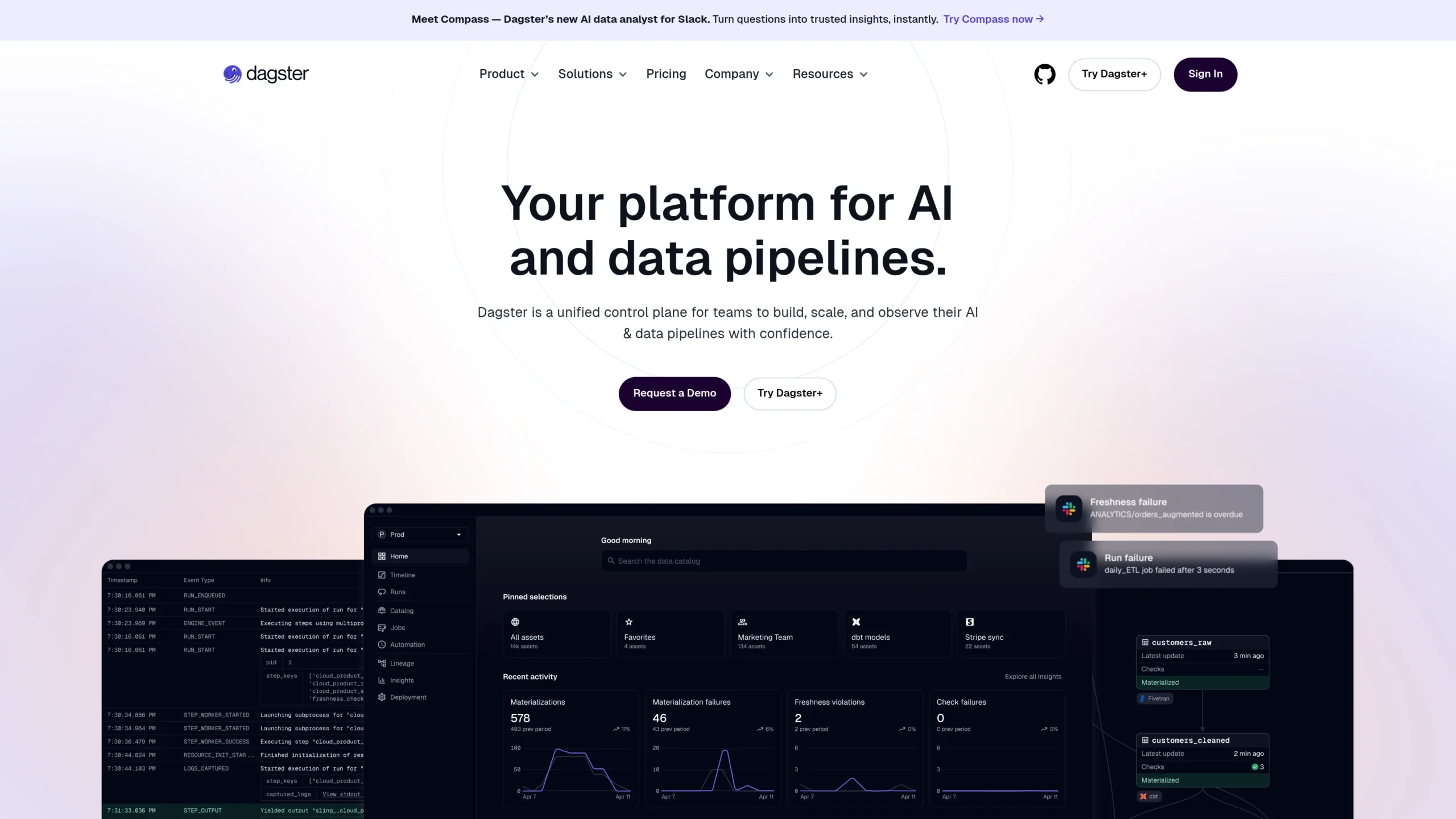
Dagster is a data orchestration platform built for AI and data pipelines. It focuses on building, scheduling, monitoring, and observing reliable data workflows. Dagster positions itself as a unified control plane for teams building, scaling, and observing AI and data pipelines.
Dagster is different from many workflow orchestration tools because it is asset-aware. That means teams can think about the data assets being created, not only the tasks being executed.
Features
- Data asset-based orchestration
- Pipeline monitoring
- Lineage and observability
- Testing-friendly design
- Python-based development
- AI and data pipeline support
- Dagster+ managed option
Free Features
- Open-source Dagster
- Local development
- Pipeline visualization
- Data asset modeling
Pro Features
- Dagster+
- Enterprise monitoring
- Team collaboration
- Managed infrastructure
- Advanced observability
Best For
Modern data teams, analytics engineers, AI pipeline teams, and data platform teams.
Limitations
- Mostly focused on data and AI pipelines
- Requires technical setup
- Not built mainly for general business app automation
Best Use Cases
- Data platform orchestration
- AI pipeline management
- Data lineage tracking
- Analytics engineering
- Modern ETL workflows
- Data quality workflows
5. Argo Workflows
Argo Workflows is an open-source, container-native workflow engine for Kubernetes. It is designed to orchestrate parallel jobs on Kubernetes and is implemented as a Kubernetes custom resource definition.
Argo is one of the best workflow orchestration tools for teams that already use Kubernetes and containerized infrastructure.
Features
- Kubernetes-native workflow engine
- Parallel job orchestration
- DAG and step-based workflows
- Container-first design
- Open-source project
- Cloud-native workflow execution
- Strong DevOps fit
Free Features
- Open-source usage
- Kubernetes deployment
- Workflow templates
- Community documentation
Pro Features
- Enterprise Kubernetes support through vendors
- Advanced security setup
- Managed Kubernetes infrastructure
- Enterprise observability through integrations
Best For
DevOps teams, platform engineers, Kubernetes users, and ML infrastructure teams.
Limitations
- Requires Kubernetes knowledge
- Not beginner-friendly for business users
- Needs infrastructure management
Best Use Cases
- Kubernetes batch jobs
- ML training pipelines
- CI/CD-related workflows
- Containerized data processing
- Cloud-native automation
- Parallel task orchestration
6. Camunda
Camunda is a process orchestration platform for designing, automating, and improving business processes. It is especially useful for enterprises that need structured process orchestration with people, systems, decisions, and automation steps. Camunda describes its platform as process orchestration software for developers and enterprises, with support for designing and running end-to-end processes.
Camunda is a strong choice when a business process needs visibility, governance, and structured modeling.
Features
- BPMN process modeling
- Enterprise process orchestration
- Human task support
- Decision automation
- System integration
- Process monitoring
- SaaS, cloud, and self-hosting options
Free Features
- Free trial options
- Developer resources
- Modeling tools
- Community learning materials
Pro Features
- Enterprise process automation
- Advanced monitoring
- Governance features
- Scalable deployment
- Enterprise support
Best For
Enterprises, banks, insurance companies, operations teams, and process-heavy organizations.
Limitations
- Requires process design knowledge
- Can be more complex than simple no-code tools
- Best for structured enterprise workflows
Best Use Cases
- Loan approval workflows
- Insurance claims processing
- Customer onboarding
- Compliance workflows
- Human approval workflows
- Enterprise process orchestration
7. AWS Step Functions
AWS Step Functions is a serverless workflow orchestration service that helps teams build and orchestrate distributed applications using visual workflows. AWS describes it as a way to orchestrate multiple AWS services into serverless workflows.
For companies already using AWS, Step Functions is one of the best automation platforms for cloud-native workflow orchestration.
Features
- Serverless workflow orchestration
- Visual workflow design
- AWS service integrations
- Error handling and retries
- State machine-based workflows
- Event-driven automation
- Scalable cloud execution
Free Features
- AWS Free Tier options may apply
- Visual workflow development
- Documentation and tutorials
- Basic workflow execution
Pro Features
- Production-scale orchestration
- Advanced AWS integrations
- Monitoring through AWS tools
- Enterprise cloud security
- High-scale distributed workflows
Best For
AWS users, cloud engineers, serverless teams, and backend application teams.
Limitations
- Best inside the AWS ecosystem
- Requires AWS knowledge
- Pricing depends on workflow usage
Best Use Cases
- Serverless app workflows
- API orchestration
- Data processing workflows
- Cloud automation
- Microservice coordination
- Event-driven process orchestration
8. n8n
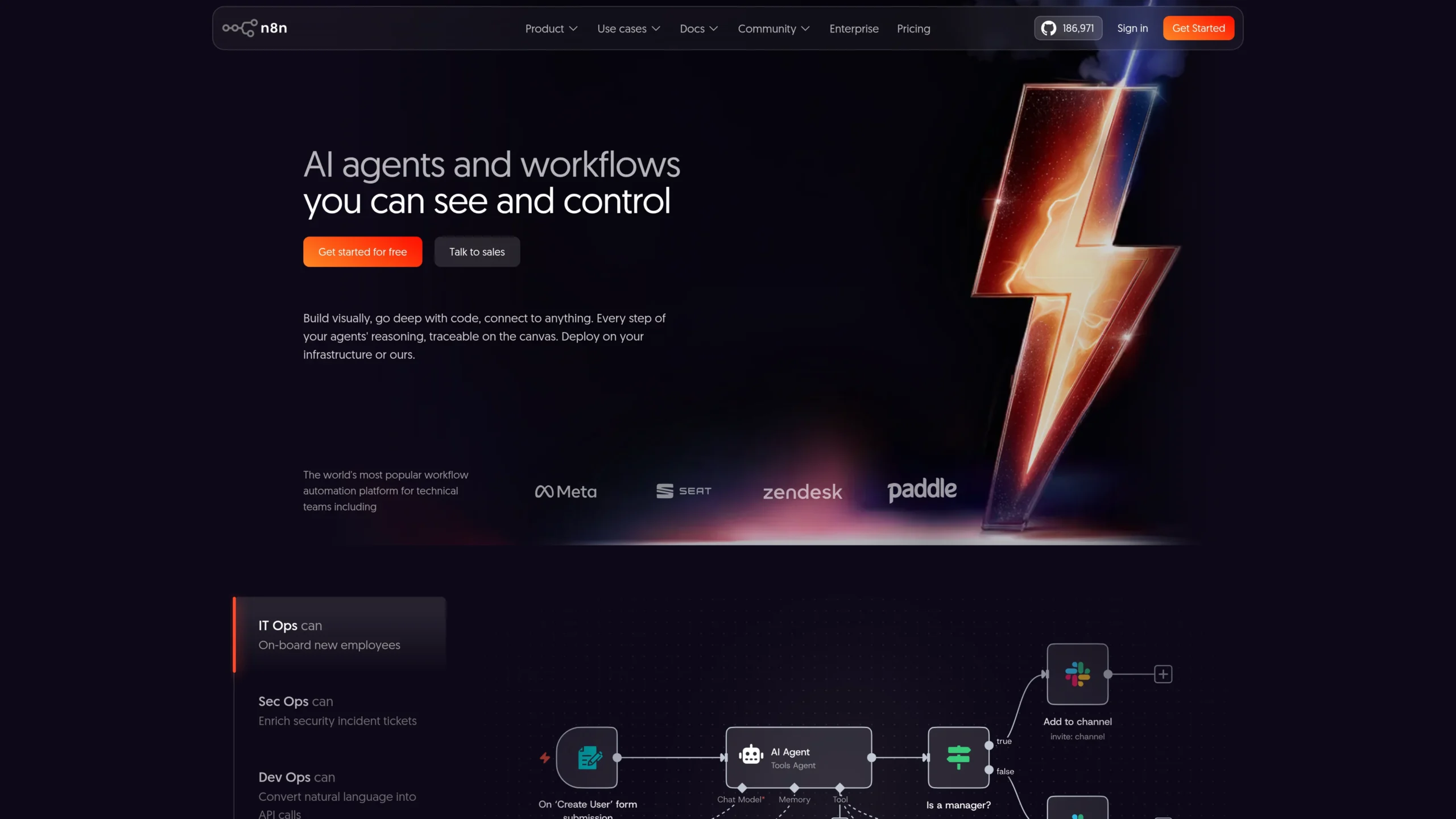
n8n is a workflow automation platform that combines visual workflow building with code flexibility. It supports AI workflows, business process automation, and integrations, giving technical teams more control over their automation. n8n describes itself as a workflow automation platform that combines AI capabilities with business process automation.
n8n is useful for teams that want a balance between no-code speed and technical customization.
Features
- Visual workflow builder
- AI workflow automation
- App integrations
- Code support
- Self-hosting option
- Webhooks and APIs
- Human-in-the-loop workflows
Free Features
- Community/self-hosting options
- Visual workflow creation
- Basic integrations
- Templates and documentation
Pro Features
- n8n Cloud
- Team collaboration
- Enterprise controls
- Advanced deployment
- Managed hosting
- Security and scaling options
Best For
Technical operators, agencies, startups, automation builders, and AI workflow teams.
Limitations
- Some advanced workflows need technical skill
- Self-hosting requires security management
- Less structured than enterprise BPM platforms
Best Use Cases
- AI agent workflows
- Lead automation
- Internal operations automation
- API workflows
- SaaS app automation
- Custom business workflow automation
9. Workato
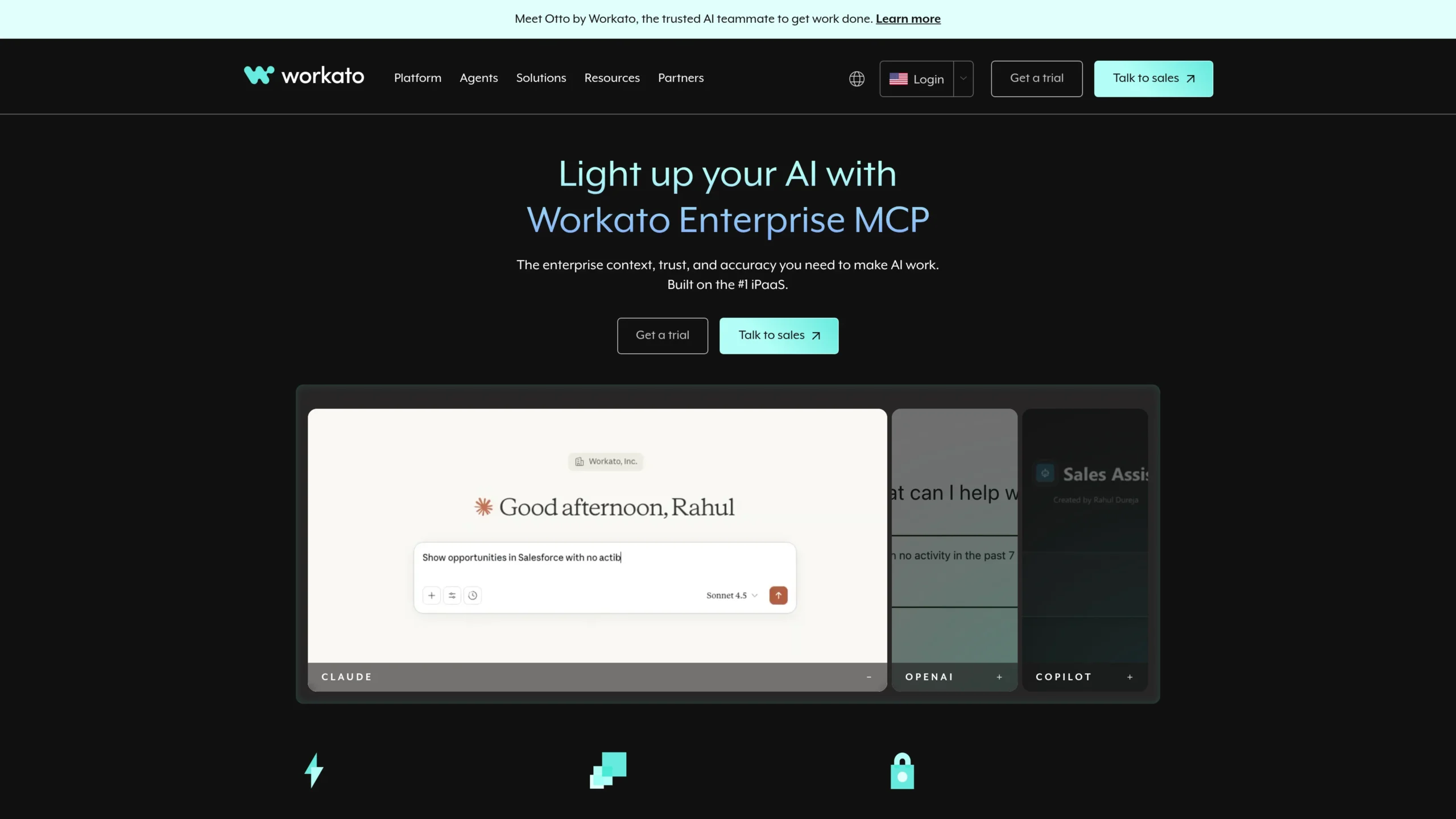
Workato is an enterprise automation platform focused on connecting apps, data, and AI workflows. It promotes enterprise MCP servers and agentic AI workflows built on its iPaaS foundation, with connections across many business applications.
Workato is one of the strongest workflow orchestration tools for enterprises that need app integration, governance, and cross-team automation.
Features
- Enterprise app integration
- Workflow orchestration
- AI and agentic workflow support
- Low-code/no-code automation
- Security and governance
- Business process automation
- SaaS workflow connectivity
Free Features
- Product demos
- Learning resources
- Trial options may be available
- Automation templates
Pro Features
- Enterprise iPaaS
- Advanced app connectors
- Governance and security
- Enterprise MCP capabilities
- Team collaboration
- Large-scale automation
Best For
Enterprises, operations teams, IT teams, revenue operations, and SaaS-heavy businesses.
Limitations
- Enterprise-focused pricing
- Maybe too advanced for small simple workflows
- Complex automations need planning
Best Use Cases
- CRM automation
- HR workflow automation
- Finance operations
- Cross-app process orchestration
- Enterprise SaaS integrations
- AI-connected workflow automation
10. Make
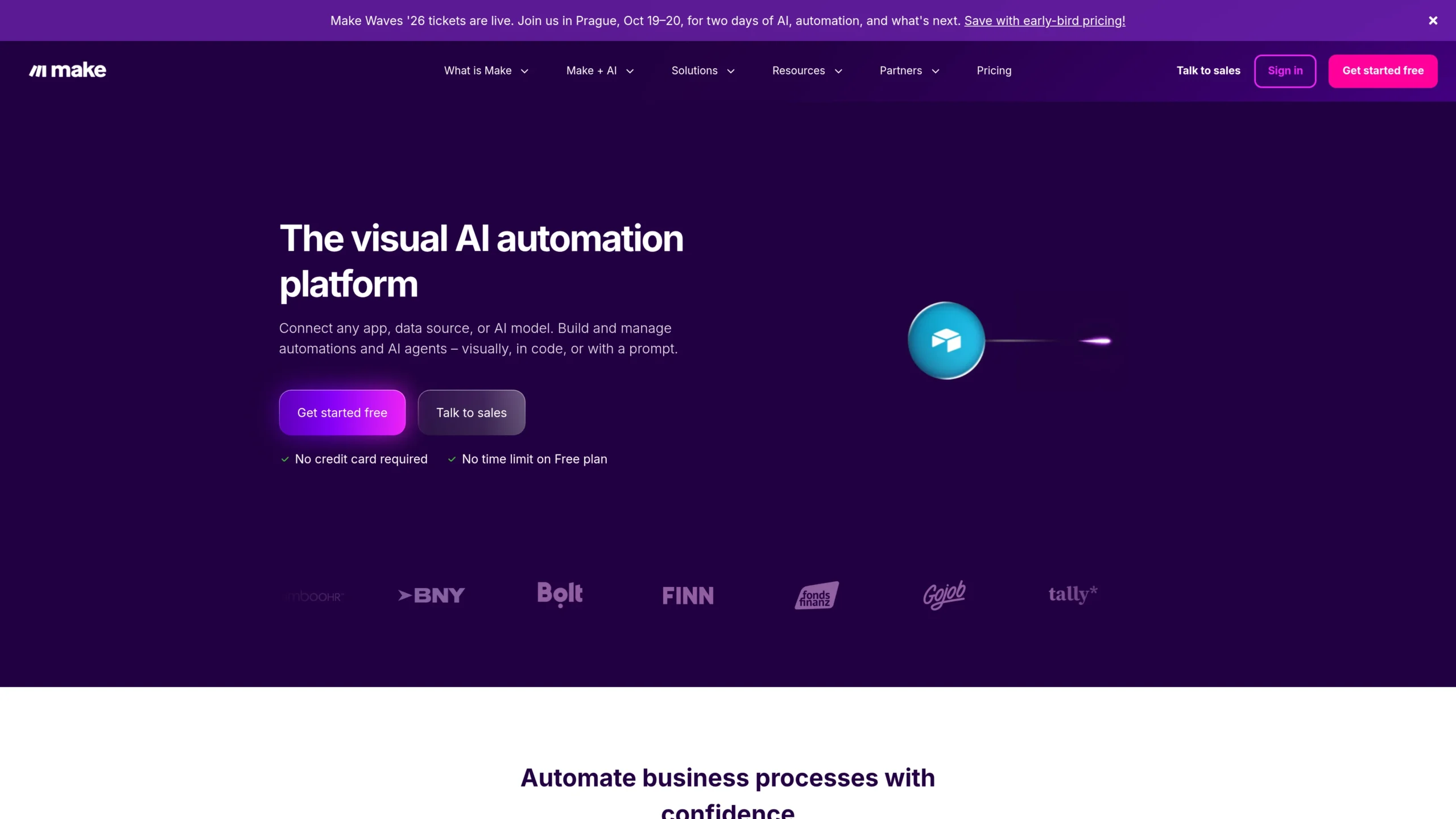
Make is a visual workflow automation platform for building, scaling, and automating AI and agentic workflows. It supports visual orchestration, no-code integrations, and enterprise automation. Make says its platform helps users visually build, scale, and automate AI and agentic workflows, with hundreds of AI app integrations and enterprise security features.
Make is a strong choice for teams that want more visual control than simple linear automation tools.
Features
- Visual scenario builder
- No-code workflow automation
- AI workflow support
- App integrations
- Conditional logic
- Error handling
- Enterprise automation options
Free Features
- Free plan options may be available
- Visual workflow builder
- Basic app connections
- Simple automation scenarios
Pro Features
- Higher operation limits
- Team features
- Enterprise security
- Advanced automation
- AI integrations
- Premium support
Best For
Small businesses, agencies, marketing teams, operations teams, and no-code automation users.
Limitations
- Complex workflows can become hard to manage
- Not as developer-focused as Temporal or Airflow
- Enterprise governance may require higher plans
Best Use Cases
- Marketing automation
- CRM workflows
- Lead routing
- Content operations
- AI-powered no-code workflows
- Business app automation
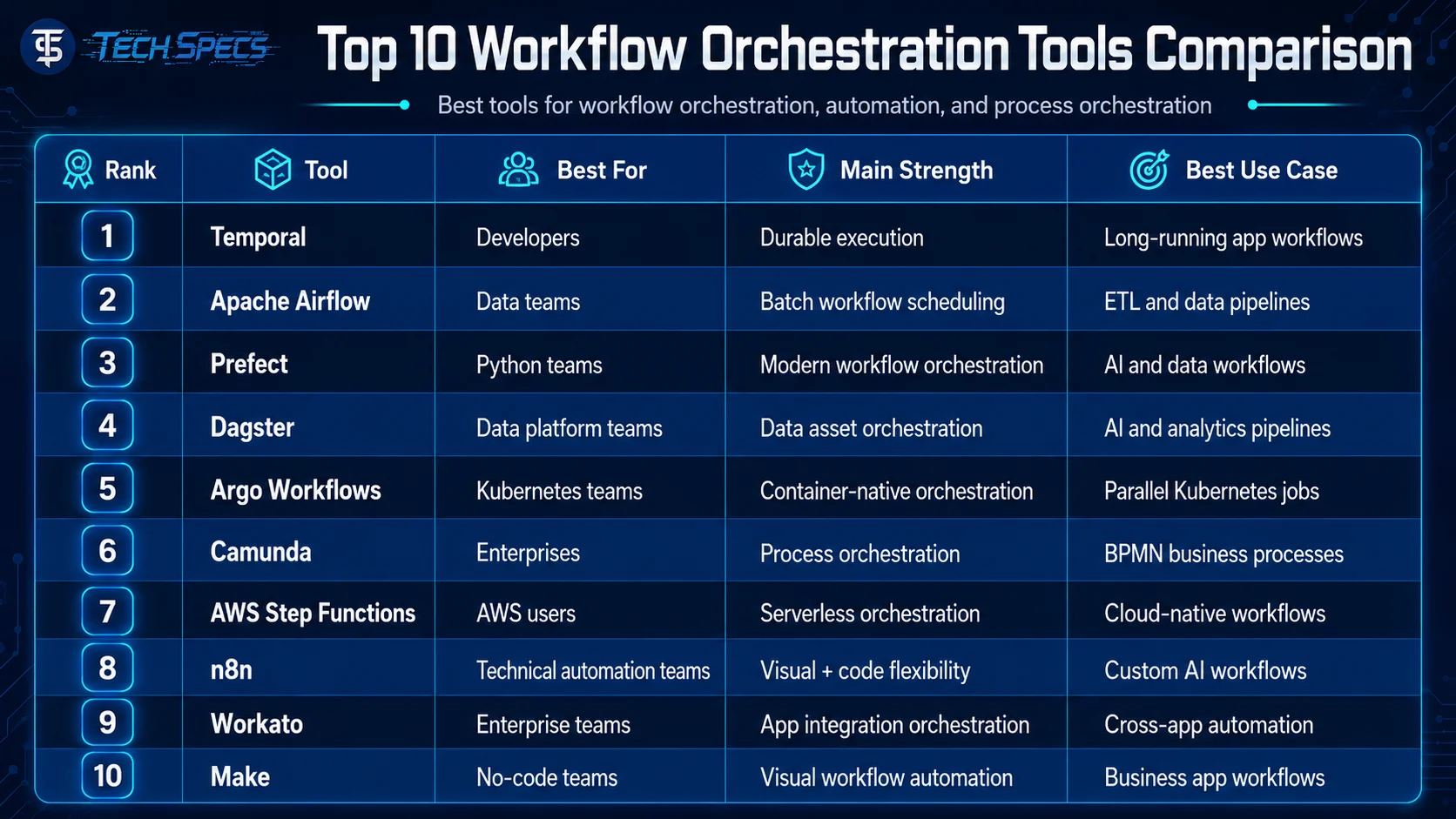
Top 10 Workflow Orchestration Tools Comparison
How to Choose the Right Workflow Orchestration Tool
Choosing the best workflow orchestration software depends on your team, workflow type, and technical needs.
- Choose Temporal if your workflows are part of your application logic and must be highly reliable.
- Choose Apache Airflow if your main focus is batch data pipelines.
- Choose Prefect if you want Python-first workflow automation with modern flexibility.
- Choose Dagster if data assets, lineage, and observability matter most.
- Choose Argo Workflows if your team already works deeply with Kubernetes.
- Choose Camunda if you need structured enterprise process orchestration with human approvals.
- Choose AWS Step Functions if your workflows live mostly inside AWS.
- Choose n8n if you want flexible visual automation with optional code.
- Choose Workato if your enterprise needs secure app-to-app workflow orchestration.
- Choose Make if you want an easy visual workflow automation tool for business teams.
Recommendation
For most businesses, there is no single “best” workflow orchestration tool for everyone. The best choice depends on the workflow type.
For data engineering, Apache Airflow, Prefect, and Dagster are strong options. For cloud-native and developer-heavy workflows, Temporal, Argo Workflows, and AWS Step Functions are better fits. For enterprise business automation and process orchestration, Camunda and Workato are excellent choices. For visual automation and AI-powered business workflows, n8n and Make are practical options.
The smartest approach is to start with one high-value workflow, test reliability, measure time saved, and then expand automation gradually.
Final Thoughts
Workflow orchestration tools are becoming essential in 2026 because teams need more than basic automation. They need visibility, reliability, error handling, governance, and the ability to connect apps, data, cloud services, people, and AI workflows.
The best workflow automation tools help businesses move from scattered tasks to organized process orchestration. Whether you are building data pipelines, serverless apps, AI workflows, or enterprise approval systems, the right automation platform can save time, reduce errors, and make operations easier to scale.
FAQs
1. What are workflow orchestration tools?
Workflow orchestration tools help teams design, run, monitor, and manage workflows across tasks, systems, applications, APIs, and people.
2. What is workflow orchestration?
Workflow orchestration is the process of coordinating multiple tasks or services so they run in the right order with proper monitoring, retries, and error handling.
3. What is the difference between workflow automation and workflow orchestration?
Workflow automation usually automates individual tasks. Workflow orchestration manages the full process, including dependencies, conditions, approvals, failures, and monitoring.
4. Which workflow orchestration tool is best for data pipelines?
Apache Airflow, Prefect, and Dagster are strong choices for data pipeline workflow orchestration.
5. Which workflow orchestration tool is best for developers?
Temporal is excellent for developer-led, long-running application workflows. Argo Workflows is strong for Kubernetes-based workflows.
6. Which tool is best for enterprise process orchestration?
Camunda is one of the best choices for enterprise process orchestration, especially when BPMN, approvals, and structured workflows are important.
7. Which workflow orchestration platform is best for AWS?
AWS Step Functions is the best fit for teams already using AWS services and serverless workflows.
8. Is n8n a workflow orchestration tool?
Yes. n8n is a workflow automation and orchestration tool that supports visual workflows, integrations, APIs, and AI automation.
9. Is Make good for workflow automation?
Yes. Make is good for visual workflow automation, app integrations, and no-code business process automation.
10. Are workflow orchestration tools only for developers?
No. Some tools like Temporal, Airflow, and Argo are developer-focused, while Make, Workato, n8n, and Camunda can support business and operations teams.
11. What is the best open-source workflow orchestration tool?
Apache Airflow, Temporal, Prefect, Dagster, Argo Workflows, and n8n all offer open-source or self-hosted options.
12. What features should I look for in workflow orchestration tools?
Look for scheduling, monitoring, retries, error handling, integrations, security, scalability, logging, visual workflow views, and support for your existing systems.