


The way healthcare communicates is changing fast. From busy hospital front desks to remote patient monitoring, an AI voice agent in healthcare is stepping in to handle tasks that once took hours of human effort. These intelligent voice-powered systems are no longer a futuristic concept. They are actively being used right now in clinics, hospitals, and private practices around the world.
Healthcare providers are under constant pressure. Staff shortages, rising patient volumes, and growing administrative workloads are pushing the system to its limits. That is exactly where an AI voice agent in healthcare solutions comes in. They answer patient calls, schedule appointments, send reminders, collect symptoms, and even assist doctors with clinical documentation, all without burnout, all without breaks.
In this post by TechSpecs, you will discover the top 7 powerful AI voice agents in healthcare solutions that are transforming the industry today. Whether you are a hospital administrator, a healthcare IT professional, or a medical practice owner, this guide will help you understand which voice agent platform fits your needs best and why healthcare AI solutions are no longer optional.
What Is an AI Voice Agent in Healthcare?
Before diving into the top solutions, it helps to understand what these systems actually do.
An AI voice agent in healthcare is a conversational AI system that uses natural language processing and speech recognition to interact with patients and healthcare staff through voice. Unlike basic phone trees or simple chatbots, these agents can hold natural, two-way conversations, understand medical context, and take meaningful actions.
Here is what a typical AI voice agent for healthcare can do:
- Answer patient inquiries 24 hours a day, 7 days a week
- Schedule, reschedule, and cancel appointments automatically
- Send medication reminders and follow-up alerts
- Collect patient symptoms and pre-visit information
- Route calls to the right department or staff member
- Assist physicians with voice-based clinical documentation
- Support telehealth check-ins and remote monitoring
- Handle billing inquiries and insurance questions
The best AI voice agents go beyond simple automation. They learn from interactions, adapt to patient needs, and integrate seamlessly with electronic health records (EHR) systems, making them a true asset for any healthcare organization.
Why Healthcare Needs AI Voice Agents Right Now
The numbers tell a clear story. Healthcare administrative costs account for a significant portion of total healthcare spending. A large part of that cost comes from phone-based patient communication, manual scheduling, and repetitive front-desk tasks.
Here is why the demand for AI voice agent in healthcare solutions is growing rapidly:
- Staff burnout is real: Healthcare workers are overwhelmed. Voice agents take over repetitive tasks so staff can focus on patients.
- Patient expectations are rising: People want instant answers. A voice agent platform delivers 24/7 availability without hiring extra staff.
- Errors are costly: Manual data entry and miscommunication lead to mistakes. AI-powered voice agents reduce human error significantly.
- Hospital automation is a priority: Healthcare systems are actively investing in automation to cut costs and improve efficiency.
- Telehealth is growing: Remote care needs smart, scalable communication tools that ai voice agent for healthcare solutions provide perfectly.
Now, let us look at the top 7 solutions leading this transformation.
Top 7 Powerful AI Voice Agent in Healthcare Solutions Today
1. Nuance DAX
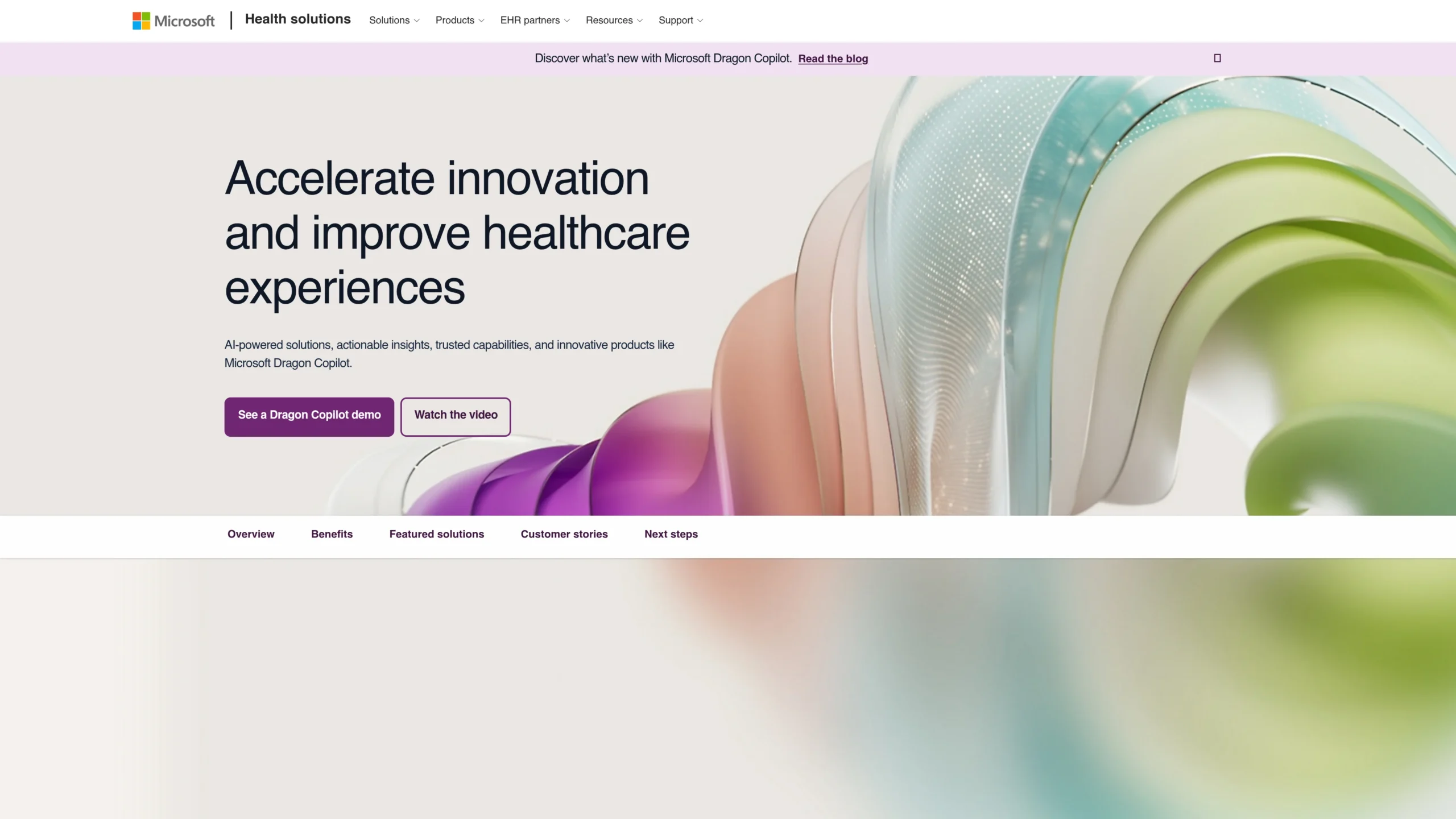
Nuance DAX is one of the most recognized names in healthcare AI solutions, and for good reason. Developed by Nuance Communications, a Microsoft company, DAX is designed specifically to assist physicians with clinical documentation.
Key features:
- Ambient clinical intelligence that listens to patient-doctor conversations
- Automatically generates clinical notes in the physician’s preferred format
- Integrates directly with major EHR systems, including Epic and Cerner
- Reduces documentation time by up to 50%
- Supports both in-person and telehealth visits
Nuance DAX addresses one of the biggest pain points in healthcare, physician burnout caused by excessive documentation. Doctors spend hours each day on notes. DAX handles that work automatically, giving physicians more time with patients.
Best for: Hospitals, large medical groups, and health systems focused on reducing physician administrative burden.
2. Hyro AI
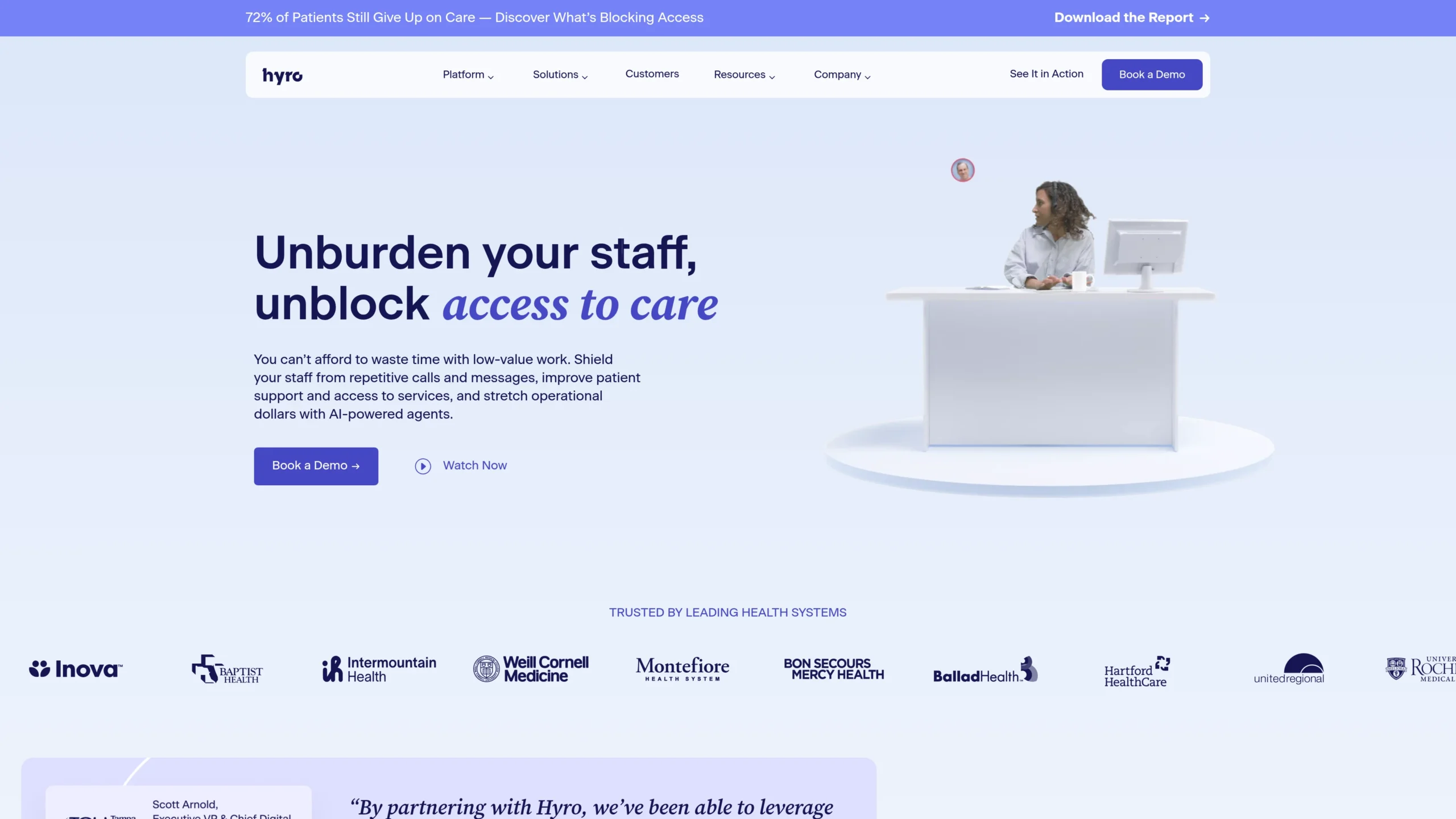
Hyro AI is a powerful voice agent platform built specifically for healthcare organizations. It uses adaptive communications technology to create conversational AI experiences across voice, chat, and SMS channels.
Key features:
- AI-powered phone calls for appointment scheduling and FAQs
- Integrates with EHR systems, websites, and call centers
- No-code platform that is easy to deploy and manage
- Continuously learns from conversations to improve accuracy
- HIPAA compliant with strong data security protocols
Hyro AI focuses on reducing call center volume. Hospitals using Hyro report significant reductions in inbound call traffic, freeing staff to handle more complex patient needs.
Best for: Health systems and hospitals looking to automate high-volume patient communication and reduce call center strain.
3. Orbita Voice
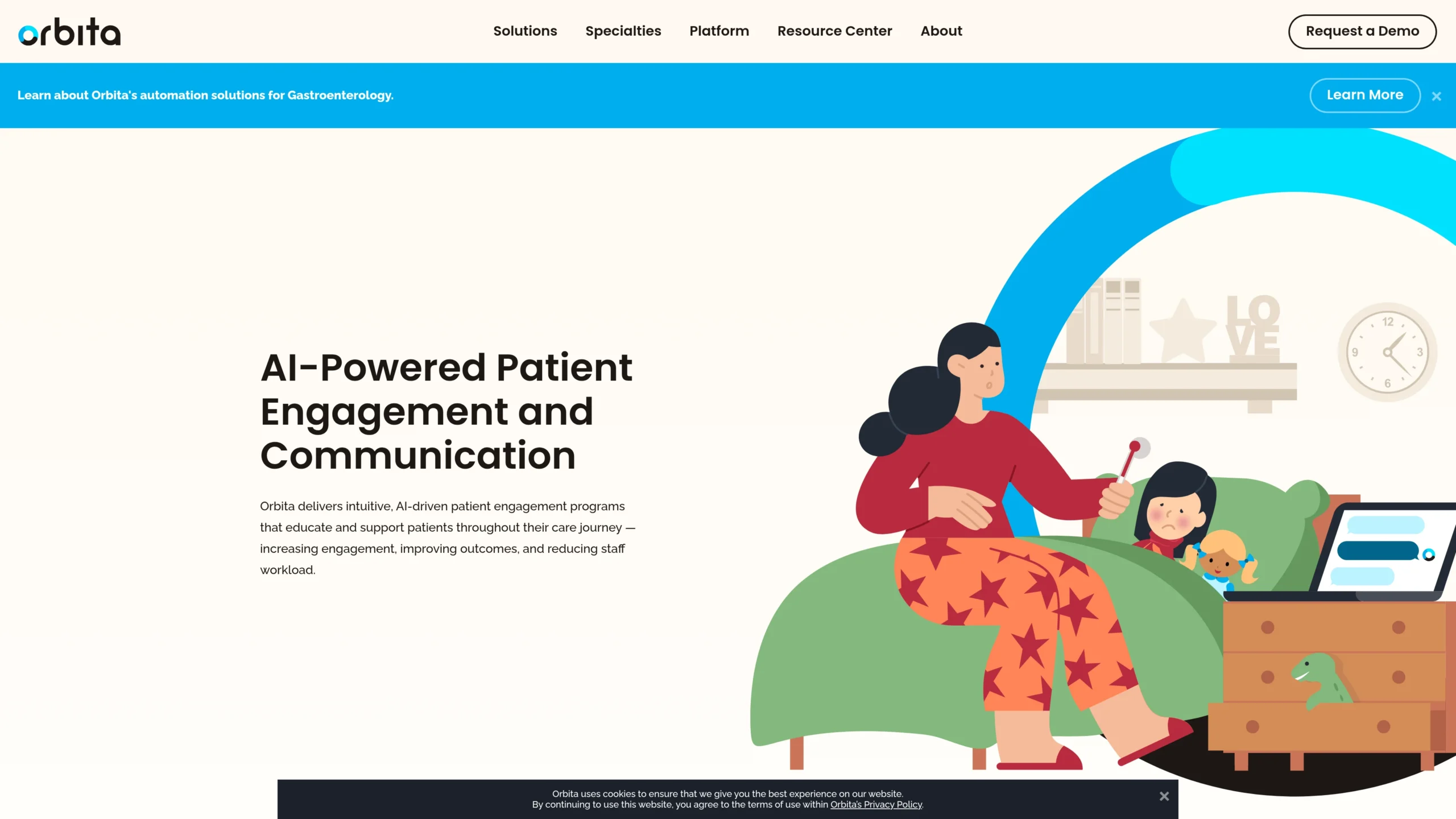
Orbita is a leading AI voice agent for healthcare that specializes in conversational AI for patient engagement and virtual care. It is built on a healthcare-specific platform that understands clinical language and workflows.
Key features:
- Voice and chat-based patient engagement tools
- Supports symptom checking, care plan guidance, and medication reminders
- Integrates with EHR systems and care management platforms
- Designed for chronic disease management programs
- Strong focus on patient education and self-care support
Orbita goes beyond scheduling. It actively supports patients throughout their care journey, helping them understand their conditions, follow care plans, and stay connected with their providers.
Best for: Health systems focused on chronic care management, patient education, and improving long-term health outcomes.
4. Conversational AI by Amazon (AWS)
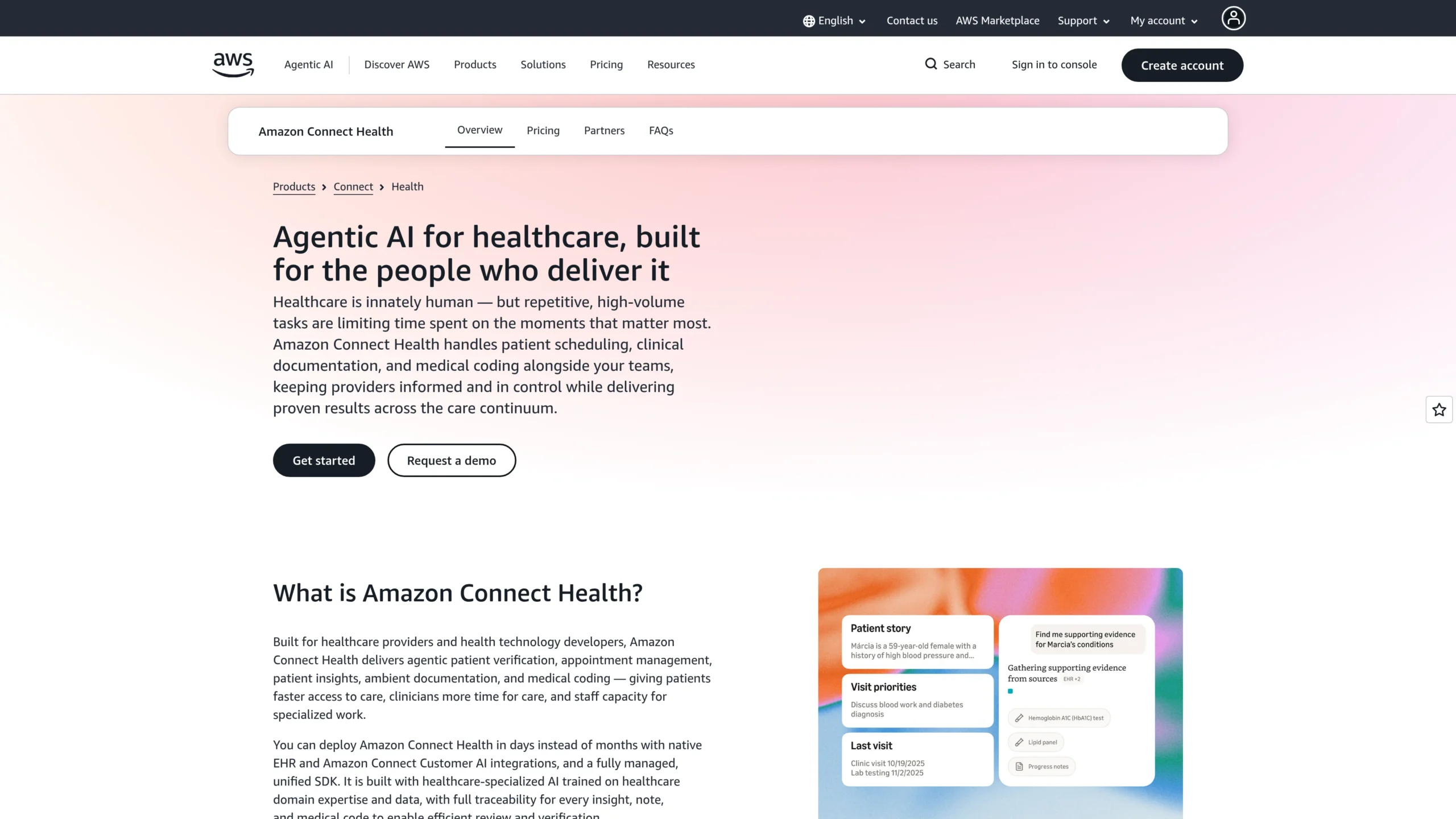
Amazon Web Services offers a robust set of tools for building custom healthcare AI solutions, including Amazon Lex for conversational AI and Amazon Connect for cloud-based contact centers.
Key features:
- Highly customizable voice and chat AI for healthcare workflows
- Integrates with existing hospital systems and databases
- Scalable to handle thousands of simultaneous interactions
- Strong security and HIPAA eligible services
- Supports multiple languages for diverse patient populations
AWS gives healthcare organizations the flexibility to build exactly what they need. Rather than a one-size-fits-all solution, AWS tools allow developers to create tailored voice experiences that match specific hospital workflows.
Best for: Large health systems and hospital networks with dedicated IT teams who want a fully customizable voice agent platform.
5. Syllable.ai
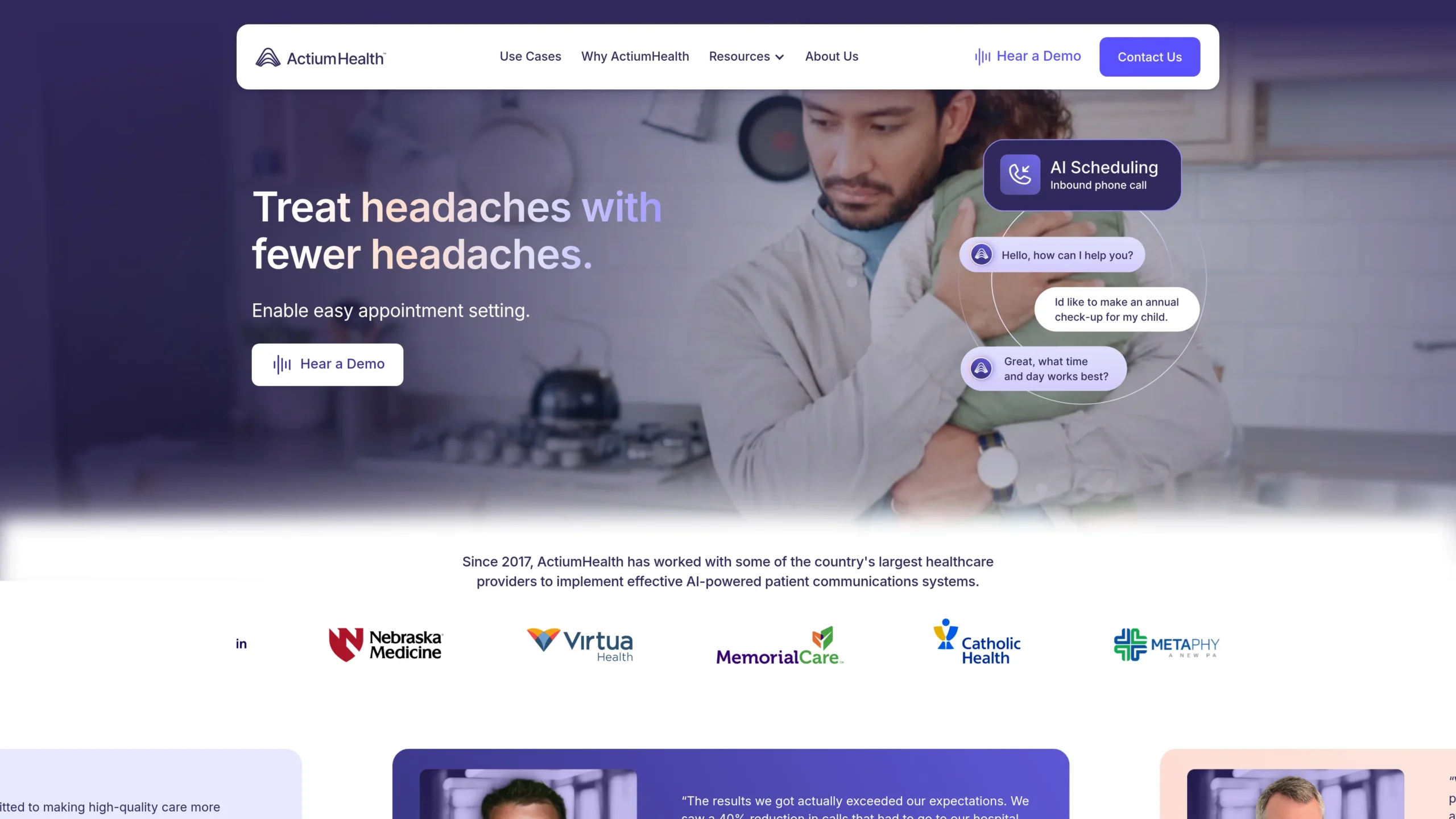
Syllable is a specialized AI voice agent in healthcare platform that focuses entirely on automating patient phone calls. It is designed to work alongside existing call center infrastructure and integrate with hospital scheduling systems.
Key features:
- Handles appointment scheduling, reminders, and cancellations
- Real-time integration with EHR systems
- Escalates complex calls to human agents seamlessly
- Provides detailed analytics on call volume and patient interactions
- Designed specifically for healthcare use cases
Syllable is laser-focused on healthcare. Every feature is built around the specific needs of hospitals and medical practices, making it one of the most purpose-built solutions on this list.
Best for: Hospitals and health systems looking to automate a high volume of patient phone calls with minimal disruption to existing operations.
6. Google Cloud Healthcare AI
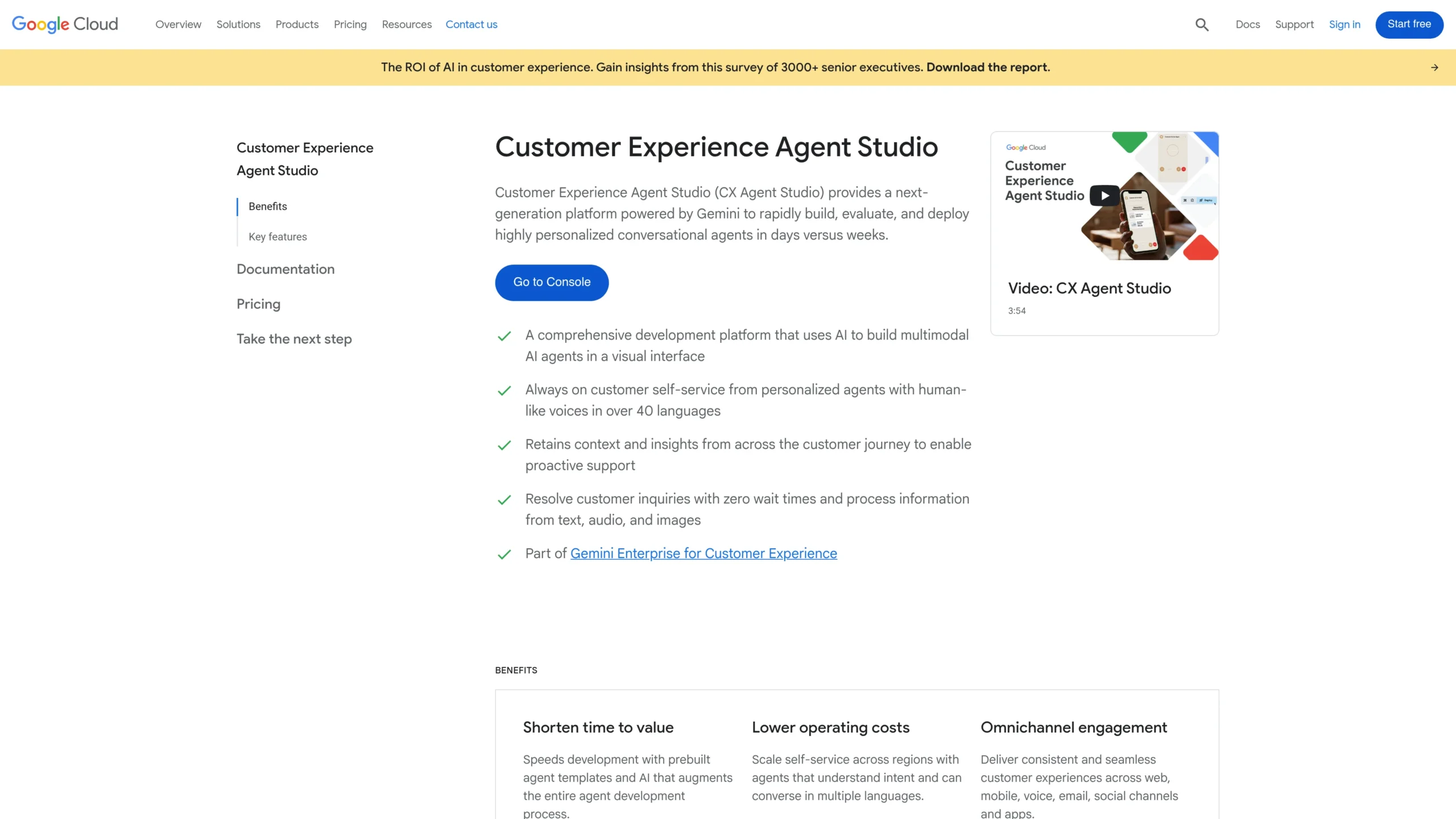
Google Cloud brings its powerful AI and machine learning capabilities to healthcare through a suite of healthcare AI solutions, including voice-based tools, natural language processing, and data analytics.
Key features:
- Healthcare Natural Language API for understanding clinical text and voice
- Integrates with Google’s speech recognition for accurate voice transcription
- Supports FHIR-based data integration with healthcare systems
- Scalable infrastructure for large health networks
- Advanced analytics and reporting tools
Google’s strength lies in its language understanding technology. The healthcare-specific NLP tools can interpret complex medical terminology with impressive accuracy, making it a strong choice for clinical documentation and patient communication.
Best for: Healthcare organizations already using Google Cloud infrastructure or those looking for enterprise-level AI capabilities with deep language understanding.
7. Dialora:
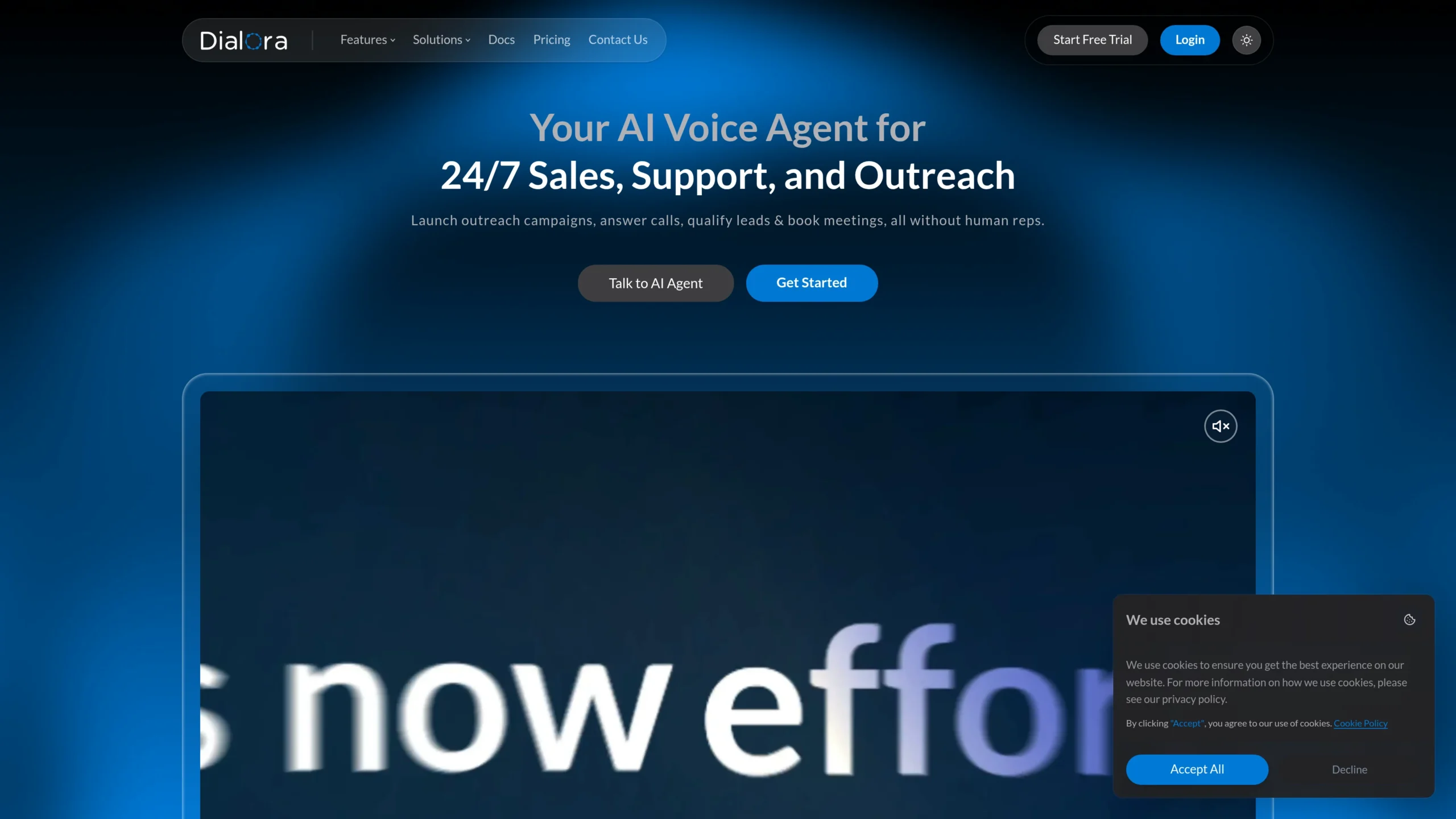
Dialora is a purpose-built AI voice agent in healthcare platform designed to automate front-desk operations and patient communication for medical practices and health systems. Their AI-powered voice agent handles appointment scheduling, patient intake, reminders, and follow-ups through natural, conversational voice interactions.
Key features:
- 24/7 appointment scheduling and rescheduling via voice
- Intelligent call routing and patient intake automation
- Multilingual conversation support for diverse patient populations
- Real-time appointment confirmation and reminder calls
- SOC 2 compliant and HIPAA-ready security infrastructure
- Seamless EHR integration with Epic, Cerner, Athenahealth, and others
- Real-time call transcription and sentiment analysis
Dialora takes a healthcare-specific approach to ai voice agent in healthcare automation. Rather than using generic voice technology, it understands medical terminology, healthcare workflows, and patient communication preferences. The platform handles the high-volume, repetitive administrative calls that consume front-desk staff time, freeing teams to focus on complex patient interactions and care delivery.
Best for: Medical practices, clinics, and health systems focused on reducing call center burden, decreasing no-show rates, and improving patient access to appointment scheduling without hiring additional staff.
How to Choose the Right AI Voice Agent Platform for Your Healthcare Organization
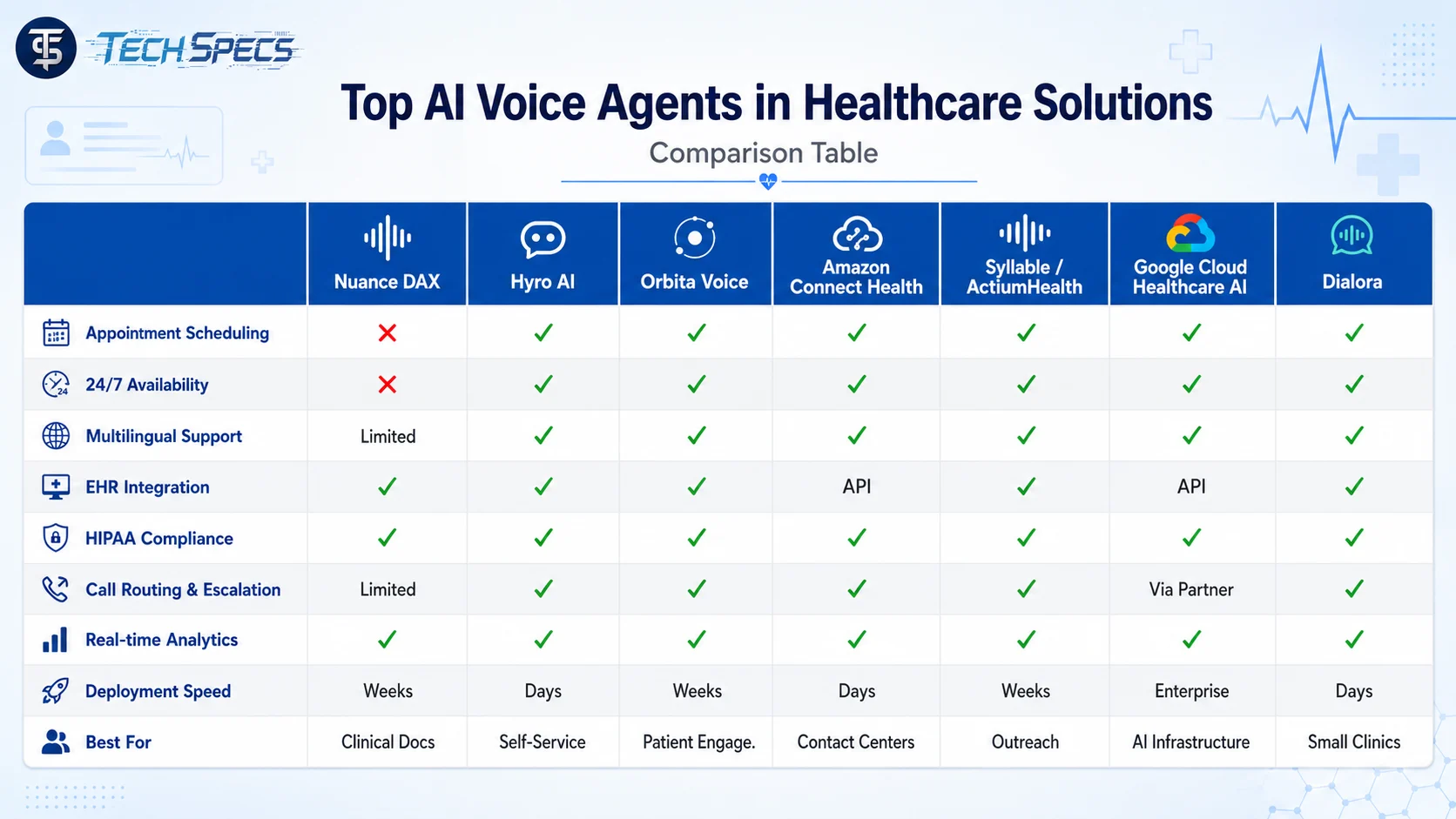
With so many strong options available, choosing the right voice agent platform can feel overwhelming. Here are the key factors to consider:
- Integration capability: Does the solution integrate with your existing EHR system, scheduling software, and communication tools?
- HIPAA compliance: Any AI voice agent in healthcare must meet strict privacy and security standards. Always verify compliance before deploying.
- Scalability: Can the platform handle your current call volume and grow with your organization?
- Ease of deployment: Some platforms require heavy IT involvement. Others are no-code and quick to deploy.
- Patient experience quality: Test the conversation quality. Does it sound natural? Can it handle complex patient requests?
- Analytics and reporting: Good platforms provide data insights that help you improve operations over time.
- Support and training: Look for vendors that offer strong onboarding, training, and ongoing technical support.
The Real Impact of Hospital Automation Through Voice AI
Hospital automation powered by voice AI is not just about saving time. The impact goes much deeper.
Consider these real-world benefits that healthcare organizations are experiencing:
- Reduced no-show rates by up to 30% through automated appointment reminders
- Faster patient check-in with voice-based pre-registration and symptom collection
- Lower call center costs by automating up to 80% of routine inbound calls
- Improved physician satisfaction through reduced documentation burden
- Better patient outcomes through consistent medication reminders and care plan follow-ups
- Increased revenue by capturing missed appointments and reducing scheduling gaps
These results are why investing in healthcare AI solutions is becoming a strategic priority for forward-thinking healthcare organizations worldwide.
Final Thoughts
The rise of the AI voice agent in healthcare is not a trend. It is a fundamental shift in how healthcare organizations communicate, operate, and deliver care. From reducing physician burnout to improving patient engagement, the solutions highlighted in this post represent the very best the industry has to offer right now.
Whether you choose a specialized platform like Syllable or a powerful, customizable option like AWS, the right AI voice agent in healthcare will help your organization work smarter, serve patients better, and operate more efficiently.
The question is no longer whether to adopt healthcare AI solutions. The question is which voice agent platform will help your organization move forward fastest. Start exploring your options today. Your patients, your staff, and your bottom line will thank you.
Frequently Asked Questions
Q1. What are AI voice agents for healthcare?
AI voice agents for healthcare are intelligent, voice-powered software systems that use natural language processing to interact with patients and healthcare staff. They can schedule appointments, answer medical questions, send reminders, collect symptoms, and assist with clinical documentation, all through natural voice conversations.
Q2. How does an AI voice agent in healthcare improve patient experience?
An AI voice agent in healthcare improves patient experience by providing instant, 24/7 access to information and services. Patients can schedule appointments, get answers to questions, and receive reminders without waiting on hold or navigating complex phone menus.
Q3. Are the best AI voice agents HIPAA compliant?
Yes, the best AI voice agents designed for healthcare are built with HIPAA compliance in mind. They use encrypted data transmission, secure storage, and access controls to protect patient information. Always verify compliance certifications before deploying any solution.
Q4. What is the difference between a voice agent platform and a basic phone tree?
A voice agent platform uses advanced AI and natural language processing to hold genuine two-way conversations. A basic phone tree only responds to specific button presses or simple commands. Voice agents understand natural speech, handle complex requests, and learn from interactions over time.
Q5. Can an AI voice agent for healthcare integrate with EHR systems?
Yes, most modern AI voice agent for healthcare solutions are built to integrate with major EHR systems like Epic, Cerner, and Athenahealth. This integration allows the voice agent to access scheduling data, patient records, and clinical information in real time.
Q6. How much does a healthcare AI voice agent cost?
Costs vary widely depending on the platform, features, and scale of deployment. Some voice agent platforms charge per interaction, while others use monthly subscription models. It is best to request a custom quote from vendors based on your specific call volume and feature requirements.
Q7. What types of healthcare organizations benefit most from hospital automation through voice AI?
Hospitals, large medical groups, outpatient clinics, telehealth providers, and specialty practices all benefit from hospital automation through voice AI. Any organization handling high volumes of patient calls, appointments, or administrative tasks can see significant efficiency gains.
Q8. How long does it take to implement an AI voice agent in healthcare?
Implementation time depends on the platform and complexity of integration. Some no-code platforms can be deployed in a few weeks. Custom-built solutions integrated with existing hospital systems may take several months. Most vendors offer onboarding support to streamline the process.
Q9. Can voice AI handle emergency medical situations?
Most AI voice agent in healthcare solutions are not designed to handle emergency situations. They are typically programmed to recognize distress signals and immediately escalate to a human agent or direct the caller to emergency services. Always ensure your system has clear emergency escalation protocols.
Q10. What is the future of AI voice agent in healthcare solutions?
The future is very promising. Advances in large language models, real-time translation, emotional intelligence, and predictive analytics will make voice agents even more capable. Expect to see deeper EHR integration, proactive patient outreach, and fully personalized voice-based care navigation in the years ahead.